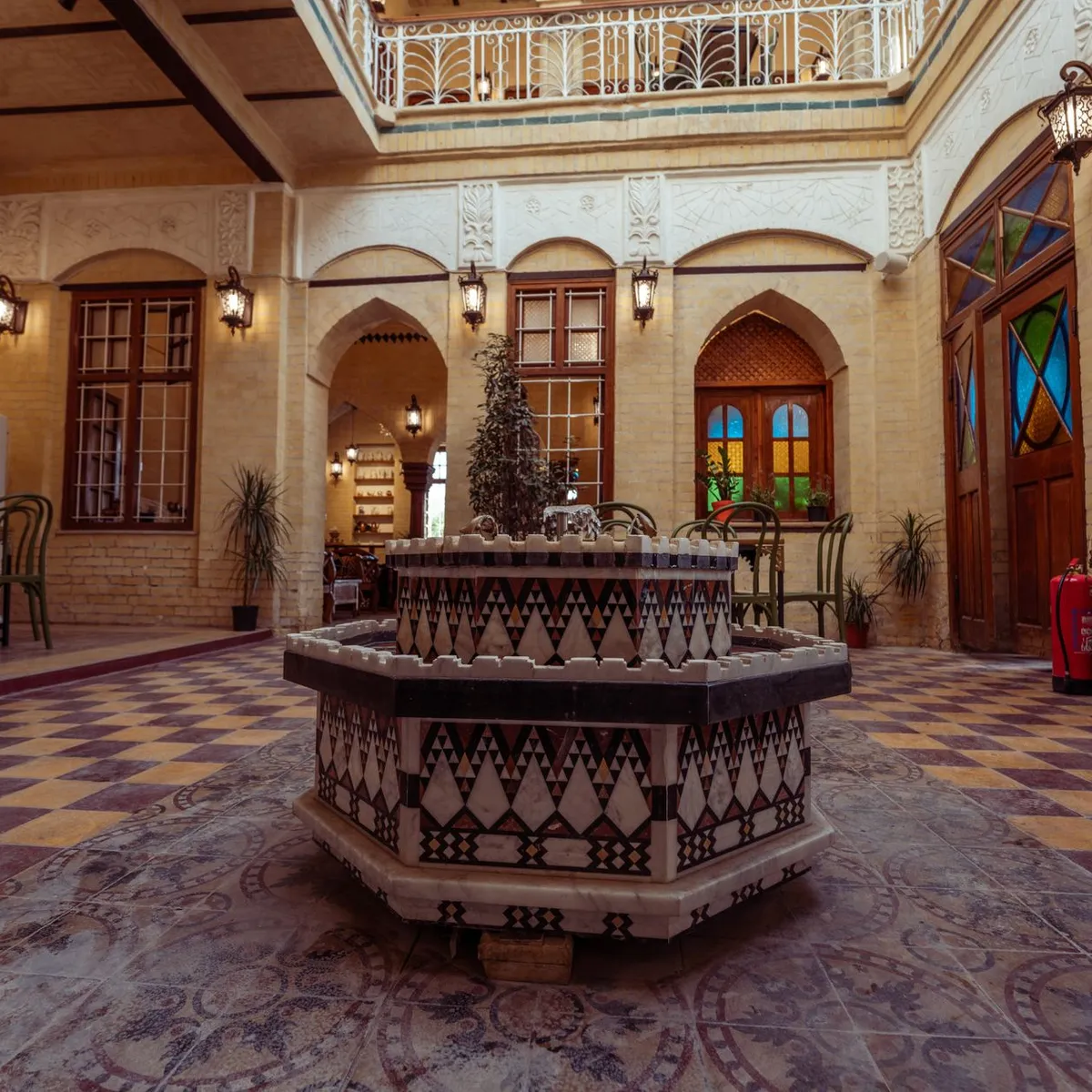
 Photo: khezez | خزاز / Pexels
Al Hārithah
Al Hārithah accessibility for wheelchair users
Compare Al Hārithah by accessibility, transport, terrain, healthcare, cost, weather, laws, reviews, and community notes.
Al Hārithah accessibility scores
Compare Al Hārithah by accessibility, transport, terrain, healthcare, cost, weather, and laws. General stats use public data and models. Community rows reflect member reviews and votes.
General stats
National benchmarks and estimates — your experience in this city may differ.
Community
Starts from our estimate — thumbs up nudge toward Excellent, down toward Poor. Reviews use 1–5 stars.
These figures combine public statistics, models, and live weather where available. Every city is different — treat this as a guide, and share what you know in the Reviews & Corrections tab.
Profile last updated 6/30/2026.
Al Hārithah wheelchair accessibility guide
Research Al Hārithah for wheelchair users and caregivers: getting around, terrain, healthcare, costs, climate, accessible things to do, and practical caveats before booking.
Last updated 6/30/2026At a glance
Al Hārithah is a smaller city north of Basra in southern Iraq. The live row scores it 60 overall, with accessibility 54, terrain 94, infrastructure 67, ramp availability 53, and wheelchair transport 56. The standout positive is terrain: DB sampling labels the area mostly flat, with average elevation near 11 m and a maximum sampled grade of only 0.3%. The challenge is not slope; it is verification. Local accessibility details, step-free venue data, and tourist infrastructure are sparse, so a wheelchair user should approach Al Hārithah as a practical base near Basra only with strong local support.
Getting around
Private car arrangements are the safest planning assumption. Do not rely on spontaneous accessible taxis, low-floor buses, or predictable pavement continuity. If you need to visit Basra, hospitals, or riverfront areas, pre-book a vehicle that can carry your chair and ask about road conditions, checkpoints, and exact drop-off points. Keep buffers for heat, security delays, and mechanical issues.
Terrain & mobility
Flat terrain is helpful for transfers and short rolls, but OSM pavement confidence is low, with many roads untagged plus asphalt, unpaved, and dirt surfaces. Expect broken shoulders, dust, missing curb ramps, and uneven crossings. A front caster that handles rough pavement, spare tubes or tools, and a companion for difficult thresholds will matter more than hill-climbing capacity.
Healthcare & care
OpenStreetMap healthcare leads within the wider area include مركز المعقل الصحي, مركز ابو صخير الصحي, عيادات الماسة الطبية/العيادة التمريضية, مركز الكباسي الصحي, and مجمع ملاك الرحمة الطبي. These are not verified accessibility endorsements. For anything beyond routine care, many travelers would likely plan around Basra-area services and confirm the route, elevator/lift access, and emergency intake before arrival. Bring medication redundancy and Arabic care notes.
Costs & housing
RollVenture estimates living costs from ~$3,241/mo, housing around $1,654/mo, and home-aid costs around $620/mo. In practice, accessible housing may be scarce. Ask for ground-floor entry, bathroom measurements, threshold heights, generator/air-conditioning reliability, and whether the entrance remains usable after rain or dust.
Climate & comfort
Southern Iraq is extremely hot. Nearby Basra is described by Wikivoyage as among the hottest cities on Earth, with summer temperatures that can exceed 50°C. Treat heat exposure as a medical risk: move early, schedule rest, keep backup cooling, and avoid long outdoor waits.
Accessible things to do
Shatt al-Arab riverside drives— the Basra region is defined by the Shatt al-Arab; a vehicle-based riverside outing is the most realistic low-exertion option.
Basra Museum— Wikivoyage lists this museum in the former Lakeside Palace; verify current opening, step-free entry, and security before leaving Al Hārithah.
Corniche al-Basra— Wikivoyage describes a street along the Shatt al-Arab; use it as a short assisted outing with close drop-off rather than assuming smooth continuous pavement.
Old Basra heritage houses— Wikivoyage notes remaining old-quarter houses and restoration efforts; expect uneven historic fabric and verify routes locally.
Imam Ali Mosque / old mosque of Basra— documented by Wikivoyage as a major historic mosque; confirm visitor access, ramps, and appropriate timing.
Community & language
Arabic is essential. Local planning should be done through trusted contacts, hotel staff, or drivers who understand mobility needs. Foreign visitors should follow current security advice and avoid improvised travel.
Would we recommend it?
Only conditionally. Al Hārithah’s flat terrain is promising, but sparse verified access data, extreme heat, and reliance on private arrangements make it unsuitable as an independent wheelchair destination. It may work for an assisted stay tied to Basra-area work or family support.
These figures combine public statistics, models, and live weather where available. Every city is different — treat this as a guide, and share what you know in the Reviews & Corrections tab.
Profile last updated 6/30/2026.