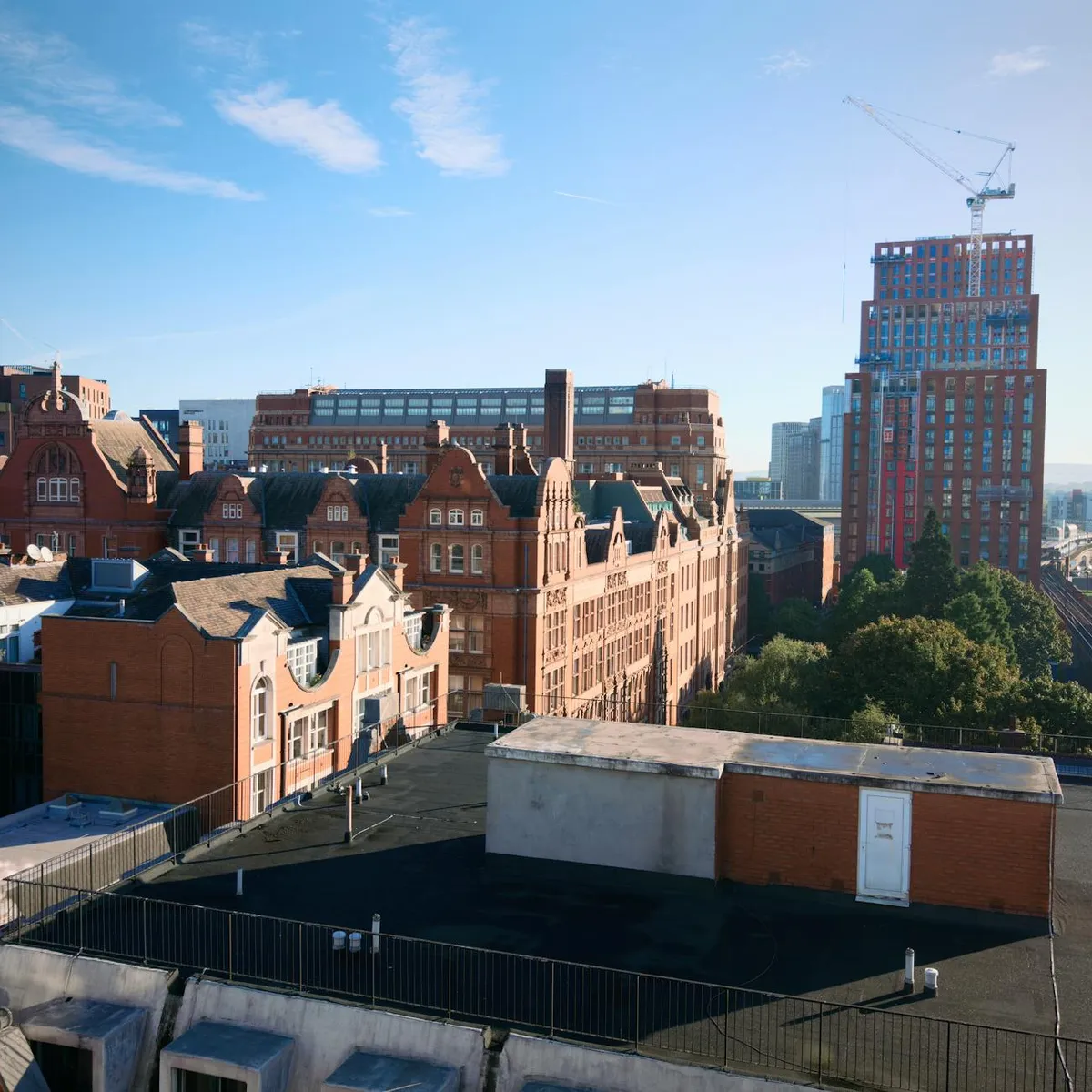
 Photo: Max W / Pexels
Birmingham
Birmingham accessibility for wheelchair users
Compare Birmingham by accessibility, transport, terrain, healthcare, cost, weather, laws, reviews, and community notes.
Birmingham accessibility scores
Compare Birmingham by accessibility, transport, terrain, healthcare, cost, weather, and laws. General stats use public data and models. Community rows reflect member reviews and votes.
General stats
National benchmarks and estimates — your experience in this city may differ.
Community
Starts from our estimate — thumbs up nudge toward Excellent, down toward Poor. Reviews use 1–5 stars.
These figures combine public statistics, models, and live weather where available. Every city is different — treat this as a guide, and share what you know in the Reviews & Corrections tab.
Profile last updated 6/30/2026.
Birmingham wheelchair accessibility guide
Research Birmingham for wheelchair users and caregivers: getting around, terrain, healthcare, costs, climate, accessible things to do, and practical caveats before booking.
Last updated 6/30/2026At a glance
Birmingham is a practical, culture-heavy UK city with good big-city services and a more manageable central terrain profile than many older European destinations. The live DB row estimates living costs from ~$4,206/mo and housing from ~$2,230/mo, so it is still expensive by global standards. Accessibility is strongest around major civic venues, museums, theatres, and newer commercial areas; it becomes more variable on older streets, canal edges, and historic buildings.
Getting around
Transport for West Midlands accessibility pages could not be verified in this pass, so treat transit planning conservatively. Use step-free station information, bus stop location, and assistance requirements from the operator before travel. Taxis or pre-booked accessible vehicles may be needed for late evenings, bad weather, or routes involving older rail infrastructure. Choose housing near the city centre, New Street, or your most-used care provider to reduce transfer risk.
Terrain & mobility
The terrain profile is gently rolling with a low central max-grade sample. That is promising, but Birmingham still has older pavements, kerb changes, construction zones, and canal-side routes that can add friction. The OSM pavement profile has medium confidence and only part of the network tagged as good, so verify the exact walking route rather than relying only on city-level scores.
Healthcare & care
The stored healthcare profile includes central clinics and Queen Elizabeth hospital-area facilities, but these are OSM leads, not confirmed accessible-care arrangements. For recurring care, confirm entrance access, accessible toilets, hoist/transfer policy, and appointment lead times. The NHS can provide strong hospital coverage, but newcomers should plan GP registration and private backup options early.
Costs & housing
Use from ~$4,206/mo as a conservative living-cost marker, with housing from ~$2,230/mo. Accessible flats in central or well-connected areas may cost more than the average. Ask for lift dimensions, entrance photos, bathroom layout, threshold heights, and backup lift procedures. Newer apartment blocks near major transport and shopping areas are usually easier starting points than converted historic housing.
Climate & comfort
Birmingham’s climate is mild but damp. Rain, wind, and short winter days affect wheelchair comfort more than extreme temperatures. Covered routes through shopping districts can help, but wet pavements and older kerbs make weather buffers important.
Accessible things to do
Birmingham Museum & Art Gallery— Birmingham Museums publishes access information for its venues; verify reopening status, lift routes, and gallery availability before visiting.
Thinktank Birmingham Science Museum— Listed by Birmingham Museums’ access information; a better candidate for a planned accessible museum day than an unsurveyed historic site.
Aston Hall— Birmingham Museums provides venue access information, but as a historic property it should be checked carefully for partial access, ramps, and accessible toilets.
Birmingham Hippodrome— The official access page lists an access registration scheme, accessible performances, and accessible facilities, making it one of the stronger evening options.
Community & language
English is the default. Birmingham is diverse, with large South Asian, Caribbean, European, and student communities. Disability access expectations are supported by UK law, but older premises vary, so direct confirmation remains important.
Would we recommend it?
Yes, cautiously. Birmingham is useful for someone who wants UK healthcare depth, culture, and relatively manageable terrain, but it is not a seamless accessibility city. It works best with central housing and venue-by-venue planning.
These figures combine public statistics, models, and live weather where available. Every city is different — treat this as a guide, and share what you know in the Reviews & Corrections tab.
Profile last updated 6/30/2026.