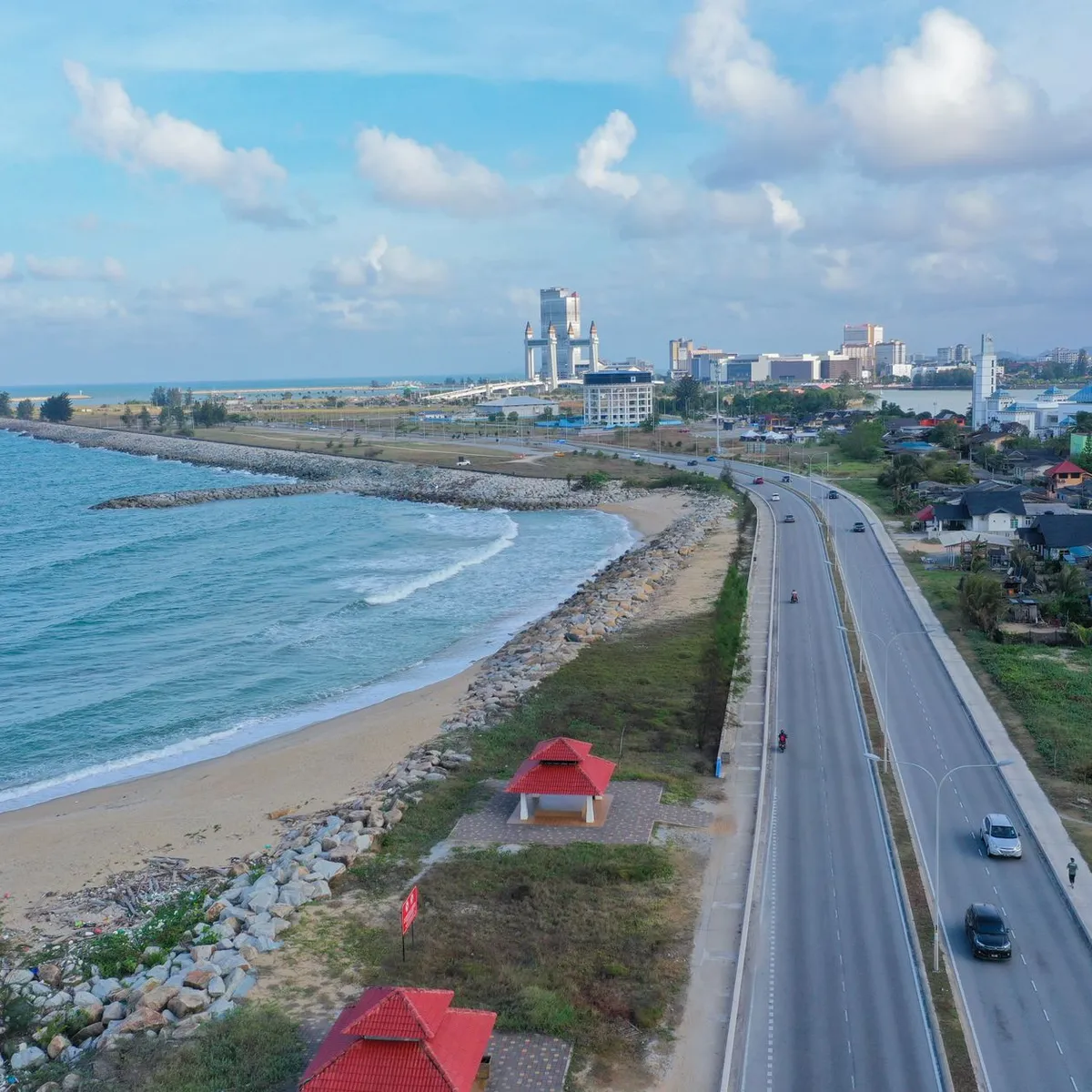
 Photo: Abdulaziz hasan / Pexels
Cukai
Cukai accessibility for wheelchair users
Compare Cukai by accessibility, transport, terrain, healthcare, cost, weather, laws, reviews, and community notes.
Cukai accessibility scores
Compare Cukai by accessibility, transport, terrain, healthcare, cost, weather, and laws. General stats use public data and models. Community rows reflect member reviews and votes.
General stats
National benchmarks and estimates — your experience in this city may differ.
Community
Starts from our estimate — thumbs up nudge toward Excellent, down toward Poor. Reviews use 1–5 stars.
These figures combine public statistics, models, and live weather where available. Every city is different — treat this as a guide, and share what you know in the Reviews & Corrections tab.
Profile last updated 6/30/2026.
Cukai wheelchair accessibility guide
Research Cukai for wheelchair users and caregivers: getting around, terrain, healthcare, costs, climate, accessible things to do, and practical caveats before booking.
Last updated 6/30/2026At a glance
Cukai, also spelled Chukai, is the town and district capital of Kemaman in Terengganu. It is a practical east-coast Malaysia stop rather than a high-certainty accessible destination. The live row is relatively affordable, with living costs from ~$1,762/mo and housing from ~$563/mo, and the terrain profile is mostly flat. The trade-off is limited verified accessibility information: hospitals and clinics exist, but sidewalks, public toilets, and beach access should be checked one-by-one. It suits wheelchair users who can use a car, prefer quieter towns, and want coast/river outings with conservative expectations.
Getting around
Use private transport, ride-hailing where available, or a known local driver. Wikipedia identifies Chukai as a town in Kemaman, and the wider district is spread along the river and coast, so distances are not hard but last-mile access matters. Public buses and intercity links may be usable for some travelers, yet step-free boarding should not be assumed. Ask hotels for covered drop-off, flat parking-to-lobby access, and whether staff can help arrange vehicles with enough boot space.
Terrain & mobility
The DB terrain profile is strong: mostly flat, about 0.8% maximum sampled grade, and low elevation range. The pavement profile is low confidence and mostly untagged/asphalt, so the issue is less hilliness and more missing curb cuts, broken drains, narrow shoulders, and wet surfaces. Beaches and river edges are likely to need assisted access or viewing from paved edges rather than rolling onto sand.
Healthcare & care
OpenStreetMap-derived healthcare leads include Klinik Kesihatan Chukai, Klinik Alias, Klinik Al-Hijrah 24 Jam, Hospital Kemaman, and Klinik Ramli & Adibah. Hospital Kemaman is the key emergency lead in the DB row, but OSM does not prove wheelchair-ready entrances, accessible wards, or specialist rehabilitation. Call before travel and keep Kuala Terengganu or Kuantan options in mind for specialist care.
Costs & housing
Use the row estimates as starting points: from ~$1,762/mo overall, housing from ~$563/mo, and transport around $187. Accessible rentals may be harder than basic rooms. Ask for step-free entrances, lift reliability, bathroom photos, shower-chair options, and flood/rain exposure. Ground-floor accommodation can be useful, but verify thresholds and bathroom drainage.
Climate & comfort
Cukai is hot and humid, with monsoon-season rain risk on Malaysia's east coast. Rain can turn flat routes into waterlogged routes, so covered parking, short transfer distances, and flexible plans matter. Heat breaks and hydration are essential.
Accessible things to do
Cukai town centre— A practical café, pharmacy, and market-area outing; verify curb cuts and parking rather than expecting a continuous roll.
Kemaman River waterfront— Good as a scenic drive or short assisted roll if the chosen section has smooth paving.
Pantai Teluk Mak Nik / Monica Bay area— A coastal lead for sea views; plan for sand and uneven approaches, not independent beach rolling.
Pasar Besar Chukai / local food stops— Useful for local culture and supplies, but aisles and thresholds may be tight.
Community & language
Malay is primary; English is usually better in hotels, clinics, and with some younger staff. Terengganu is socially conservative, so dress and behavior norms matter, especially around religious sites and markets.
Would we recommend it?
Yes for a low-cost, car-supported east-coast base with flat terrain. No if you need verified step-free public transport, beach wheelchairs, or a dense accessible tourism network.
These figures combine public statistics, models, and live weather where available. Every city is different — treat this as a guide, and share what you know in the Reviews & Corrections tab.
Profile last updated 6/30/2026.