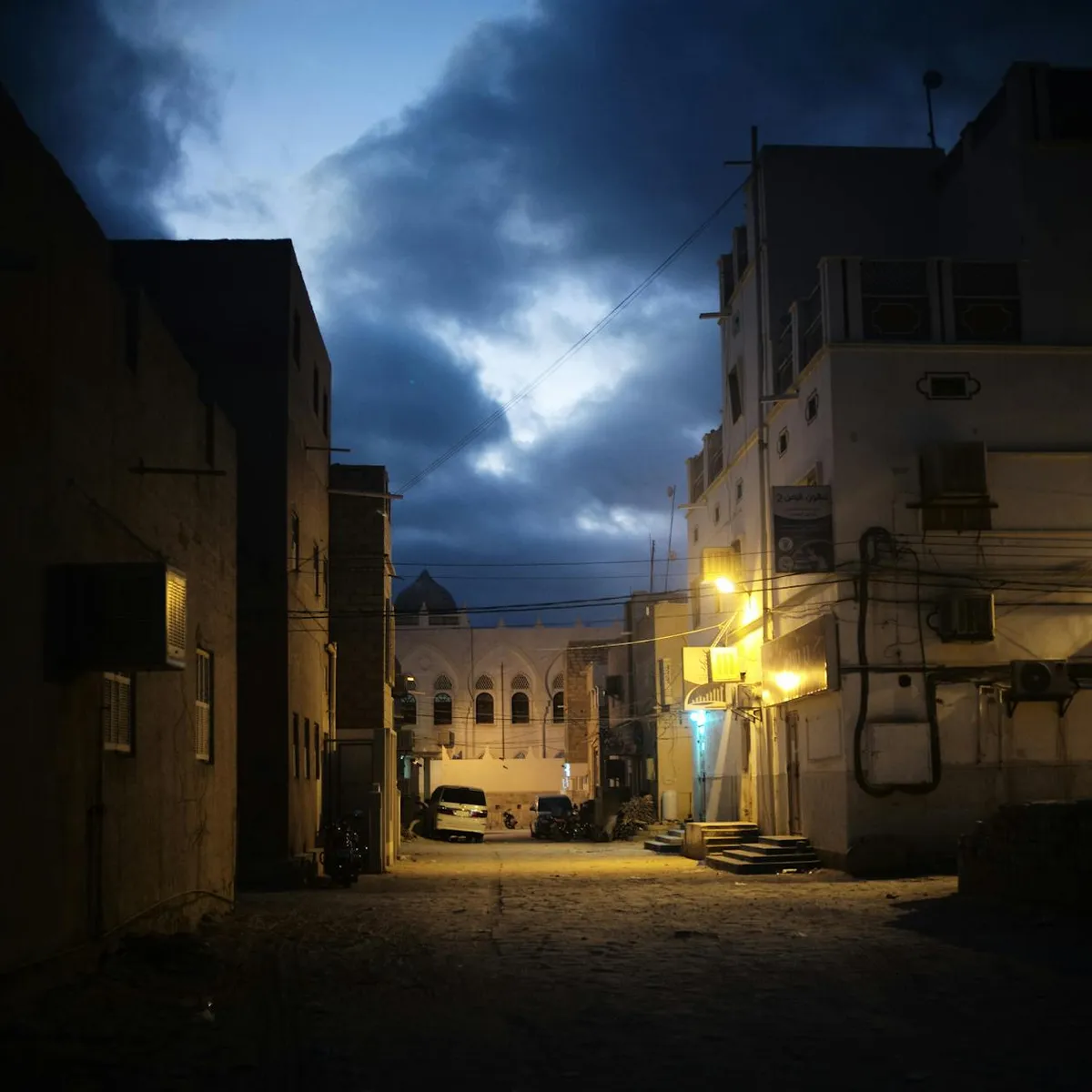
 Photo: irwan zahuri / Pexels
Dhamār
Dhamār accessibility for wheelchair users
Compare Dhamār by accessibility, transport, terrain, healthcare, cost, weather, laws, reviews, and community notes.
Dhamār accessibility scores
Compare Dhamār by accessibility, transport, terrain, healthcare, cost, weather, and laws. General stats use public data and models. Community rows reflect member reviews and votes.
General stats
National benchmarks and estimates — your experience in this city may differ.
Community
Starts from our estimate — thumbs up nudge toward Excellent, down toward Poor. Reviews use 1–5 stars.
These figures combine public statistics, models, and live weather where available. Every city is different — treat this as a guide, and share what you know in the Reviews & Corrections tab.
Profile last updated 6/30/2026.
Dhamār wheelchair accessibility guide
Research Dhamār for wheelchair users and caregivers: getting around, terrain, healthcare, costs, climate, accessible things to do, and practical caveats before booking.
Last updated 6/30/2026At a glance
Dhamār is a high-elevation city in Yemen’s central highlands, with RollVenture’s live row showing about 160,000 residents, an estimated monthly living cost from ~$3,282/mo, very limited internet, and an accessibility profile that should be treated as uncertain. The city sits around 2,400 m above sea level in public references and the local terrain profile is marked hilly, even though sampled grades near the center are not extreme. For a wheelchair user, the main issue is not just slope; it is the combination of conflict risk, weak maintenance, scarce verified curb cuts, and limited reliable medical evacuation.
Getting around
Do not plan Dhamār as an independent wheelchair trip. There is no verified step-free public transport network, and the database transport/accessibility numbers are country/model estimates rather than on-the-ground guarantees. If travel is unavoidable for family, aid, or work reasons, arrange a private vehicle, a local fixer, backup fuel, and door-to-door transfers before arrival. Avoid assuming taxis can carry a rigid chair or that drivers understand transfer needs.
Terrain & mobility
The city is in the highlands and the RollVenture terrain profile labels it hilly, with low-confidence pavement data showing mostly untagged, paving-stone, unpaved, and asphalt surfaces. Expect broken sidewalks, missing curb ramps, market congestion, and routes that become difficult after rain. Manual-chair users should plan for a helper on most outings; power-chair users should verify charging and storage before committing.
Healthcare & care
Nearby healthcare entries in the live row come from OpenStreetMap and should be used only as leads: Al-Basel clinic, East Dhamar health center, Dar Al-Shifa Hospital, West Dhamar health center, and Lebanon Hospital are listed close to the center. Accessibility, supplies, emergency capability, and wartime operating status must be verified directly. Bring essential medicines, repair parts, and a written evacuation plan.
Costs & housing
The database cost model gives living costs from ~$3,282/mo and housing from ~$1,673/mo, but these are estimates and may not reflect conflict-driven shortages. Accessible housing should be inspected in person or by video: check entry steps, bathroom width, water reliability, generator backup, and whether a caregiver can stay nearby.
Climate & comfort
Altitude moderates heat compared with Yemen’s lowlands, but nights can be cool and services may be unreliable. Dust, winter chill, and intermittent electricity can make pressure care, respiratory equipment, and charging routines harder.
Accessible things to do
Thamar University area— Public references identify the university as a recognizable city landmark; treat it as a navigation anchor rather than a guaranteed accessible attraction, and verify gates, surfaces, and permissions locally.
Central Dhamār markets— Markets may be the most practical way to understand the city, but they are also likely to be crowded, uneven, and stressful for wheelchair users. Visit only with local support and a short, reversible route.
Community & language
Arabic is essential. Disability-law protections exist mainly at country level and enforcement is inconsistent, so practical help will come from family, hosts, NGOs, or trusted local contacts rather than formal accessibility systems.
Would we recommend it?
No for leisure or relocation. Dhamār may be relevant for unavoidable personal, aid, or work reasons, but wheelchair users should treat it as high-risk, low-verification, and dependent on trusted local support.
These figures combine public statistics, models, and live weather where available. Every city is different — treat this as a guide, and share what you know in the Reviews & Corrections tab.
Profile last updated 6/30/2026.