 Photo: Erik Karits / Pexels
Funchal
Funchal accessibility for wheelchair users
Compare Funchal by accessibility, transport, terrain, healthcare, cost, weather, laws, reviews, and community notes.
Funchal accessibility scores
Compare Funchal by accessibility, transport, terrain, healthcare, cost, weather, and laws. General stats use public data and models. Community rows reflect member reviews and votes.
General stats
National benchmarks and estimates — your experience in this city may differ.
Community
Starts from our estimate — thumbs up nudge toward Excellent, down toward Poor. Reviews use 1–5 stars.
These figures combine public statistics, models, and live weather where available. Every city is different — treat this as a guide, and share what you know in the Reviews & Corrections tab.
Profile last updated 6/30/2026.
Funchal wheelchair accessibility guide
Research Funchal for wheelchair users and caregivers: getting around, terrain, healthcare, costs, climate, accessible things to do, and practical caveats before booking.
Last updated 6/30/2026At a glance
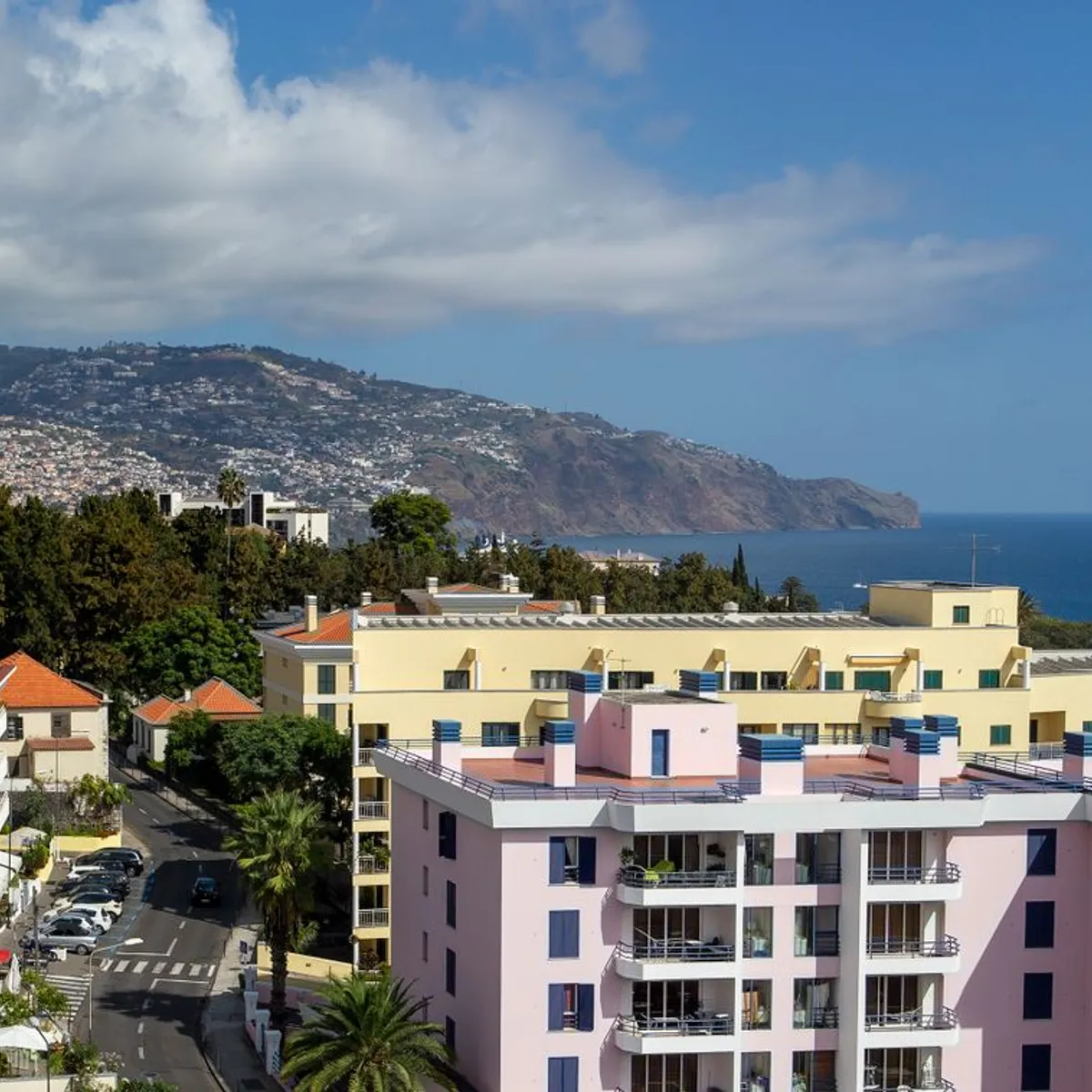
Funchal is beautiful, service-rich for Madeira, and potentially appealing for climate, but it is one of the most terrain-sensitive cities in this batch. The live RollVenture row scores it 70 overall and 62 for accessibility, with estimated costs from ~$2,881/mo and housing from ~$1,402/mo. The terrain profile is severe: very hilly, maximum sampled grade about 23.2%, and only 24% flat samples. Pavement sampling is high confidence and often good, but steepness can overpower surface quality.
For wheelchair users, Funchal can work only with carefully chosen low-elevation housing, planned transfers, and realistic expectations. It is much better for a powered chair, scooter, or traveller with adapted transport support than for a manual-chair user relying on spontaneous street rolling.
Getting around
Do not judge Funchal by map distance. Short routes can involve steep climbs, narrow pavements, or missing curb cuts. Public buses and taxis may be useful, but confirm wheelchair access and booking options directly. For airport transfers, medical appointments, and hillside attractions, arrange accessible or at least transfer-friendly transport before arrival. A waterfront or lower-centre base is usually safer than a cheaper uphill apartment.
Terrain & mobility
This is the core issue. The city rises sharply from the harbour, and many streets have gradients that are unrealistic for manual chairs. Even powered mobility needs battery margin, braking confidence, and route scouting. The flatter seafront, marina, and selected central streets are the priority zones. After rain, stone and sett surfaces can be slippery.
Healthcare & care
The OSM healthcare profile lists Centro de Saúde de São Roque, Centro de Saúde de Santo António, Hospital da Luz Funchal, Avasad, and Fysiotherapia as local leads. These are not access guarantees. Before a longer stay, confirm English or Portuguese communication, accessible exam rooms, lift access, emergency pathways, and whether home-care providers can reliably reach your building.
Costs & housing
Use from ~$2,881/mo as a baseline, but accessible housing is the make-or-break factor. Ask for a video route from street to apartment, gradient at the entrance, lift dimensions, bathroom layout, and whether taxis can stop safely outside. An apartment with a view may be unusable if the approach is too steep.
Climate & comfort
Funchal’s mild climate is a major advantage: warm winters, sea air, and less extreme cold than mainland Europe. Heat, humidity, sun exposure, and sudden rain still matter. Shade and step-free indoor fallback spaces are useful on long days.
Accessible things to do
Funchal seafront and marina— the safest first outing zone because it offers the best chance of flatter rolling, services, and short return options.
Madeira Cable Car lower station / waterfront area— a recognizable anchor, but confirm current wheelchair boarding, cabin access, and arrival-side terrain before planning the full trip.
CR7 Museum / waterfront museums— central indoor attractions can be more manageable than hillside gardens; verify step-free entry and accessible toilets directly.
Mercado dos Lavradores area— a classic central stop, but expect crowds, thresholds, and uneven surfaces; visit at quieter times and check entrances.
Community & language
Portuguese is the working language; English is common in tourism but less guaranteed in care logistics. Madeira has an active tourism economy, so pre-arranged help is possible, but disability-specific services should be verified rather than assumed.
Would we recommend it?
Only with strong caveats. Funchal’s climate and services are attractive, but the hills are a serious barrier. It is a yes for users with powered mobility, planned transport, and low-elevation housing; a no for anyone needing easy independent manual-chair movement across town.
These figures combine public statistics, models, and live weather where available. Every city is different — treat this as a guide, and share what you know in the Reviews & Corrections tab.
Profile last updated 6/30/2026.
Reviews & corrections
Share your experience or suggest a data correction. Both appear publicly; admin updates official city scores and costs separately.
Log in to write a review or suggest a correction.
No reviews or corrections yet.