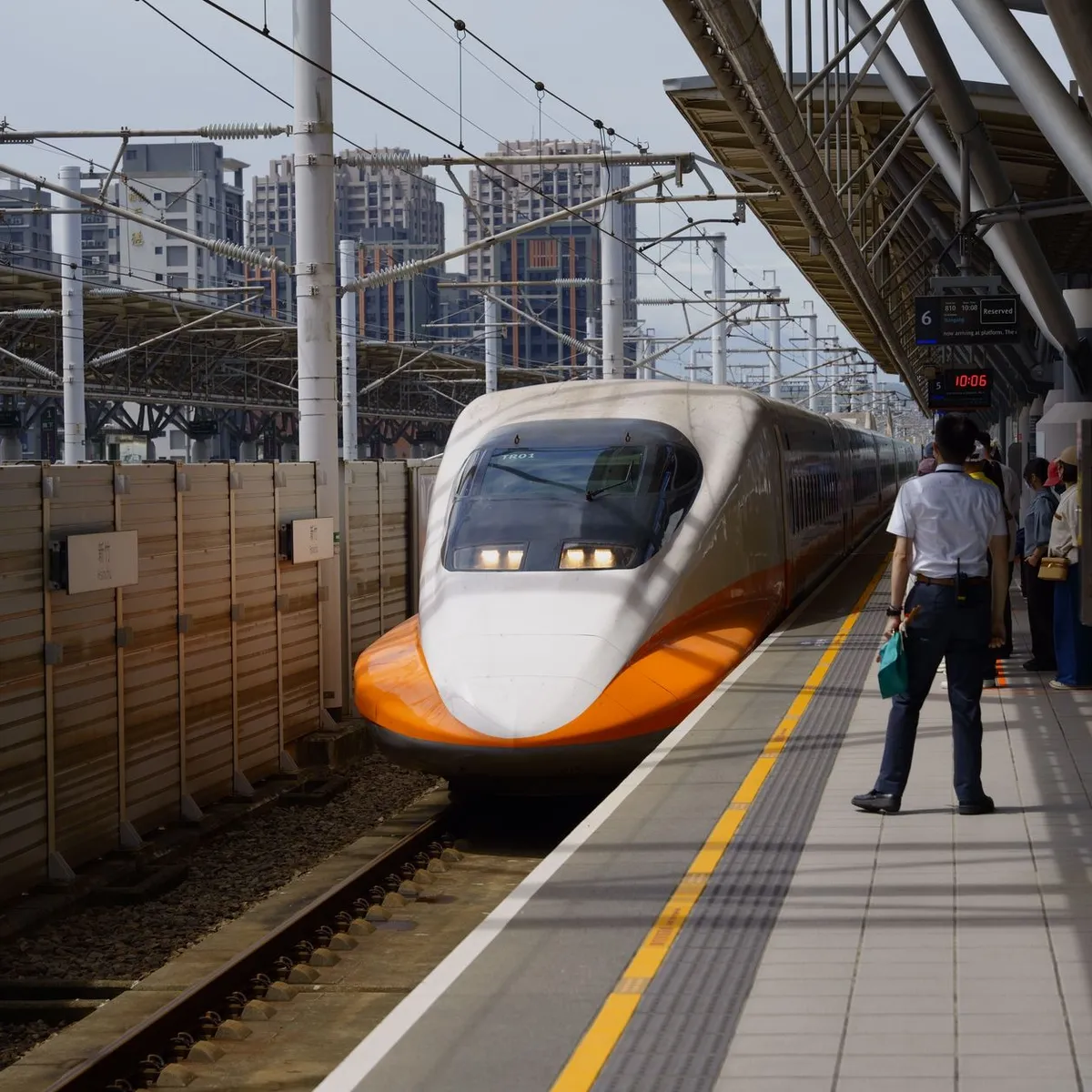
 Photo: Jacky. T. R. Chou / Pexels
Hsinchu
Hsinchu accessibility for wheelchair users
Compare Hsinchu by accessibility, transport, terrain, healthcare, cost, weather, laws, reviews, and community notes.
Hsinchu accessibility scores
Compare Hsinchu by accessibility, transport, terrain, healthcare, cost, weather, and laws. General stats use public data and models. Community rows reflect member reviews and votes.
General stats
National benchmarks and estimates — your experience in this city may differ.
Community
Starts from our estimate — thumbs up nudge toward Excellent, down toward Poor. Reviews use 1–5 stars.
These figures combine public statistics, models, and live weather where available. Every city is different — treat this as a guide, and share what you know in the Reviews & Corrections tab.
Profile last updated 6/30/2026.
Hsinchu wheelchair accessibility guide
Research Hsinchu for wheelchair users and caregivers: getting around, terrain, healthcare, costs, climate, accessible things to do, and practical caveats before booking.
Last updated 6/30/2026At a glance
Hsinchu is a compact, high-tech Taiwanese city with strong rail links, lower estimated costs than Taipei, and enough central services to be practical for a careful wheelchair user. The live row estimates living from ~$2,334/mo, with moderate accessibility scores, hilly-but-manageable sampled terrain, and medium-confidence OSM pavement data. It is not as polished for visitors as Taipei, but it can work well if you stay near the rail station, a hospital/clinic cluster, or the science-park side you actually need.
Getting around
Hsinchu’s main transport anchors are conventional rail, buses, taxis, and connections to Taiwan High Speed Rail at Hsinchu station outside the old center. Taiwan’s major rail systems provide accessible services at many stations, but assistance, platform gaps, elevators, and station choice should be confirmed before travel. Within the city, taxis are often the practical fallback. Sidewalk continuity varies, so map short routes rather than assuming a straight-line distance is easy.
Terrain & mobility
The terrain sample labels Hsinchu hilly, with a moderate elevation range, but many useful central routes are manageable if planned. OSM pavement data has medium confidence, with asphalt, paved, unpaved, and untagged surfaces. Expect a mix: smoother roads near large civic, university, and commercial areas; broken sidewalks, scooter parking, and curb obstacles on smaller streets. Wind is also part of Hsinchu’s comfort profile and can be tiring on exposed routes.
Healthcare & care
The DB healthcare profile lists several nearby clinics within about 1 km of the center, including Hsinchu City East District Health Center as an OSM lead. For serious care, verify the nearest full-service hospital and rehabilitation provider separately. Taiwan’s health system is strong, but short-term visitors should confirm language support, appointment process, wheelchair entry, and whether a companion can assist.
Costs & housing
The database estimate is from ~$2,334/mo, with housing around ~$852/mo, transport around ~$231/mo, medical around ~$129/mo, PT around ~$90/mo, and home aid around ~$590/mo. Newer elevator buildings near transit or the science-park corridor are the best housing candidates. Older walk-ups and compact bathrooms are common traps. Ask for entrance, lift, bathroom, and street-to-door videos before paying deposits.
Climate & comfort
Hsinchu is humid, rainy at times, and famously windy. Summer heat and typhoon-season rain can make outdoor transfers uncomfortable, while winter is milder than northern continental cities. Covered routes, malls, and station-adjacent housing can make daily life much easier.
Accessible things to do
Hsinchu Zoo / Hsinchu Park area— A central outdoor lead with family-friendly paths; confirm current entrance, restroom, and slope details before visiting.
Hsinchu City God Temple area— Culturally important and lively, but the surrounding market streets can be crowded and uneven; best with a companion and off-peak timing.
Hsinchu City Glass Museum / park museums— A compact cultural lead near parkland; verify elevators, thresholds, and accessible toilets before setting out.
17 Kilometers of Splendid Coastline route— A scenic coastal lead where individual segments may be easier than the whole route; check path surface, wind, and toilet access.
Community & language
Mandarin is the working language; English is better around universities, tech employers, and some hotels than in neighborhood services. Disabled-travel planning is easier if you can message venues in Chinese or ask hotel staff to call ahead.
Would we recommend it?
Yes, cautiously, for longer stays tied to work, study, or family, and for travelers comfortable verifying routes in Chinese. Taipei is easier for first-time accessible tourism, but Hsinchu can be workable and more affordable.
These figures combine public statistics, models, and live weather where available. Every city is different — treat this as a guide, and share what you know in the Reviews & Corrections tab.
Profile last updated 6/30/2026.