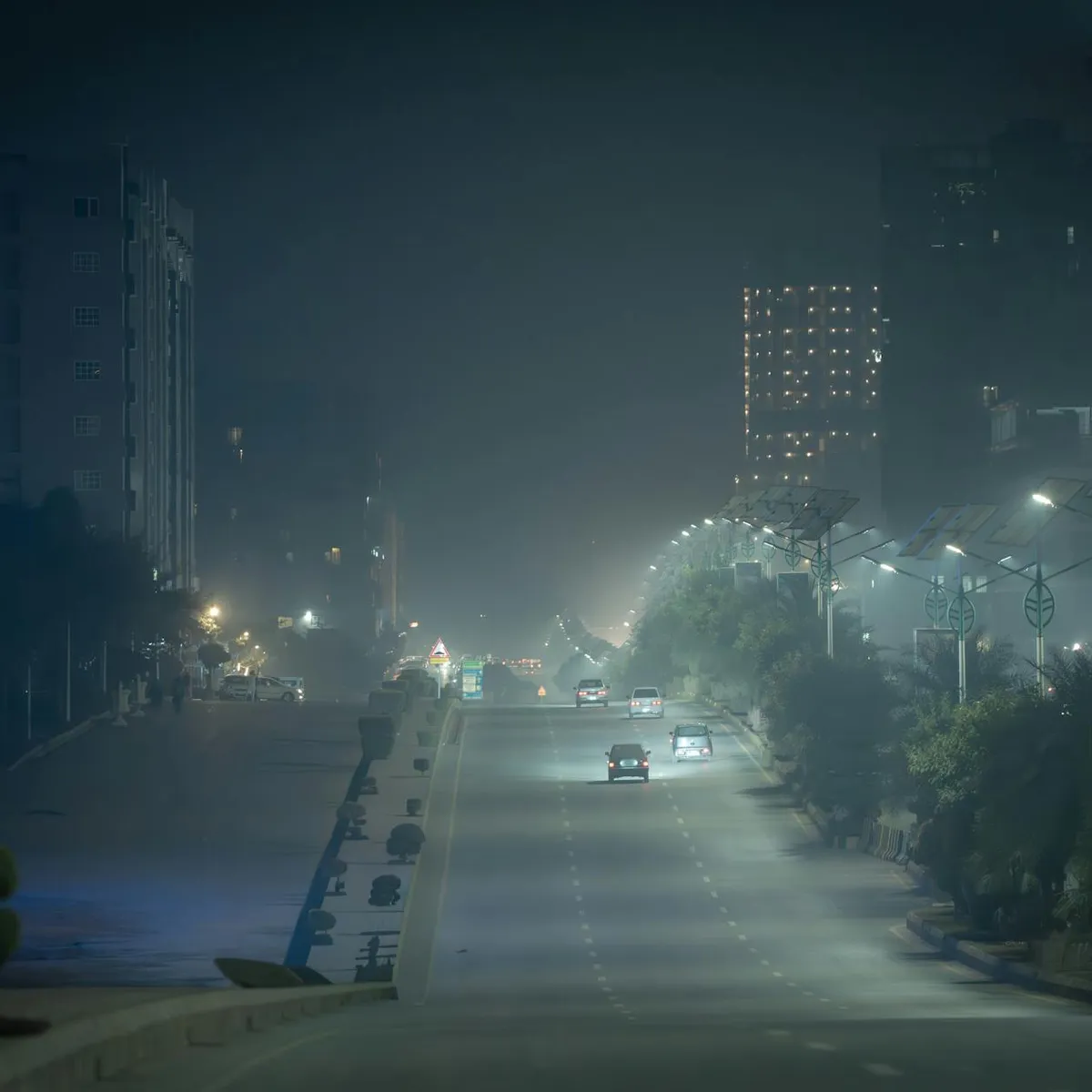
 Photo: Tahamie Farooqui / Pexels
Karachi
Karachi accessibility for wheelchair users
Compare Karachi by accessibility, transport, terrain, healthcare, cost, weather, laws, reviews, and community notes.
Karachi accessibility scores
Compare Karachi by accessibility, transport, terrain, healthcare, cost, weather, and laws. General stats use public data and models. Community rows reflect member reviews and votes.
General stats
National benchmarks and estimates — your experience in this city may differ.
Community
Starts from our estimate — thumbs up nudge toward Excellent, down toward Poor. Reviews use 1–5 stars.
These figures combine public statistics, models, and live weather where available. Every city is different — treat this as a guide, and share what you know in the Reviews & Corrections tab.
Profile last updated 6/30/2026.
Karachi wheelchair accessibility guide
Research Karachi for wheelchair users and caregivers: getting around, terrain, healthcare, costs, climate, accessible things to do, and practical caveats before booking.
Last updated 6/30/2026At a glance
Karachi is Pakistan’s largest city and a major medical, commercial, and cultural hub. RollVenture’s live row scores it 49 overall and 26 for accessibility, with estimated costs from ~$1,871/mo. The city has a mostly flat terrain profile and good sampled road-surface data, but density, traffic, inconsistent sidewalks, heat, drainage, and limited accessible public transport make daily movement demanding. It can work for wheelchair users who have private transport, local support, and carefully verified housing; it is not an easy independent-access city.
Getting around
Private car and driver arrangements are the practical baseline. Do not rely on step-free public transport for core access. Traffic is intense, road crossings can be difficult, and sidewalks may be blocked, broken, or absent even where the roadway itself is paved. Choose lodging near the hospitals, family, work, or activities you need most, because cross-city trips can become exhausting. For airport transfers, confirm vehicle space for your chair and luggage before arrival.
Terrain & mobility
Karachi’s terrain is a plus: the database sample is mostly flat, with low average elevation and a small maximum grade. Pavement sampling is high-confidence and heavily asphalt/paved, which is better than many cities in the queue. The challenge is not hills; it is the urban interface: curb cuts, drainage channels, parked vehicles, security barriers, crowds, and building thresholds. Power-chair users should plan battery margins for long detours and heat.
Healthcare & care
Karachi has far deeper healthcare options than most cities in this batch, though the stored row’s nearby OSM leads are only partial. For serious planning, identify hospitals and specialists close to your stay, confirm wheelchair entrance and lift access, and keep emergency transport numbers available. Medicines and private care can be easier to source than on small islands, but quality and access vary by provider.
Costs & housing
The current cost estimate is from ~$1,871/mo, with housing around ~$986/mo. Value can be good, but accessible housing must be inspected closely. Ask for lift size, backup power, ramp gradient, bathroom photos, shower setup, water reliability, and whether the building entrance has security steps or lips. In dense neighborhoods, a technically accessible apartment can still be hard to reach from the street.
Climate & comfort
Karachi is hot, humid near the coast, dusty at times, and affected by monsoon rain. Heat management is central: air conditioning, shaded transfers, hydration, and rest days matter. Rain can flood streets and make curb gaps or broken pavements more dangerous.
Accessible things to do
Mazar-e-Quaid— A major national monument with broad grounds; verify current ramp, security-screening, and restroom arrangements before visiting.
Mohatta Palace Museum— A key cultural site; historic-building access can be uneven, so confirm entrance and gallery circulation directly.
Frere Hall and gardens— A central heritage stop where outdoor viewing may be easier than full interior access; check paths and event-day crowds.
Clifton / Sea View waterfront— Best approached as a vehicle-supported coastal outing because sand and crowds limit wheelchair access.
Port Grand— A controlled dining-and-waterfront environment that may be more manageable than street wandering, but current step-free routes should be confirmed.
Community & language
Urdu and Sindhi are common, and English is useful in private healthcare, hotels, and professional settings. Local support is a major advantage: a driver or host who understands wheelchair logistics can change the whole experience.
Would we recommend it?
Yes, cautiously, for users with private transport and local help. Karachi offers services, healthcare depth, and affordability, but the accessibility burden is high. It is better for purposeful stays than casual independent tourism.
These figures combine public statistics, models, and live weather where available. Every city is different — treat this as a guide, and share what you know in the Reviews & Corrections tab.
Profile last updated 6/30/2026.
Reviews & corrections
Share your experience or suggest a data correction. Both appear publicly; admin updates official city scores and costs separately.
Log in to write a review or suggest a correction.
No reviews or corrections yet.