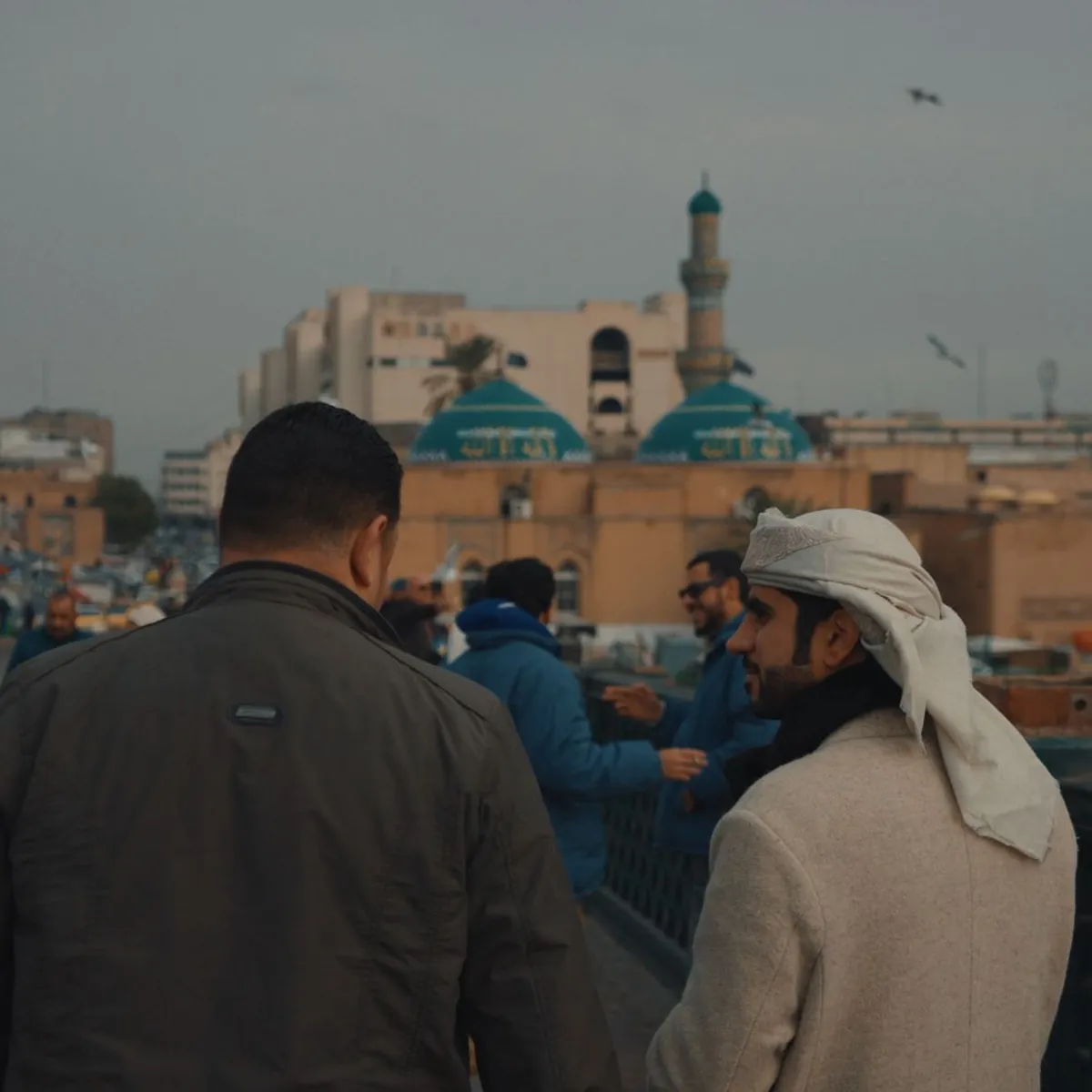
 Photo: khbab alturky / Pexels
Kufa
Kufa accessibility for wheelchair users
Compare Kufa by accessibility, transport, terrain, healthcare, cost, weather, laws, reviews, and community notes.
Kufa accessibility scores
Compare Kufa by accessibility, transport, terrain, healthcare, cost, weather, and laws. General stats use public data and models. Community rows reflect member reviews and votes.
General stats
National benchmarks and estimates — your experience in this city may differ.
Community
Starts from our estimate — thumbs up nudge toward Excellent, down toward Poor. Reviews use 1–5 stars.
These figures combine public statistics, models, and live weather where available. Every city is different — treat this as a guide, and share what you know in the Reviews & Corrections tab.
Profile last updated 7/1/2026.
Kufa wheelchair accessibility guide
Research Kufa for wheelchair users and caregivers: getting around, terrain, healthcare, costs, climate, accessible things to do, and practical caveats before booking.
Last updated 7/1/2026At a glance
Kufa is a historic city in Najaf Governorate, about 10 km northeast of Najaf and on the Euphrates. It is one of the holiest cities in Shia Islam and is closely tied to early Islamic history, Imam Ali, scholarship, and Kufic script. For wheelchair users, the city has a favorable flat-terrain profile but limited verified accessibility information. RollVenture’s DB sample marks the terrain mostly flat, with a low 0.7% maximum sampled grade; pavement data is low-confidence and largely untagged. Budget from ~$3,150/mo, with housing estimated from ~$1,611/mo.
Getting around
Kufa is best handled with a driver familiar with shrine-area traffic and drop-off rules. It is close enough to Najaf that many travelers may base there and visit Kufa by vehicle. Do not assume accessible public transport; instead, confirm vehicle type, ramp or transfer help, and how close cars can get to the mosque or other religious sites during busy periods.
Terrain & mobility
The physical terrain is promising: mostly flat, 100% flat samples, and only a 30 m sampled elevation range. The access risk is surface and crowd management. The pavement profile has low confidence and no good tagged-surface share, so ground truth is uncertain. Around shrines and old religious complexes, expect security checks, thresholds, carpets, polished stone, crowded courtyards, and changing entry routes.
Healthcare & care
DB/OSM healthcare leads list several hospitals in the Kufa-Najaf area, including مستشفى الفرات الاوسط and مستشفى الغدير الاهلي. Treat these as names to verify, not proof of accessible care. Confirm emergency departments, ramps, lift access, language support, and whether a companion can assist inside. For planned treatment, Najaf’s broader medical network may be more relevant than Kufa alone.
Costs & housing
The DB cost estimate is relatively high for this batch: from ~$3,150/mo overall and housing from ~$1,611/mo. Pilgrim-oriented lodging may vary widely in access. Ask for room-entry width, bathroom layout, lift status, backup power, distance from drop-off, and whether staff can help with luggage without carrying the wheelchair itself.
Climate & comfort
Kufa has hot summers and mild winters. Heat management is central: schedule shrine visits early or late, carry water, and avoid long waits in exposed queues. Dust and crowded religious seasons can add fatigue, so plan rest periods and know the nearest step-free indoor refuge.
Accessible things to do
Great Mosque of Kufa— Wikipedia identifies it as an active mosque and shrine in Kufa, with major religious significance. Verify wheelchair entry routes, prayer-area access, toilets, and crowd timing before visiting.
Palace remains at the Great Mosque complex— The Great Mosque article notes palace remains as part of the architectural discussion. These are likely of historical interest but may involve uneven archaeological surfaces.
Euphrates riverside orientation— Wikipedia places Kufa on the banks of the Euphrates. A vehicle-based look at the river corridor may be more realistic than assuming continuous accessible promenades.
Najaf-linked pilgrimage circuit— Kufa is only about 10 km from Najaf, so many visitors combine it with Najaf’s religious sites. Use a driver and verify each stop separately rather than treating the circuit as uniformly accessible.
Community & language
Arabic is essential; religious travel providers may have some English, Persian, or Urdu depending on pilgrims served. Written Arabic access requests and a local contact are valuable. Be precise about whether you need step-free access, a lift, a commode chair, or help transferring.
Would we recommend it?
Yes for religious or historical travelers with local support and a driver; not as a casual independent accessibility destination. The terrain is flat and the significance is high, but verified wheelchair infrastructure remains too uncertain for a strong general recommendation.
These figures combine public statistics, models, and live weather where available. Every city is different — treat this as a guide, and share what you know in the Reviews & Corrections tab.
Profile last updated 7/1/2026.
Reviews & corrections
Share your experience or suggest a data correction. Both appear publicly; admin updates official city scores and costs separately.
Log in to write a review or suggest a correction.
No reviews or corrections yet.