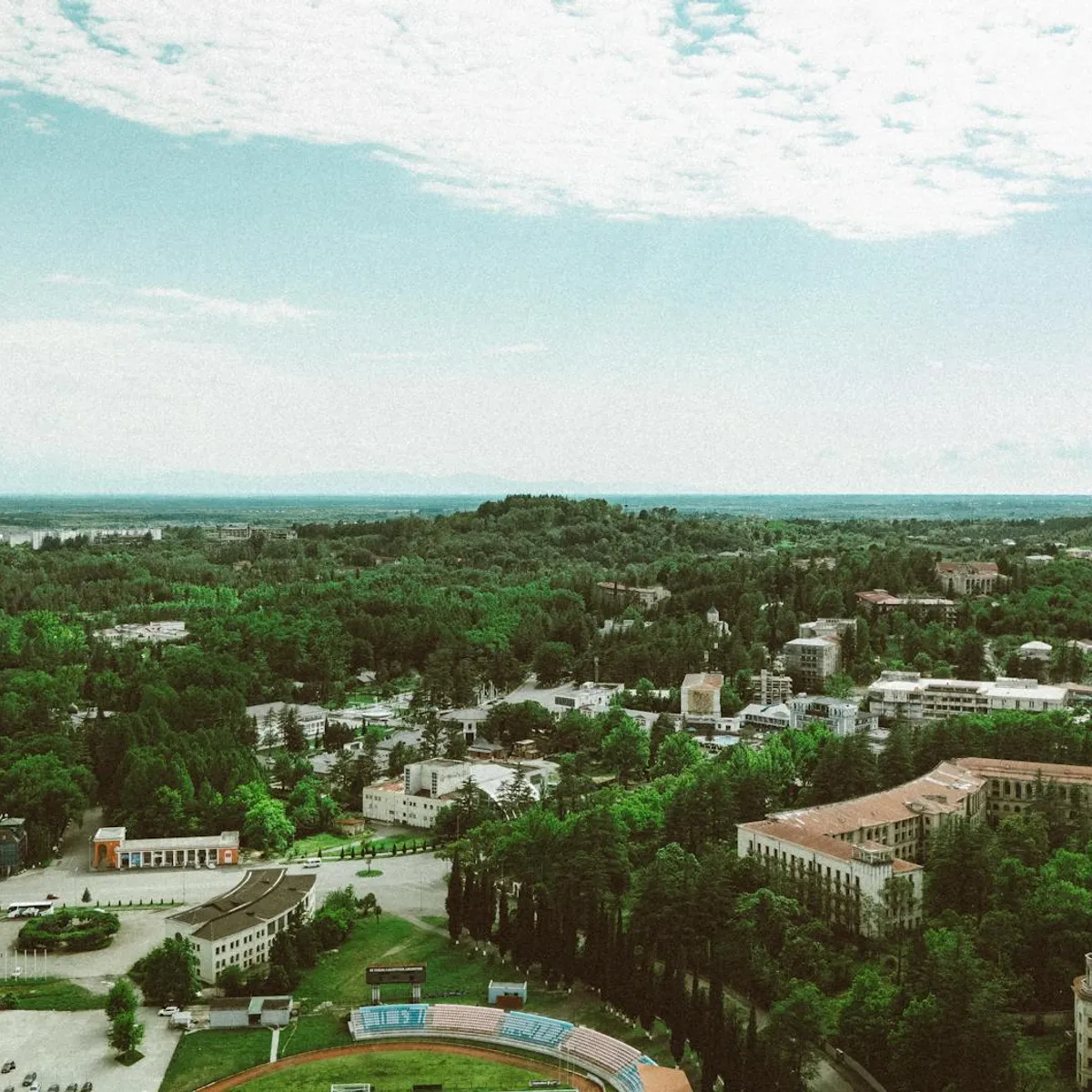
 Photo: Eslam Mohammed Abdelmaksoud / Pexels
Kutaisi
Kutaisi accessibility for wheelchair users
Compare Kutaisi by accessibility, transport, terrain, healthcare, cost, weather, laws, reviews, and community notes.
Kutaisi accessibility scores
Compare Kutaisi by accessibility, transport, terrain, healthcare, cost, weather, and laws. General stats use public data and models. Community rows reflect member reviews and votes.
General stats
National benchmarks and estimates — your experience in this city may differ.
Community
Starts from our estimate — thumbs up nudge toward Excellent, down toward Poor. Reviews use 1–5 stars.
These figures combine public statistics, models, and live weather where available. Every city is different — treat this as a guide, and share what you know in the Reviews & Corrections tab.
Profile last updated 6/30/2026.
Kutaisi wheelchair accessibility guide
Research Kutaisi for wheelchair users and caregivers: getting around, terrain, healthcare, costs, climate, accessible things to do, and practical caveats before booking.
Last updated 6/30/2026At a glance
Kutaisi is a historic Georgian city with a growing airport/tourism role, lower costs than Tbilisi, and access to caves, monasteries, museums, and the Imereti region. It is interesting for slow travel, but wheelchair users should approach it as a moderately difficult city. The RollVenture profile estimates living costs from ~$2,227/mo and housing around ~$689/mo. Pavement data is mixed, terrain is hilly, and many heritage sites were not designed with step-free access in mind. It is best for travelers who want culture and regional trips, can use a car, and are comfortable verifying every attraction and apartment in advance.
Getting around
A private car or known driver is the most realistic mobility plan. Kutaisi has compact central areas, but sidewalks, curbs, underpasses, and older streets can interrupt routes quickly. Airport or intercity transfers should be arranged ahead, especially if you need space for a rigid chair or help with luggage. Do not assume marshrutkas or casual taxis can handle a wheelchair comfortably. For regional sites, confirm parking distance, surface type, toilets, and whether a companion can assist on slopes.
Terrain & mobility
The city’s terrain is hilly rather than flat, with OpenTopoData showing a moderate elevation range and the database labeling the area hilly. OSM pavement data is high-confidence but mixed: paved and asphalt sections exist, alongside unpaved or poorer surfaces. Expect better rolling near selected central streets and more difficulty around old neighborhoods, river approaches, and heritage viewpoints. Rain or winter conditions can add slipperiness to stone, tile, and steep paths.
Healthcare & care
OpenStreetMap healthcare leads near the center include several clinics and hospitals, but the names and access details need local confirmation. Call before relying on any facility for step-free entrance, lift access, emergency intake, and English or Russian-speaking staff if needed. For complex care, Tbilisi may be the stronger fallback. Bring translated medication lists and check pharmacy availability early in the stay.
Costs & housing
The cost estimate is from ~$2,227/mo, with housing around ~$689/mo. Kutaisi can be cheaper than major Western European bases, but accessible housing may be scarce. Many guesthouses and older apartments have stairs, narrow bathrooms, or steep street approaches. Ask for video walkthroughs: building entrance, elevator if any, bathroom, shower lip, bed height, door widths, and the pavement outside the building. Heating and insulation matter outside summer.
Climate & comfort
Kutaisi has warm summers and damp, cooler seasons. Rain can make stone streets and slopes more tiring. If you use a power chair, confirm charging reliability and keep weather protection for electronics. In winter, prioritize heating and short routes to groceries or pharmacies; in summer, plan shade and rest breaks.
Accessible things to do
Kutaisi city center / Colchis Fountain area— A useful first orientation route with civic landmarks and nearby cafés. Check curb cuts and paving before planning a long roll.
Kutaisi State Historical Museum— A central cultural stop to investigate; contact ahead about entrance steps, internal lifts, and accessible toilets because web access details were limited in the quick check.
Bagrati Cathedral exterior area— A major landmark with views, but hill access and surfaces can be challenging. Treat it as a vehicle-supported stop and verify current access.
Prometheus Cave— Georgia’s protected areas page confirms the site identity. Caves can involve wet surfaces, gradients, and controlled routes, so contact the operator before visiting about wheelchair access and assistance.
Community & language
Georgian is the local language; Russian and some English may help in tourism contexts, but not everywhere. Accessibility information may be easier to obtain by phone or through hotel staff than through official web pages. A reliable driver and a responsive host are especially valuable here.
Would we recommend it?
Maybe. Kutaisi is culturally rich and potentially good value, but it is not an easy independent wheelchair base. It suits travelers who can use private transport, accept partial access at heritage sites, and verify housing very carefully before arrival.
These figures combine public statistics, models, and live weather where available. Every city is different — treat this as a guide, and share what you know in the Reviews & Corrections tab.
Profile last updated 6/30/2026.