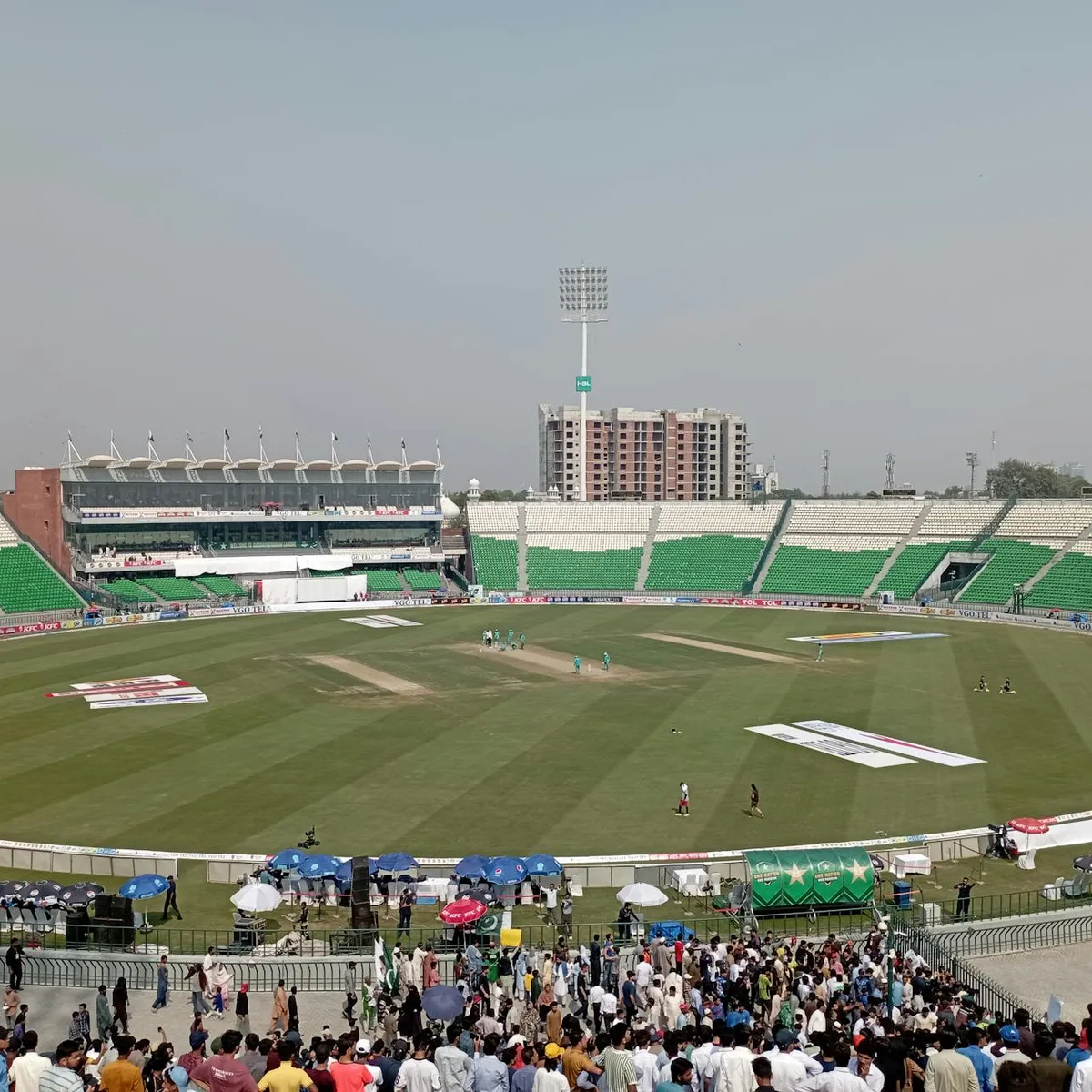
 Photo: Muhammad Ahsan / Pexels
Lahore
Lahore accessibility for wheelchair users
Compare Lahore by accessibility, transport, terrain, healthcare, cost, weather, laws, reviews, and community notes.
Lahore accessibility scores
Compare Lahore by accessibility, transport, terrain, healthcare, cost, weather, and laws. General stats use public data and models. Community rows reflect member reviews and votes.
General stats
National benchmarks and estimates — your experience in this city may differ.
Community
Starts from our estimate — thumbs up nudge toward Excellent, down toward Poor. Reviews use 1–5 stars.
These figures combine public statistics, models, and live weather where available. Every city is different — treat this as a guide, and share what you know in the Reviews & Corrections tab.
Profile last updated 6/30/2026.
Lahore wheelchair accessibility guide
Research Lahore for wheelchair users and caregivers: getting around, terrain, healthcare, costs, climate, accessible things to do, and practical caveats before booking.
Last updated 6/30/2026At a glance
Lahore is a high-reward but high-friction choice for wheelchair users: a huge, flat, culturally dense city where the best experiences are real but rarely plug-and-play. The live RollVenture row scores it strongly for terrain and cost, but low for ramps, wheelchair transport, and reliable infrastructure. Treat it as a city for travelers who can arrange a trusted driver, confirm hotel access in writing, and use a companion or local fixer around the Walled City.
Getting around
Do not plan on independent public transport. Lahore has metrobus and urban rail corridors, but step-free continuity, platform access, station approach routes, and staff assistance should be checked for the exact journey. For most wheelchair users, a private car or accessible van arranged through a hotel or medical provider is the realistic baseline. Traffic is heavy, kerbs can be abrupt, and short distances in the Walled City may take longer than the map suggests.
Terrain & mobility
The city itself is mostly flat, and the stored terrain sample shows very little grade change. The problem is not hills; it is surfaces, crossings, crowding, parking spillover, missing curb cuts, and historic entrances. Asphalt corridors in newer districts can be manageable with a car-to-door plan, while the old core around Lahore Fort, Badshahi Mosque, Delhi Gate, and Wazir Khan Mosque has uneven paving, crowds, security barriers, and steps.
Healthcare & care
The database has OpenStreetMap healthcare leads such as Combined Military Hospital, Naseer Hospital, and PU Health Center. Use these as leads only, not guarantees of wheelchair-ready intake. Lahore has major hospitals and private clinics, but visitors should pre-identify an English-speaking doctor, ask whether imaging/pharmacy/lab areas are step-free, and keep prescriptions and caregiver contacts available. Personal-care hiring should be arranged before arrival.
Costs & housing
RollVenture’s stored living-cost estimate is from ~$1,849/mo, with housing from ~$976/mo. That can be affordable by large-city standards, but wheelchair-friendly housing may cost more because elevator reliability, bathroom turning radius, generator backup, and no-step building entry matter more than rent. Ask for recent doorway, shower, lift, and entrance photos before paying.
Climate & comfort
Lahore has very hot late spring and summer weather, monsoon rain in mid-summer, and cooler winters. Heat, dust, and air quality can make long outdoor transfers tiring. Plan attractions early, build in air-conditioned breaks, and avoid assuming that shaded historic courtyards will have smooth routes.
Accessible things to do
Lahore Fort / Shahi Qila— Wikivoyage lists the fort as a core sight. Go with a guide and verify which gates and courtyards can be reached without stairs.
Badshahi Mosque and Minar-e-Pakistan area— Major landmarks close to the fort; the open spaces help, but security checks, paving, and thresholds need on-site confirmation.
Wazir Khan Mosque and Delhi Gate— Excellent for culture and tilework, but the old-city route is likely the hardest part; consider viewing with assisted short transfers.
Shalimar Gardens or Mall Road heritage buildings— Better candidates for a paced outing than dense bazaar lanes, though ramps and toilets still need checking.
Community & language
Urdu and Punjabi dominate; English is common in hotels, hospitals, universities, and professional settings. Hospitality is a plus, but do not rely on spontaneous accessibility problem-solving. Written confirmations, WhatsApp photos, and a local contact are more useful.
Would we recommend it?
Yes, for experienced wheelchair travelers with a driver, flexible pacing, and strong local support. Not recommended as a first independent South Asian accessibility test.
These figures combine public statistics, models, and live weather where available. Every city is different — treat this as a guide, and share what you know in the Reviews & Corrections tab.
Profile last updated 6/30/2026.
Reviews & corrections
Share your experience or suggest a data correction. Both appear publicly; admin updates official city scores and costs separately.
Log in to write a review or suggest a correction.
No reviews or corrections yet.