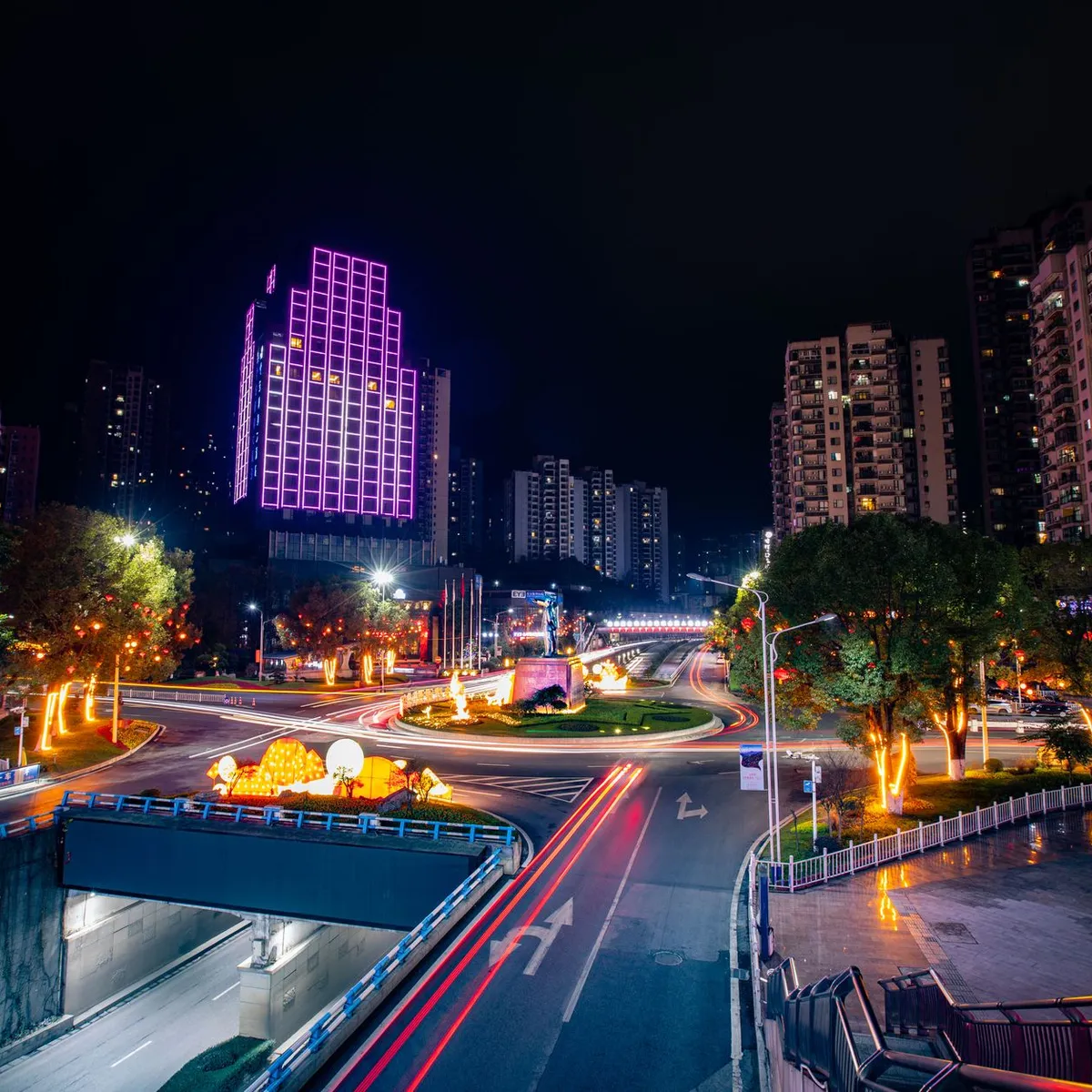
 Photo: 优品 江南 / Pexels
Nanning
Nanning accessibility for wheelchair users
Compare Nanning by accessibility, transport, terrain, healthcare, cost, weather, laws, reviews, and community notes.
Nanning accessibility scores
Compare Nanning by accessibility, transport, terrain, healthcare, cost, weather, and laws. General stats use public data and models. Community rows reflect member reviews and votes.
General stats
National benchmarks and estimates — your experience in this city may differ.
Community
Starts from our estimate — thumbs up nudge toward Excellent, down toward Poor. Reviews use 1–5 stars.
These figures combine public statistics, models, and live weather where available. Every city is different — treat this as a guide, and share what you know in the Reviews & Corrections tab.
Profile last updated 6/30/2026.
Nanning wheelchair accessibility guide
Research Nanning for wheelchair users and caregivers: getting around, terrain, healthcare, costs, climate, accessible things to do, and practical caveats before booking.
Last updated 6/30/2026At a glance
Nanning, capital of Guangxi, is a greener and more humid Chinese regional capital with metro coverage, parks, museums, and strong rail connections. For wheelchair users, the main advantage is urban scale: many useful sights cluster near metro corridors, newer civic districts, and large parks. The main drawback is source uncertainty: RollVenture's row gives an accessibility score of 46, ramp availability 46, and low-confidence pavement data, so assume mixed sidewalks unless a venue confirms otherwise. Monthly living cost is from ~$2,140/mo.
Getting around
Wikivoyage notes that Nanning Metro began operating in 2016 and now reaches many places of interest, with bilingual signs and security screening at stations. Lines 1, 2, and 3 are especially useful for rail stations, Chaoyang Square, Qingxiu, and museum districts. In practice, verify lifts at the exact station exits you plan to use. Airport access includes buses and a Wuxu Airport rail station with quick links into town. Taxis/ride-hailing remain best when rain, heat, or station exit uncertainty makes transfers tiring.
Terrain & mobility
Nanning sits in a hilly basin, but the DB terrain sample for the urban point is more forgiving than the label suggests: local sampled points were flat, with moderate infrastructure but weak ramp scores. The climate creates mobility issues as much as topography does. Wet tiles, puddled curb cuts, and crowded station security queues can slow wheelchair users. Choose hotels on wide boulevards near metro exits and keep trips short during peak rain.
Healthcare & care
OSM lists Nanning Chinese Medicine Hospital close to the center, Guangxi University of Chinese Medicine First Affiliated Hospital's Renai branch, and other clinic/hospital leads. Treat these as starting points only; confirm emergency access, departments, ramps, elevators, and payment requirements. If you use mobility equipment, bring spare tires/tubes, charger adapters, and Chinese-language instructions for repair help.
Costs & housing
The DB estimate is from ~$2,140/mo, with housing around $756/mo. Value can be good compared with coastal megacities, but accessible housing needs careful filtering. Prioritize newer towers in Qingxiu, Liangqing/Wuxiang, or near Line 1/3 stations; ask for step-free lobby photos, elevator dimensions, wet-room layout, and reliable air-conditioning. Older central flats may be cheap but often have thresholds and cramped bathrooms.
Climate & comfort
Nanning is warm, humid, and rainy. DB monthly data shows the wettest stretch from May through August, with June near 294 mm and many rainy days. Heat and humidity can make transfers exhausting. Plan morning outings, carry rain protection for joystick/controllers, and choose indoor museum/metro-linked days during storms.
Accessible things to do
Guangxi Museum— Wikivoyage lists the Museum of Guangxi Zhuang Autonomous Region by Minzu Square Metro, free entry, and major exhibits on pottery, bronze drums, and Guangxi cultures. It is a strong indoor candidate; verify elevator and restroom details.
Anthropology Museum of Guangxi— a large museum near Qingxiu Mountain with extensive collections on ethnic groups and bronze drums. Good for a controlled indoor visit if transport is arranged from the nearest metro/bus stop.
Qingxiu Mountain— a major AAAAA scenic area and the city's “Green Lung.” It has gates, tourist transport, and long distances; wheelchair users should confirm accessible vehicles and which gardens are step-free.
South Lake Park— an open-all-day urban lake park by Nanhu Station. It is likely one of the easier outdoor rolls, though path surfaces and curb transitions still need checking.
Yongzhou Ancient City / Three Streets and Two Alleys— a central heritage district near Chaoyang Square. Good for culture and food, but expect crowds, heritage paving, and stepped shopfronts.
Community & language
Mandarin is the practical language; Zhuang appears on public signs, and Cantonese-influenced local speech exists. Accessibility details are easier to confirm in written Chinese. Staff in major museums and hotels may be helpful but may not know wheelchair-specific terms unless shown photos.
Would we recommend it?
Yes, cautiously. Nanning has enough metro, museum, park, and hospital infrastructure to be useful, but the low ramp/pavement confidence means it suits travelers who can verify each venue, tolerate rain, and use taxis when station-to-door links are not accessible.
These figures combine public statistics, models, and live weather where available. Every city is different — treat this as a guide, and share what you know in the Reviews & Corrections tab.
Profile last updated 6/30/2026.