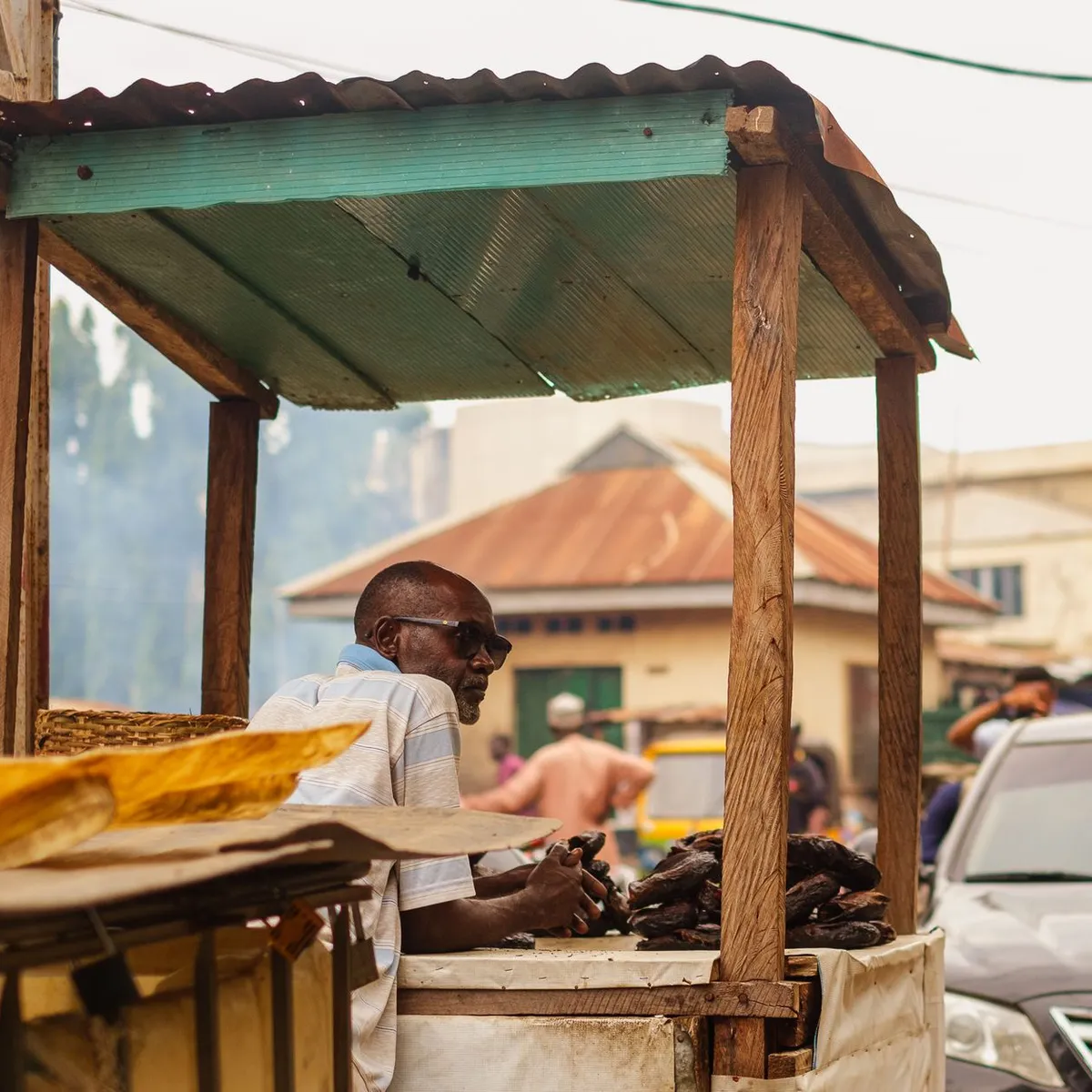
 Photo: Vurzie Kim / Pexels
Onitsha
Onitsha accessibility for wheelchair users
Compare Onitsha by accessibility, transport, terrain, healthcare, cost, weather, laws, reviews, and community notes.
Onitsha accessibility scores
Compare Onitsha by accessibility, transport, terrain, healthcare, cost, weather, and laws. General stats use public data and models. Community rows reflect member reviews and votes.
General stats
National benchmarks and estimates — your experience in this city may differ.
Community
Starts from our estimate — thumbs up nudge toward Excellent, down toward Poor. Reviews use 1–5 stars.
These figures combine public statistics, models, and live weather where available. Every city is different — treat this as a guide, and share what you know in the Reviews & Corrections tab.
Profile last updated 7/2/2026.
Onitsha wheelchair accessibility guide
Research Onitsha for wheelchair users and caregivers: getting around, terrain, healthcare, costs, climate, accessible things to do, and practical caveats before booking.
Last updated 7/2/2026At a glance
Onitsha is a large Anambra State trading city on the Niger, useful for travelers who need a lower-cost Nigerian base but realistic about accessibility. The database estimate is from ~$1,781/mo, with housing from ~$701/mo, and the strongest practical advantage is the city’s commercial depth: markets, churches, river crossings, and intercity road links. The accessibility score is low, so treat Onitsha as a supported-trip destination rather than an easy independent wheelchair city. It is best for people visiting family, doing trade, or building an escorted cultural route.
Getting around
Plan around private cars, hired drivers, or trusted local taxis. Onitsha’s role as a trading port and bridge city means traffic can be intense around the market, bridge approaches, and bus parks. Public transport is not a dependable wheelchair option; ask hotels or hosts to arrange door-to-door vehicles and confirm boot space for mobility equipment. Build in extra time for the Niger Bridge corridor, and avoid peak market hours if transfers are difficult.
Terrain & mobility
The terrain data flags hilly conditions, with sampled elevation changes up to about 154 m. Pavement data is better than many remaining empty RollVenture rows: OSM-derived sampling showed a high-confidence mix with many paved/asphalt ways, but also untagged and unpaved segments. That means central roads may be workable by car, while footpaths, market edges, drainage channels, and curb cuts still need on-the-ground checking. A manual chair user should not plan long independent rolls without a local scout.
Healthcare & care
The stored healthcare lead is Government Hospital Ibusa, about 19 km from the city centre, so do not rely on it as proof of nearby wheelchair-ready care. For a longer stay, verify a closer private clinic or hospital, ambulance access, pharmacy hours, and whether a provider can help with transfers. Personal assistance is strongly recommended, especially for bathing, rough surfaces, and crowded venues.
Costs & housing
Use the cost line as from ~$1,781/mo, including housing from ~$701/mo. Cheaper local housing may save money but often means steps, generators, narrow bathrooms, and inconsistent water. Prioritize serviced apartments or hotels that can send current entrance, bathroom, bed-height, and generator photos before payment. If staying near family, budget for vehicle hire and small access fixes.
Climate & comfort
Onitsha is hot and humid, with rainy-season drainage and traffic making mobility harder. Air conditioning, backup power, mosquito control, and short transfer distances matter. Wheelchair users should avoid planning tight outdoor routes during storms or peak heat. Keep water, shade, and a dry transfer plan in the car.
Accessible things to do
Cathedral Basilica of the Most Holy Trinity— a major Onitsha landmark; verify step-free entrance and seating before attending.
Obi's Palace— a cultural-history stop best arranged with a local contact and vehicle drop-off.
Zik Mausoleum— a civic heritage anchor; confirm opening, ramps, and restroom access in advance.
Onitsha Market— important but crowded; visit only with assistance, a driver nearby, and a short route plan.
Niger Bridge / river crossing viewpoint— better as a vehicle-based scenic route than a rollable promenade.
Community & language
Igbo is central locally, and English is widely useful for hotels, clinics, and formal arrangements. Markets and transport hubs are busy, direct, and sometimes overwhelming; a trusted local fixer can make the city far easier.
Would we recommend it?
Yes, but only for travelers with strong local support, a hired vehicle, and flexible expectations. Onitsha has real cultural and commercial value, yet wheelchair access is uneven and must be verified block by block.
These figures combine public statistics, models, and live weather where available. Every city is different — treat this as a guide, and share what you know in the Reviews & Corrections tab.
Profile last updated 7/2/2026.