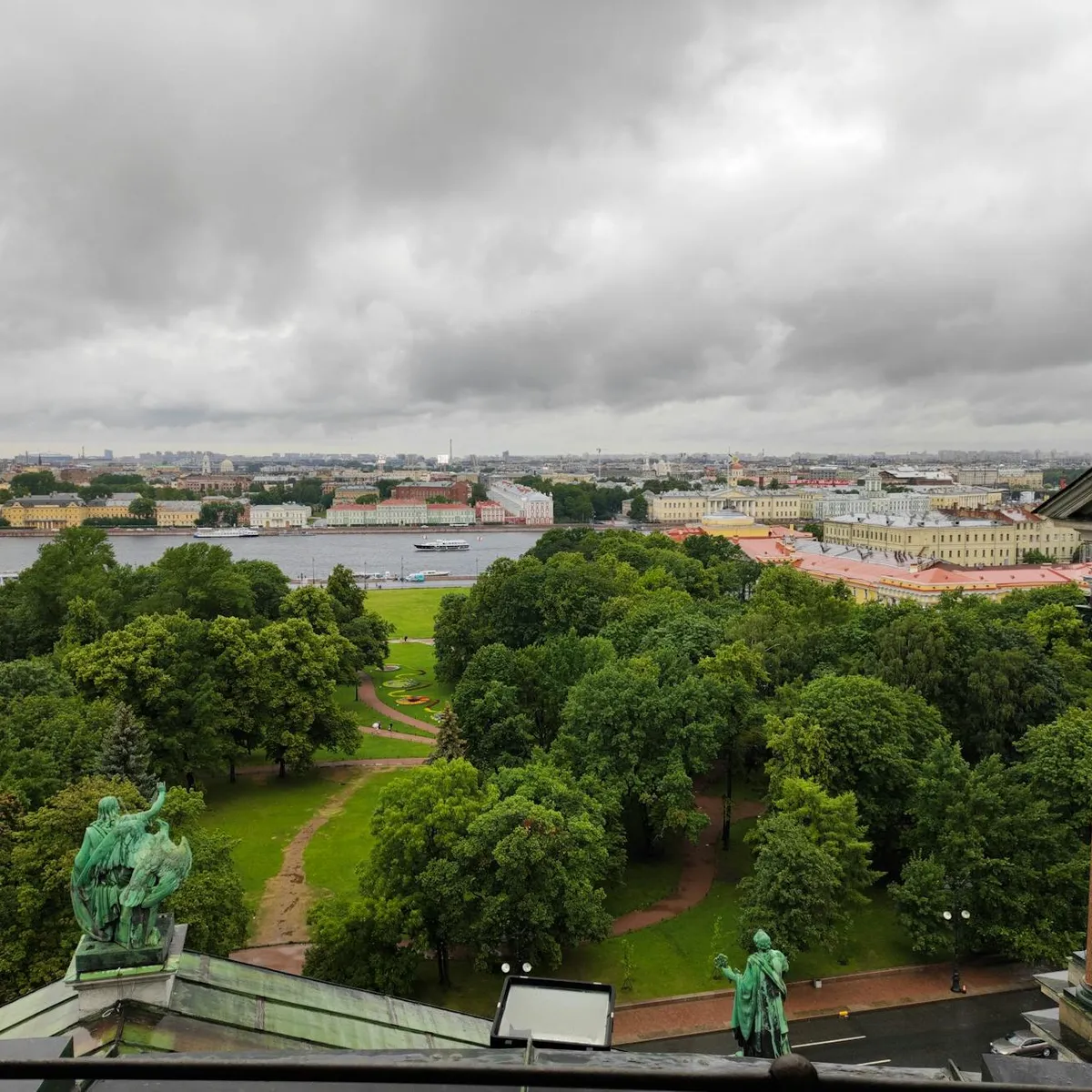
 Photo: Sun452 / Pexels
Saint Petersburg
Saint Petersburg accessibility for wheelchair users
Compare Saint Petersburg by accessibility, transport, terrain, healthcare, cost, weather, laws, reviews, and community notes.
Saint Petersburg accessibility scores
Compare Saint Petersburg by accessibility, transport, terrain, healthcare, cost, weather, and laws. General stats use public data and models. Community rows reflect member reviews and votes.
General stats
National benchmarks and estimates — your experience in this city may differ.
Community
Starts from our estimate — thumbs up nudge toward Excellent, down toward Poor. Reviews use 1–5 stars.
These figures combine public statistics, models, and live weather where available. Every city is different — treat this as a guide, and share what you know in the Reviews & Corrections tab.
Profile last updated 6/30/2026.
Saint Petersburg wheelchair accessibility guide
Research Saint Petersburg for wheelchair users and caregivers: getting around, terrain, healthcare, costs, climate, accessible things to do, and practical caveats before booking.
Last updated 6/30/2026At a glance
Saint Petersburg has a flatter physical profile than Moscow and rich culture, but its historic fabric and deep metro create accessibility friction. The RollVenture row shows from ~$2,771/mo living cost, mostly flat sampled terrain, high-confidence pavement data, and a middling wheelchair-transport score. The best stay is central but not too old: choose verified step-free housing, plan museum entries individually, and avoid assuming the metro is easy just because the city is flat.
Getting around
The Saint Petersburg Metro is extensive and famous for deep stations; Wikipedia and operator pages document a major rapid-transit network, but deep escalators, older stations, and limited lift routes can be difficult for wheelchair users. Surface transport and taxis may be more predictable for many trips. In winter, build extra time for snow clearance at entrances and curb ramps.
Terrain & mobility
The DB terrain profile is strong: mostly flat, 100% flat samples, and only a 0.5% maximum sampled grade. Pavement sampling is high-confidence with 82% good surfaces, mostly asphalt, compacted surfaces, and paving stones. The practical caveat is the historic center: bridges, granite embankments, courtyards, cobbles, and underpasses can create localized barriers despite flat terrain.
Healthcare & care
The stored healthcare profile is OSM-based and lists clinics such as Grand Vita, Open Mind, a nephrology center, and other specialty clinics within several kilometers. Use these as leads only and verify entrance access, appointment availability, language, and emergency-transfer procedures. Private clinic coordination is advisable for longer stays.
Costs & housing
Use the DB estimate as from ~$2,771/mo, with housing from ~$1,424/mo. Historic buildings may have beautiful locations but inaccessible entrances, small lifts, or no lift at all. Newer serviced apartments or hotels with confirmed lift dimensions and roll-in shower details are safer.
Climate & comfort
Winters are cold, dark, icy, and hard on curb ramps. Spring thaw and autumn rain can make paving stones slippery. Summer is the easiest mobility season, but tourist crowds around major museums and bridges can be intense. Wind off the Neva can make exposed embankment routes tiring, so keep a sheltered backup plan and do not rely on one long outdoor route for the whole day.
Accessible things to do
Hermitage Museum / Palace Square area— Essential cultural anchor; verify accessible entrance, lifts, and ticket process before choosing a visit time.
Nevsky Prospekt corridor— Central, service-rich, and relatively straightforward in segments, though crossings and crowds need patience.
Peter and Paul Fortress grounds— Broad outdoor spaces in parts, but cobbles and historic thresholds require route checking.
Neva embankments and bridges— Scenic flat routes are possible in good weather; choose sections with curb cuts and avoid icy conditions.
Community & language
Russian is the default for practical tasks. Tourist-facing venues may offer English, but building managers, pharmacies, and local clinics may not. Written Russian addresses and a local phone contact help.
Would we recommend it?
Yes, in summer or shoulder season for travelers comfortable with historic-city caveats. The flat terrain and good pavement profile are positives, but deep metro stations, winter, and old buildings keep it from being low-friction.
These figures combine public statistics, models, and live weather where available. Every city is different — treat this as a guide, and share what you know in the Reviews & Corrections tab.
Profile last updated 6/30/2026.