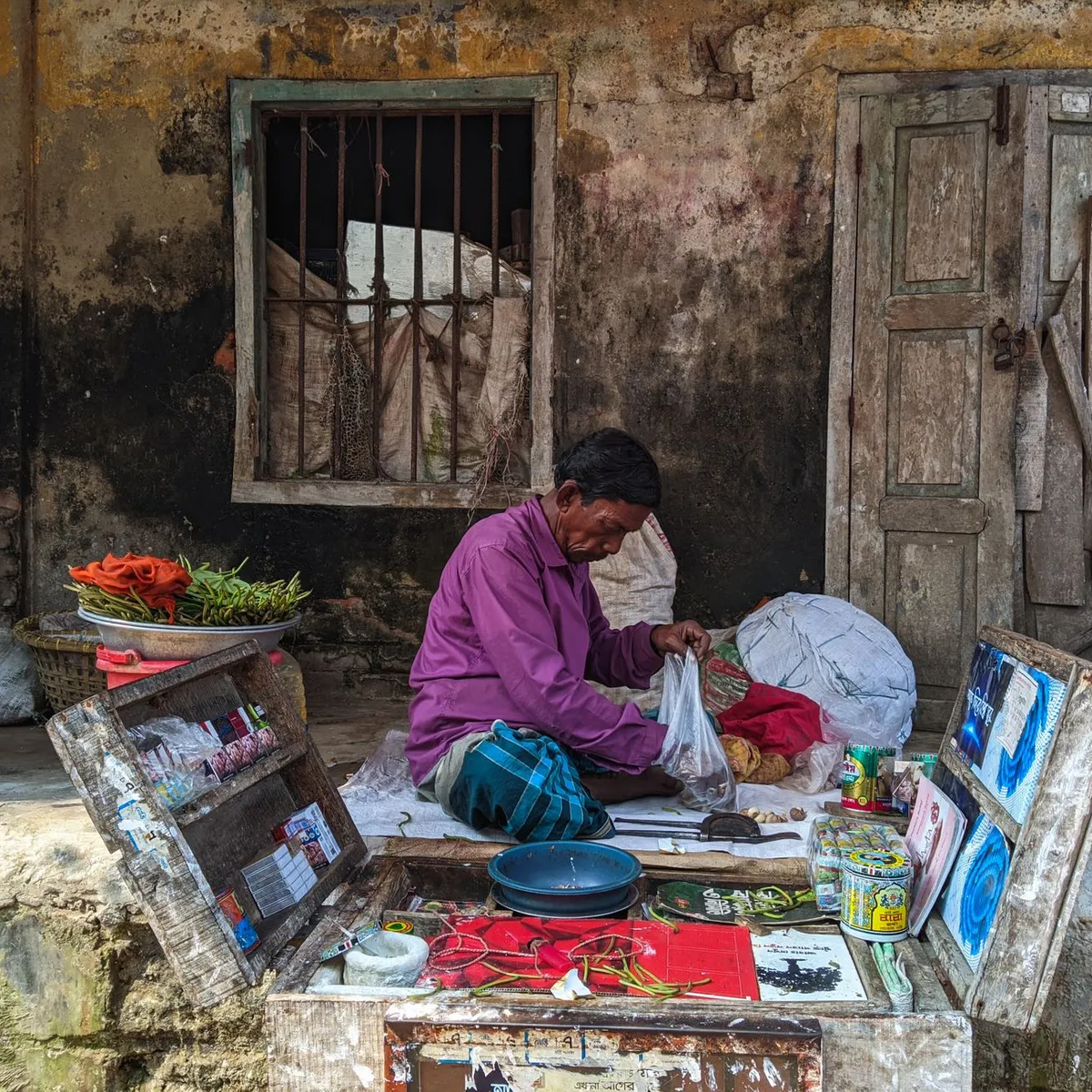
 Photo: Adil Ahnaf🇧🇩🇵🇸 / Pexels
Sonārgaon
Sonārgaon accessibility for wheelchair users
Compare Sonārgaon by accessibility, transport, terrain, healthcare, cost, weather, laws, reviews, and community notes.
Sonārgaon accessibility scores
Compare Sonārgaon by accessibility, transport, terrain, healthcare, cost, weather, and laws. General stats use public data and models. Community rows reflect member reviews and votes.
General stats
National benchmarks and estimates — your experience in this city may differ.
Community
Starts from our estimate — thumbs up nudge toward Excellent, down toward Poor. Reviews use 1–5 stars.
These figures combine public statistics, models, and live weather where available. Every city is different — treat this as a guide, and share what you know in the Reviews & Corrections tab.
Profile last updated 7/2/2026.
Sonārgaon wheelchair accessibility guide
Research Sonārgaon for wheelchair users and caregivers: getting around, terrain, healthcare, costs, climate, accessible things to do, and practical caveats before booking.
Last updated 7/2/2026At a glance
Sonārgaon is a historic destination near Dhaka/Narayanganj rather than a polished accessibility base. It has strong cultural interest — Panam Nagar, Goaldi Mosque, folk-art institutions, and old river-port history — but the DB accessibility profile is weak. The terrain is mostly flat, which helps, yet ramp availability, wheelchair transport, and pavement confidence are low. Costs are attractive at from about ~$1,359/mo, with housing around ~$451/mo, but wheelchair users should treat those numbers as baseline living costs before adding private transport and support.
Getting around
Do not plan around independent public transport. Arrange a car or van from Dhaka or Narayanganj, confirm chair storage, and avoid peak traffic where possible. Local roads can be narrow, busy, wet, or broken at the edge. For sightseeing, a driver who can wait nearby is more useful than one who drops you far from a site entrance. If you use a manual chair, bring a companion who can help over thresholds, ramps that are too steep, and uneven historic surfaces.
Terrain & mobility
OpenTopoData marks Sonārgaon as mostly flat, with very low sampled grades and only a small elevation range. That is the main accessibility advantage. The surface story is weaker: OSM pavement confidence is low, with many untagged ways and some unpaved or paving-stone surfaces. Historic sites may have steps, courtyards, brick, dirt, or damaged paths. Heat and monsoon rain can turn a technically flat route into a difficult one.
Healthcare & care
The DB healthcare profile lists hospital leads mostly outside the immediate centre, including Bandar Upazila Health Complex, Narayanganj General Hospital, Gazaria Upazila Health Complex, Mukti General Hospital, and Victoria General Hospital. These are OSM leads only. For any stay beyond a day trip, verify accessible entry, emergency transport, pharmacy access, and whether a Dhaka-based clinic is a better backup. Arrange personal care and equipment repair contacts before arrival.
Costs & housing
The low DB cost estimate is useful, but accessible housing can be the bottleneck. If staying locally, request ground-floor access, bathroom photos, doorway widths, bed height, air conditioning, mosquito control, and a vehicle approach that remains usable after rain. Many travelers may be better off sleeping in Dhaka or Narayanganj and visiting Sonārgaon by private vehicle.
Climate & comfort
Expect heat, humidity, and heavy monsoon rain. Plan early starts, shaded breaks, hydration, and a dry bag for electronics and medications. Flooding, mud, and slick paving can quickly reduce independence even where the land is flat.
Accessible things to do
Panam Nagar— the signature historic-street lead; expect uneven old surfaces and verify whether any sections are realistically rollable before committing.
Shilpacharya Zainul Folk and Craft Museum— a major cultural lead; call ahead for ramps, galleries, toilets, and parking/drop-off.
Goaldi Mosque— an important heritage stop; access may involve thresholds or uneven ground, so use a companion and check current site conditions.
Neel Kuthi area— another historic lead from the Sonārgaon heritage cluster; treat it as a photo/context stop unless access is confirmed.
Community & language
Bangla is the main language; English may work with hotels, guides, and some medical contacts, but not everywhere. A local guide or driver who can call ahead is the difference between a smooth day and a blocked entrance.
Would we recommend it?
For a supported cultural day trip, yes. For an independent wheelchair stay, only cautiously. The flat land helps, but historic surfaces, traffic, rain, and weak access data require hands-on planning.
These figures combine public statistics, models, and live weather where available. Every city is different — treat this as a guide, and share what you know in the Reviews & Corrections tab.
Profile last updated 7/2/2026.