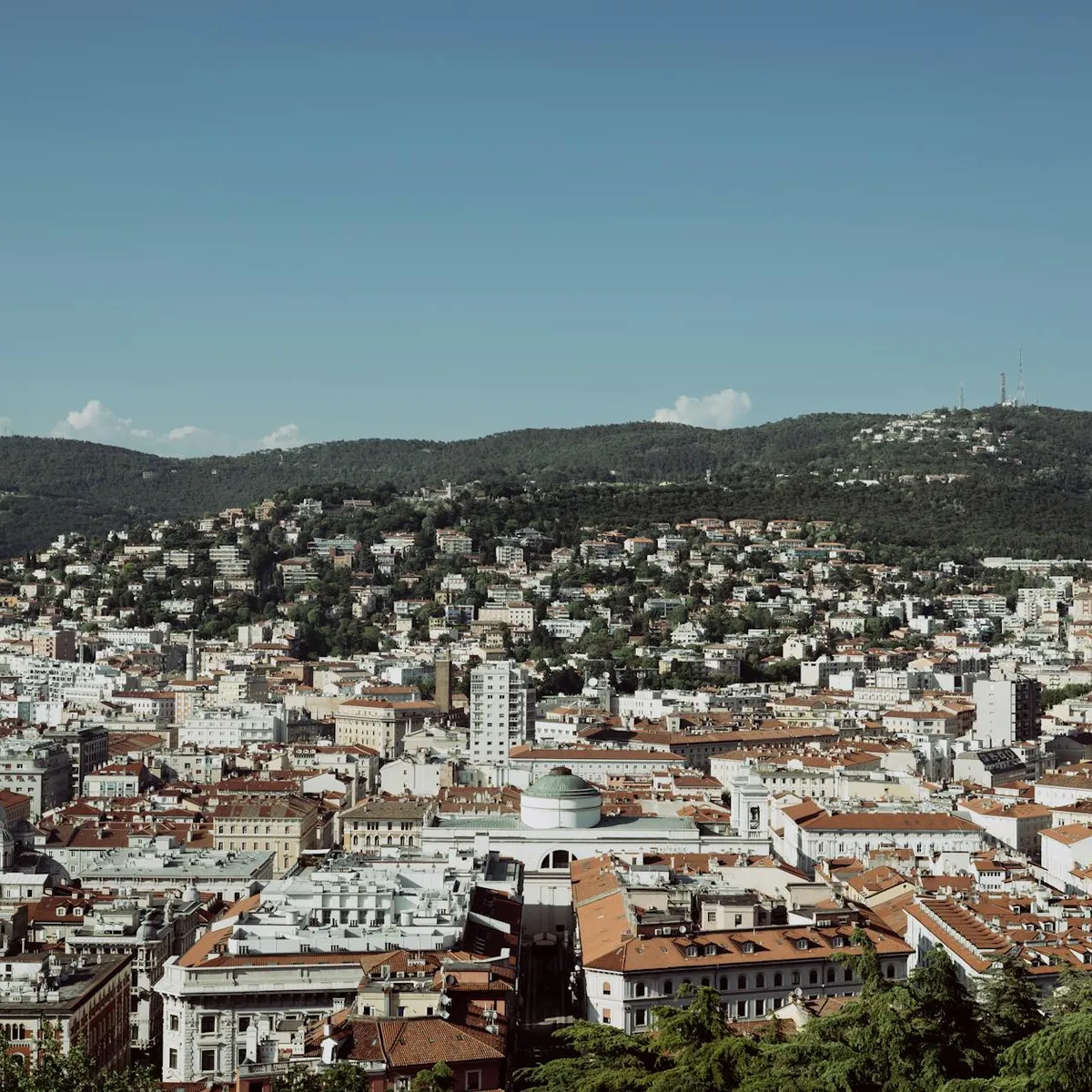
 Photo: Mick De Paola / Pexels
Trieste
Trieste accessibility for wheelchair users
Compare Trieste by accessibility, transport, terrain, healthcare, cost, weather, laws, reviews, and community notes.
Trieste accessibility scores
Compare Trieste by accessibility, transport, terrain, healthcare, cost, weather, and laws. General stats use public data and models. Community rows reflect member reviews and votes.
General stats
National benchmarks and estimates — your experience in this city may differ.
Community
Starts from our estimate — thumbs up nudge toward Excellent, down toward Poor. Reviews use 1–5 stars.
These figures combine public statistics, models, and live weather where available. Every city is different — treat this as a guide, and share what you know in the Reviews & Corrections tab.
Profile last updated 6/30/2026.
Trieste wheelchair accessibility guide
Research Trieste for wheelchair users and caregivers: getting around, terrain, healthcare, costs, climate, accessible things to do, and practical caveats before booking.
Last updated 6/30/2026At a glance
Trieste is a beautiful Adriatic port city with strong cultural appeal, good healthcare leads, and a complicated mobility profile. The waterfront, Piazza Unità d’Italia, and museum corridor can be rewarding, while the hills behind the centre can quickly become tiring or impractical for manual wheelchair users. RollVenture estimates the cost at from ~$3,179/mo, including housing from ~$1,449/mo. The city is best for someone who wants Italian coastal culture and can choose housing carefully near flatter waterfront or central routes.
Getting around
Trieste has buses, taxis, rail links, and a compact central area, but it is not uniformly flat. The official Friuli Venezia Giulia tourism page includes an “Info Accessibility” link, and individual museum pages can expose access information. Treat public transport as route-specific: confirm low-floor buses, stop gradients, and the distance from the stop to the venue. For regional travel, Trieste Centrale is a useful anchor, but book assistance for train trips rather than assuming same-day help.
Terrain & mobility
The terrain score is the main caution. OSM and elevation sampling show mixed-to-hilly conditions, with the city rising sharply away from the water. The pavement score is strong, but even good paving does not solve steep grades. A practical wheelchair plan should prioritize the waterfront, Canal Grande area, Piazza Unità, and flat museum approaches; hillside apartments or attractions may require taxis and careful transfer planning.
Healthcare & care
The live healthcare profile lists nearby clinic and hospital leads, including Presidio di medicina generale, Pronto Soccorso - Casa della Comunità, and CSM “Gambini,” with several within about 1 km of the centre. These OSM-derived entries are useful for planning but should be verified directly for service scope, language support, and step-free entry. For complex care, research hospital departments in Trieste before arrival and arrange prescriptions in Italian.
Costs & housing
Trieste is not cheap in this batch: the model estimate is from ~$3,179/mo, with housing from ~$1,449/mo. Accessibility-friendly housing near the flatter centre may cost more than the city average. Prioritize lift access, entrance gradients, shower layout, and proximity to a flatter bus route. Older historic buildings can be charming but risky if they rely on stairs, small lifts, or steep lanes.
Climate & comfort
Seasonal comfort can make or break the stay. In summer, plan short morning outings, shade, hydration, and indoor breaks; in winter or wet weather, allow extra time for slippery surfaces and transport delays. A wheelchair-friendly apartment with reliable heating/cooling and a short grocery route is more important than a postcard location.
Accessible things to do
Piazza Unità d’Italia and the waterfront— The city’s signature flat, open route; still check paving gaps, event barriers, and windy weather.
Museo Revoltella— The museum’s official site lists opening details and an “Info Accessibilità” link, making it one of the better candidates for a planned accessible visit.
Canal Grande and historic cafés— A central, atmospheric area where route choice matters; verify café thresholds and toilets individually.
Miramare Castle grounds— A major Trieste-area attraction; confirm current accessible routes, parking, and lift/terrain details before going because the site is outside the core and has park gradients.
Community & language
Use the local language for housing, healthcare, and transport confirmations when possible, and keep written replies. Tourism staff may help in English, but clinics, landlords, drivers, and small venues often need specific practical questions: step-free entrance, lift size, accessible toilet, companion seating, and nearest drop-off point.
Would we recommend it?
Yes, for a visitor who wants culture and sea air and can stay near the flatter centre. No, or only with a helper, if steep streets and wind exposure are dealbreakers.
These figures combine public statistics, models, and live weather where available. Every city is different — treat this as a guide, and share what you know in the Reviews & Corrections tab.
Profile last updated 6/30/2026.