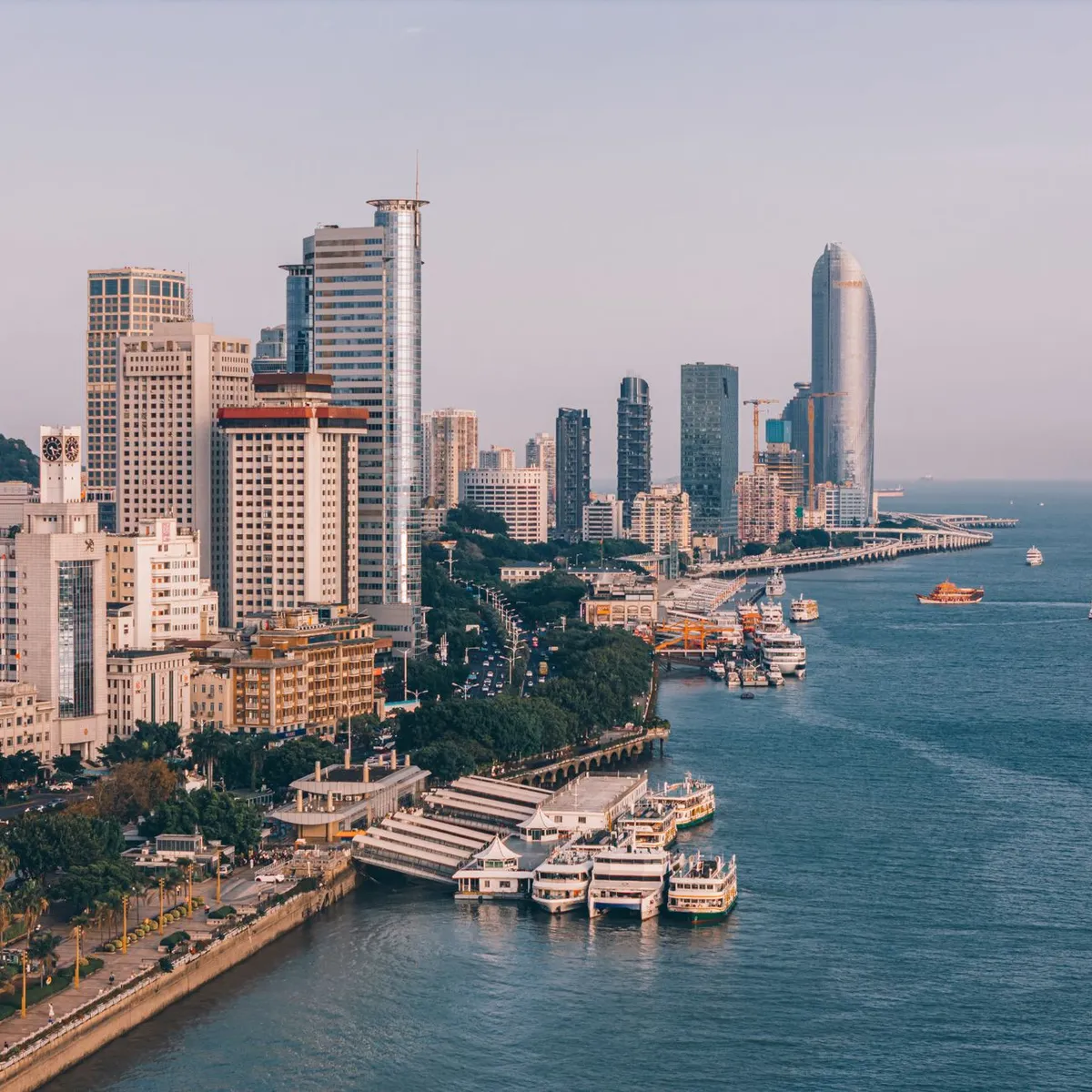
 Photo: toter yau / Pexels
Xiamen
Xiamen accessibility for wheelchair users
Compare Xiamen by accessibility, transport, terrain, healthcare, cost, weather, laws, reviews, and community notes.
Xiamen accessibility scores
Compare Xiamen by accessibility, transport, terrain, healthcare, cost, weather, and laws. General stats use public data and models. Community rows reflect member reviews and votes.
General stats
National benchmarks and estimates — your experience in this city may differ.
Community
Starts from our estimate — thumbs up nudge toward Excellent, down toward Poor. Reviews use 1–5 stars.
These figures combine public statistics, models, and live weather where available. Every city is different — treat this as a guide, and share what you know in the Reviews & Corrections tab.
Profile last updated 6/30/2026.
Xiamen wheelchair accessibility guide
Research Xiamen for wheelchair users and caregivers: getting around, terrain, healthcare, costs, climate, accessible things to do, and practical caveats before booking.
Last updated 6/30/2026At a glance
Xiamen is a large Fujian port city with a mild coastal setting, famous for Gulangyu Island, waterfront promenades, university neighborhoods, temples, gardens, and ferry-linked sightseeing. For a wheelchair user, the best parts of Xiamen are the flat island-edge districts, the relatively modern metro/bus corridors, and the number of major hospitals and hotels in the urban core. The harder parts are older lanes, ferry boarding logistics, typhoon-season rain, and attraction paths that may mix ramps, steps, stone paving, and crowds.
RollVenture’s city data puts monthly living cost from ~$2,331/mo, with housing from ~$936/mo, transport from ~$212/mo, medical from ~$147/mo, and home aid from ~$528/mo. Treat those as planning estimates, not quotes.
Getting around
Use the metro and newer taxi/ride-hail trips as the backbone rather than assuming every bus stop or ferry pier is easy. The metro network is the most predictable option for step-free station planning, but lifts, accessible toilets, and platform gaps should still be checked station by station. For Gulangyu, plan ferry times carefully and ask the operator or hotel to confirm boarding assistance before buying timed tickets.
Terrain & mobility
The DB terrain profile labels Xiamen gently rolling, with low average elevation near the sampled center and no major grade spikes in the central sample. That helps around waterfronts and newer districts. The caveat is pavement: OSM pavement data has low confidence and most streets are untagged, so curb cuts, tactile paving, and smooth sidewalks need block-by-block verification.
Healthcare & care
Nearby OSM healthcare leads include Haicang Hospital with emergency tagging, the Navy Hospital, Rendeyiyuan inpatient department, Xiamen Chinese Medicine Hospital South Area, and smaller clinics. Treat these as leads only: confirm English-speaking support, wheelchair entrances, appointment process, and emergency routing before relying on them. For longer stays, line up a hotel or serviced apartment that can help arrange local care contacts.
Costs & housing
Xiamen is not the cheapest China option in this queue, but it can offer stronger coastal-city amenities than smaller inland alternatives. Accessible housing checks should focus on elevator width, step-free building entry, bathroom thresholds, wet-room drainage, backup power, and whether the surrounding block has continuous sidewalks.
Climate & comfort
Expect humid summers, heavy rain episodes, and typhoon-season disruption risk. Shade, cooling, and short transit hops matter more than raw distance. Winter is generally mild, which is helpful for pain and fatigue management compared with northern China cities.
Accessible things to do
Gulangyu Island— a real, ferry-served heritage island and Xiamen’s signature day trip; verify ferry boarding, pier ramps, and lane surfaces before committing because historic streets can be uneven.
Xiamen Botanical Garden— a major landscaped attraction; use vehicle access or internal transport where available and confirm which garden zones avoid steep paths.
South Putuo Temple area— a central cultural stop near Xiamen University; courtyards may be easier than upper temple routes, so confirm step-free sections.
Zhongshan Road pedestrian area— useful for food, shopping, and evening strolling if curb cuts and crowds are manageable.
Community & language
Mandarin is essential for healthcare, housing, and transport details; English is more likely in international hotels and major tourist services than in clinics or landlords’ offices. Bring written Chinese accessibility requirements and photos of needed bathroom/entry layouts.
Would we recommend it?
Yes, with careful planning. Xiamen’s coastal layout and modern infrastructure make it more promising than many same-score cities, but wheelchair users should pre-check ferry access, hotel bathrooms, and rainy-season backup routes rather than relying on attraction-level accessibility claims.
These figures combine public statistics, models, and live weather where available. Every city is different — treat this as a guide, and share what you know in the Reviews & Corrections tab.
Profile last updated 6/30/2026.