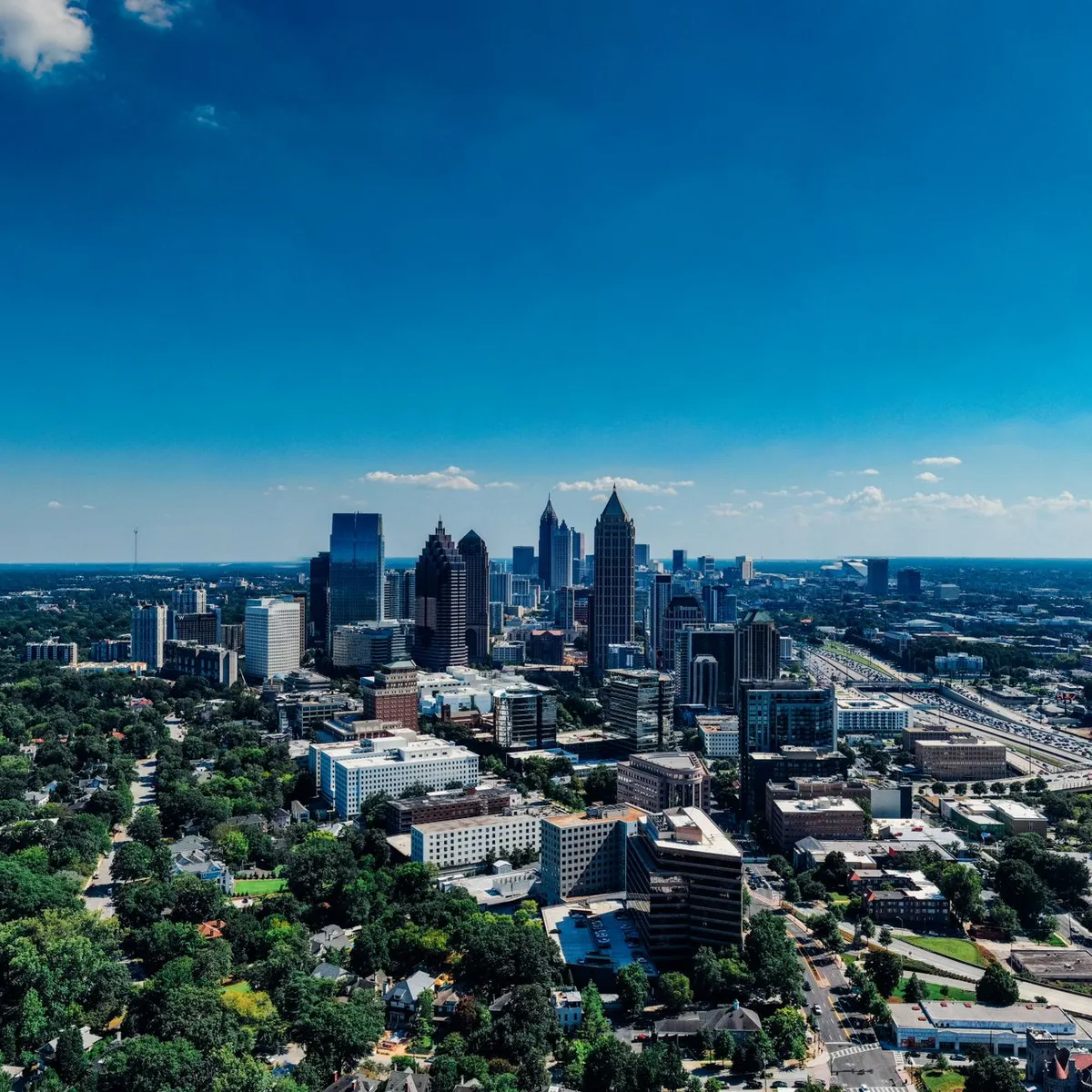
 Photo: K / Pexels
Atlanta
Atlanta accessibility for wheelchair users
Compare Atlanta by accessibility, transport, terrain, healthcare, cost, weather, laws, reviews, and community notes.
Atlanta accessibility scores
Compare Atlanta by accessibility, transport, terrain, healthcare, cost, weather, and laws. General stats use public data and models. Community rows reflect member reviews and votes.
General stats
National benchmarks and estimates — your experience in this city may differ.
Community
Starts from our estimate — thumbs up nudge toward Excellent, down toward Poor. Reviews use 1–5 stars.
These figures combine public statistics, models, and live weather where available. Every city is different — treat this as a guide, and share what you know in the Reviews & Corrections tab.
Profile last updated 6/30/2026.
Atlanta wheelchair accessibility guide
Research Atlanta for wheelchair users and caregivers: getting around, terrain, healthcare, costs, climate, accessible things to do, and practical caveats before booking.
Last updated 6/30/2026At a glance
Atlanta can work well for wheelchair users who choose the right district, but it is not a city to improvise casually. The RollVenture row gives it strong infrastructure and ramp scores, and terrain sampling reads gently rolling rather than steep. The real challenge is the mix of heat, traffic, construction, station elevator reliability, and long distances between neighborhoods. Budget from about ~$4,227/mo, with housing from ~$2,016/mo. A practical setup is to stay near a MARTA rail station with confirmed elevator access, or near the specific attractions and clinics you expect to use most.
Getting around
MARTA rail and buses are the backbone, and MARTA’s site prominently links accessible services, elevator and escalator updates, and MARTA Mobility paratransit. Treat elevator status as a pre-trip check, not an afterthought, especially for airport transfers or late returns. Rideshare WAV availability can be inconsistent, so do not make it your only accessible plan. If you use a manual chair, remember that Atlanta’s blocks can be long and hot even when grades are moderate.
Terrain & mobility
The database terrain profile labels Atlanta gently rolling, with a maximum sampled grade around 1.3% and a 98 m elevation range in the sample. That is friendlier than Atlanta’s reputation suggests, but pavement confidence is low and the surface mix includes untagged, asphalt, unpaved, and paved segments. Downtown, Midtown, and attraction campuses usually have better curb infrastructure than side streets. Summer heat, event crowds, and construction detours are the major mobility friction points.
Healthcare & care
The city profile lists nearby healthcare leads including Loughlin Radiation-Oncology Center, Servy Institute for Reproductive Endocrinology, Ankle and Foot Centers of Georgia, Piedmont West Surgery Center, and Center for Rehabilitation Medicine. Use these as leads only: call to confirm accessible entrances, transfer support, restroom access, and parking or MARTA routing. For longer stays, Atlanta’s large medical ecosystem is a plus, but travel time between providers can be significant.
Costs & housing
Atlanta is not cheap in this dataset: plan from ~$4,227/mo, with housing from ~$2,016/mo. Accessible newer apartments around Midtown, Buckhead, or transit-adjacent areas may be easier to verify but can be expensive. Ask for measurements and photos of thresholds, bathroom clearances, elevator dimensions, package/mail access, trash rooms, and backup generator policies. If you need daily care, price travel time because providers may serve a broad metro area.
Climate & comfort
Heat and humidity shape accessibility here. Summer afternoons can make outdoor rolling exhausting, and thunderstorms can flood curb ramps or leave debris. Spring and fall are more comfortable. Winter is usually mild, but ice events can paralyze sidewalks and transit. Plan museum-heavy days in summer, hydrate aggressively, and keep a backup indoor route when visiting large campuses.
Accessible things to do
Georgia Aquarium— The aquarium publishes accessibility information and an “Ocean of Inclusion” accessibility resource; verify current seating, sensory, and mobility-device details before booking timed tickets.
World of Coca-Cola— A central, high-capacity attraction near other downtown venues; its accessibility page was not reachable during this check, so confirm wheelchair routes and companion policies directly.
Zoo Atlanta— A major outdoor attraction; the official accessibility page blocked automated access during this run, so treat it as a candidate and call ahead about slopes, rentals, and accessible restrooms.
Atlanta History Center— Useful for a slower indoor/outdoor day in Buckhead; verify current accessible entrances, paths between buildings, and parking before visiting.
Community & language
English is the default language. Atlanta has a large disability, medical, university, and airport-connected community, which helps for services and peer knowledge. The tradeoff is sprawl: accessible plans often depend on the exact neighborhood. Ask local groups about station elevators, sidewalk construction, and realistic travel times before committing to housing.
Would we recommend it?
Yes, cautiously. Atlanta is a good fit for wheelchair users who want major-city healthcare, air connections, and big attractions, and who can handle detailed transit and heat planning. It is a weaker fit for anyone needing consistently short, spontaneous, step-free trips across the whole city.
These figures combine public statistics, models, and live weather where available. Every city is different — treat this as a guide, and share what you know in the Reviews & Corrections tab.
Profile last updated 6/30/2026.
Reviews & corrections
Share your experience or suggest a data correction. Both appear publicly; admin updates official city scores and costs separately.
Log in to write a review or suggest a correction.
No reviews or corrections yet.