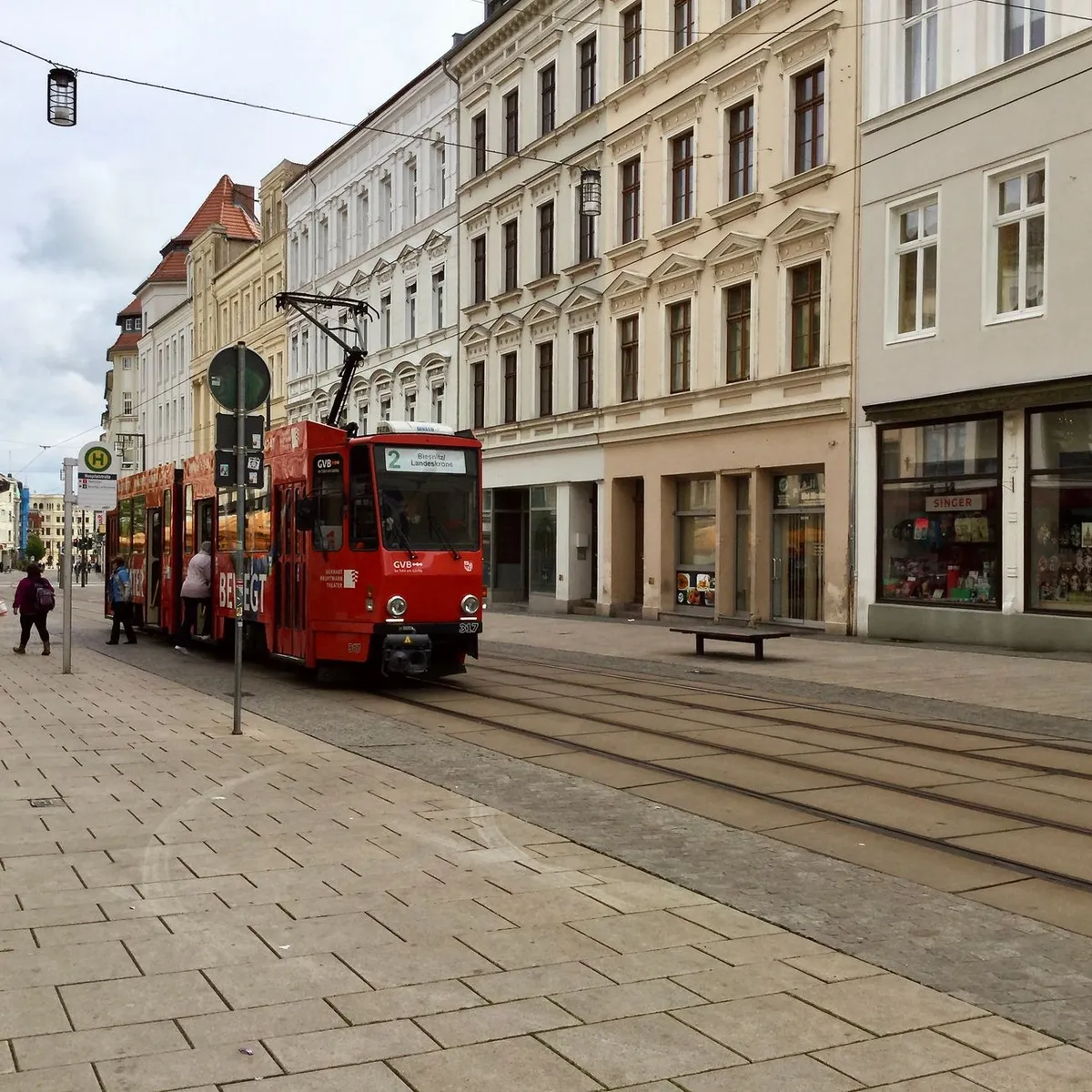
 Photo: Miwa / Pexels
Chemnitz
Chemnitz accessibility for wheelchair users
Compare Chemnitz by accessibility, transport, terrain, healthcare, cost, weather, laws, reviews, and community notes.
Chemnitz accessibility scores
Compare Chemnitz by accessibility, transport, terrain, healthcare, cost, weather, and laws. General stats use public data and models. Community rows reflect member reviews and votes.
General stats
National benchmarks and estimates — your experience in this city may differ.
Community
Starts from our estimate — thumbs up nudge toward Excellent, down toward Poor. Reviews use 1–5 stars.
These figures combine public statistics, models, and live weather where available. Every city is different — treat this as a guide, and share what you know in the Reviews & Corrections tab.
Profile last updated 6/30/2026.
Chemnitz wheelchair accessibility guide
Research Chemnitz for wheelchair users and caregivers: getting around, terrain, healthcare, costs, climate, accessible things to do, and practical caveats before booking.
Last updated 6/30/2026At a glance
Chemnitz is a high-scoring practical city for wheelchair users who want German services, lower costs than the western metros, and a compact cultural core. RollVenture's live row gives it 74 overall and an 84 accessibility score, with living costs from ~$3,316/mo and housing from ~$1,508/mo. It is not flat everywhere, but the pavement sample is strong and the city has enough museums, transit and clinics to make a careful stay realistic.
Getting around
CVAG runs local trams and buses, and regional rail links connect Chemnitz with Leipzig, Dresden and smaller Saxon towns. Before relying on a route, check the exact stop, vehicle type, construction notices and whether assistance is needed. The city centre is compact enough for short wheelchair trips, but hills and tram-track crossings can make a direct map route harder than it looks.
Terrain & mobility
The stored terrain profile labels Chemnitz hilly, with a sampled maximum grade around 3.7% and a 202 m elevation range. The pavement profile is high-confidence and comparatively good: 74% good surfaces, 3% poor, with asphalt, paving stones and sett. In practice, central routes can be workable, but older streets, winter grit, cobbles and sloped approaches require route planning. A power chair or strong assistance is useful for exploring beyond the flattest core.
Healthcare & care
The OSM healthcare profile lists central clinics and medical buildings including HYGIEIA, Poliklinik, Ärztehaus Rosenhof and MVZ Polymed. These are leads only: verify step-free access, lift availability, insurance, language and accessible parking/drop-off. For long stays, identify a primary-care doctor, pharmacy and medical-supply provider early. German systems are capable but paperwork-heavy.
Costs & housing
Use the DB numbers as a baseline: living from ~$3,316/mo, housing from ~$1,508/mo, food from ~$538/mo and transport from ~$281/mo. Chemnitz may offer better accessible-housing value than Munich, Hamburg or Frankfurt, but older buildings still create problems: steps at the entrance, small lifts, narrow bathrooms and heavy doors. Ask for photos and measurements before signing.
Climate & comfort
Chemnitz has cool winters, mild-to-warm summers and more winter traction risk than lowland coastal cities. Snow, ice and slush can affect curb ramps and tram stops. Summer is usually manageable, though heat waves increasingly matter in older apartments. Indoor cultural options are useful when weather makes slopes unpleasant.
Accessible things to do
smac - State Museum of Archaeology Chemnitz— The official museum site is a reliable anchor for a central indoor visit; confirm lift and toilet details before going.
Kunstsammlungen Chemnitz— The official art-museum site is useful for exhibitions and visitor planning; verify accessible entrance and temporary-gallery routes.
Saxon Museum of Industry Chemnitz— The official Chemnitz industrial museum page provides a strong city-specific POI; check current wheelchair routes and accessible toilets.
Stadthalle / city-centre cultural district— A practical planned outing around central venues and restaurants, but confirm event seating and step-free entrances venue by venue.
Community & language
German is important for housing, healthcare and bureaucracy. English may work in major museums or universities, but not everywhere. Chemnitz is less internationally polished than Berlin or Hamburg, so written access questions in German and local contacts are valuable.
Would we recommend it?
Yes for cost-conscious wheelchair users who can handle some hills and want a manageable German city with cultural depth. It is not a no-effort destination, but the cost/accessibility balance is promising with pre-checked routes.
These figures combine public statistics, models, and live weather where available. Every city is different — treat this as a guide, and share what you know in the Reviews & Corrections tab.
Profile last updated 6/30/2026.