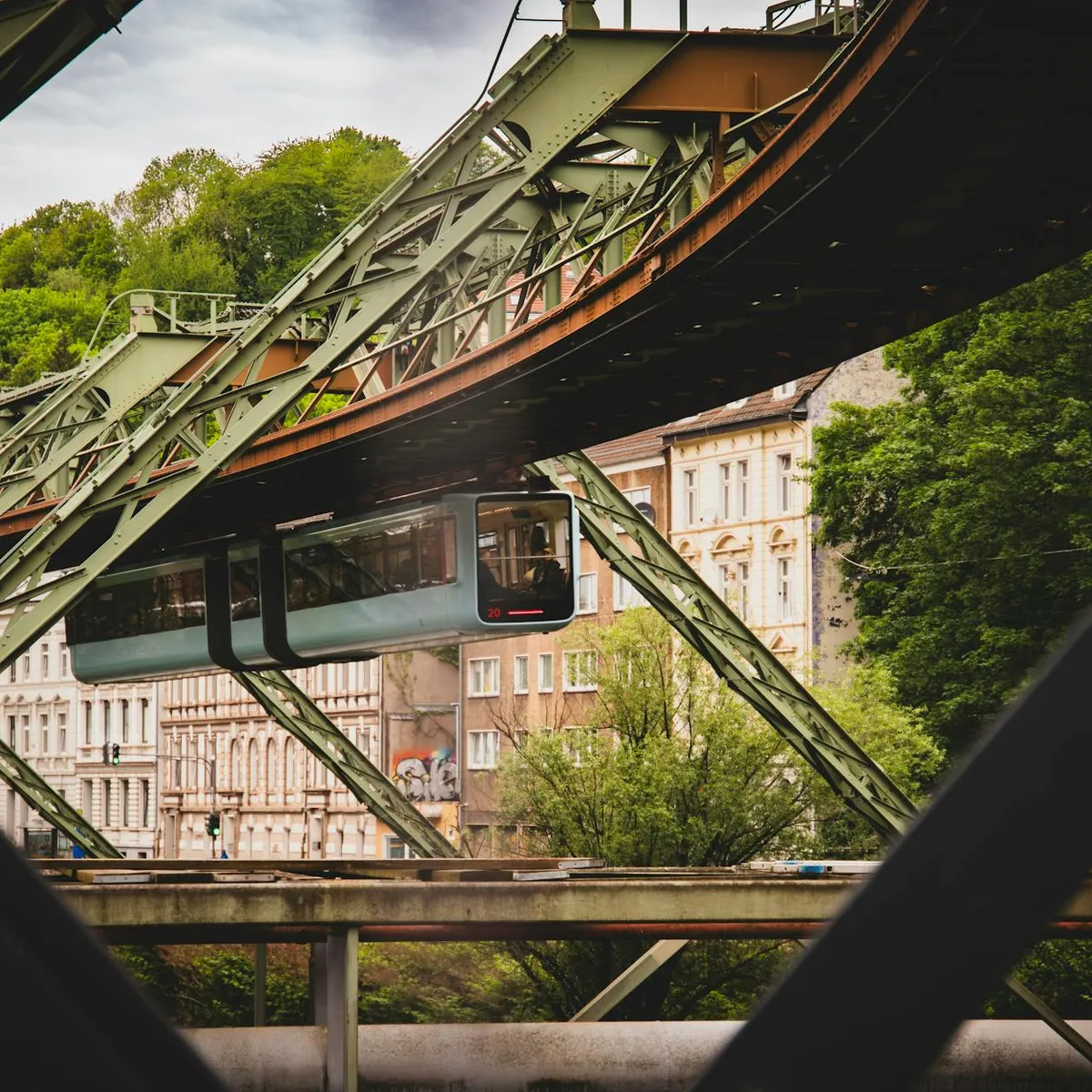
 Photo: Gabriel Grip / Pexels
Wuppertal
Wuppertal accessibility for wheelchair users
Compare Wuppertal by accessibility, transport, terrain, healthcare, cost, weather, laws, reviews, and community notes.
Wuppertal accessibility scores
Compare Wuppertal by accessibility, transport, terrain, healthcare, cost, weather, and laws. General stats use public data and models. Community rows reflect member reviews and votes.
General stats
National benchmarks and estimates — your experience in this city may differ.
Community
Starts from our estimate — thumbs up nudge toward Excellent, down toward Poor. Reviews use 1–5 stars.
These figures combine public statistics, models, and live weather where available. Every city is different — treat this as a guide, and share what you know in the Reviews & Corrections tab.
Profile last updated 6/30/2026.
Wuppertal wheelchair accessibility guide
Research Wuppertal for wheelchair users and caregivers: getting around, terrain, healthcare, costs, climate, accessible things to do, and practical caveats before booking.
Last updated 6/30/2026At a glance
Wuppertal is an interesting German option for wheelchair users who want strong urban infrastructure but can handle hills. The city follows a narrow valley, and RollVenture’s row reflects that mix: good infrastructure, ramp, and pavement indicators, but a hilly terrain profile. Costs are mid-to-high for the dataset, from ~$3,526/mo overall and housing from ~$1,660/mo. The main accessibility question is not whether Wuppertal has services; it is whether your exact route avoids steep side streets and station/stair surprises.
Getting around
The Schwebebahn official English site was reachable and confirms the suspension railway as Wuppertal’s signature transit spine. Do not assume every station approach is easy: check lifts, platform access, and alternative stops before booking housing. Regional VRR transit accessibility pages were not successfully reached in this check, so use current operator apps and station information before travel. Accessible taxis are useful for hilltop neighborhoods, evening trips, or medical appointments.
Terrain & mobility
OpenTopoData labels the city hilly, with about 193 m elevation range and a sampled max grade around 3.4%. The OSM pavement profile is much better: high-confidence, 74% good surfaces, and only 2% poor, with asphalt and paving stones common. Valley-floor routes and major shopping streets should be manageable; side streets can become steep quickly. Rain also matters because Wuppertal is wet year-round in the climate data.
Healthcare & care
OSM healthcare leads include clinics and rehab/hospital entries such as MVZ Medi-Wtal II, Rehazentrum Burgerland GmbH, and Dr. Becker Klinik Juliana. Treat these as starting points, not verified accessible providers. Germany’s disability-rights framework is strong in the row, but older buildings and hillside locations can still create access problems. Confirm lift access, step-free entrances, accessible toilets, and appointment language before relying on any provider.
Costs & housing
The row estimates from ~$3,526/mo, with housing from ~$1,660/mo, food around $553, and transport around $290. For wheelchair users, the best-value apartment may be near a Schwebebahn or regional rail stop on the valley floor. Verify entrance gradient, elevator dimensions, bathroom clearance, and whether the surrounding block requires a steep climb to reach groceries.
Climate & comfort
Open-Meteo data shows rain in every month, cool winters with snow days, and mild summers. Wet paving stones, leaf litter, and winter slush are more important than extreme heat. Build in indoor alternatives and avoid tight transfer plans during heavy rain.
Accessible things to do
Wuppertal Schwebebahn— The official site was reachable; use it as both transit and sightseeing, but verify station lift status for the exact stops you need.
Von der Heydt Museum— A central art museum option; the specific accessibility URL checked returned 404, so confirm entrance and lift details directly.
Green Zoo Wuppertal— The zoo site returned 403 in the check; treat it as a possible outing only after confirming route gradients, accessible toilets, and wheelchair-viewing areas.
Engels-Haus / Museum Industriekultur area— A historically important Wuppertal stop; verify step-free access because older museum buildings can vary by entrance.
Community & language
German is the daily language, with English more likely in hotels, museums, and university contexts than in routine medical or housing calls. Written confirmations help.
Would we recommend it?
Yes, but selectively. Wuppertal is worthwhile if you plan around the valley transit spine and avoid steep housing locations. It is less ideal for manual wheelchair users who want spontaneous hill-free wandering.
These figures combine public statistics, models, and live weather where available. Every city is different — treat this as a guide, and share what you know in the Reviews & Corrections tab.
Profile last updated 6/30/2026.