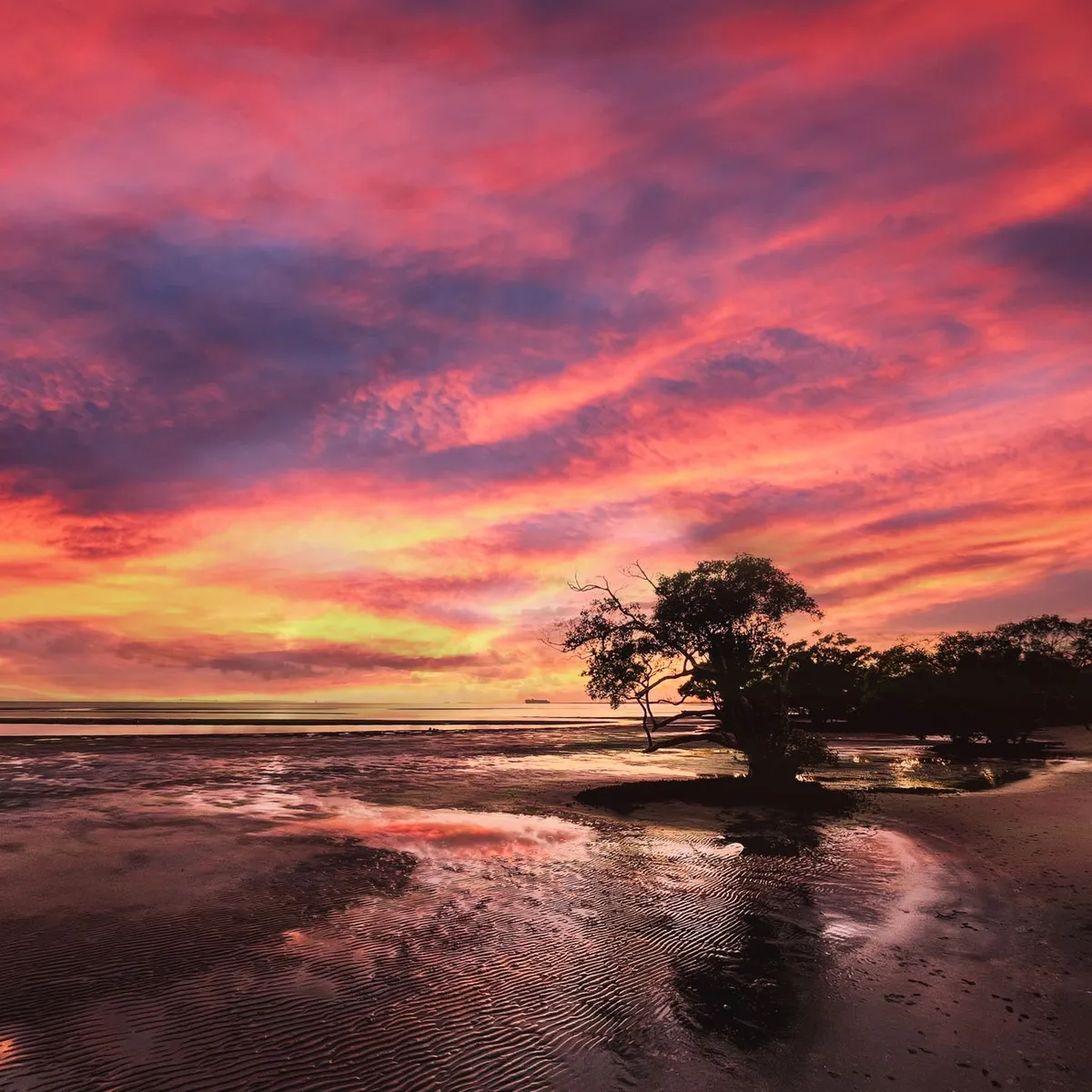
 Photo: Benny Hassum / Pexels
Darwin
Darwin accessibility for wheelchair users
Compare Darwin by accessibility, transport, terrain, healthcare, cost, weather, laws, reviews, and community notes.
Darwin accessibility scores
Compare Darwin by accessibility, transport, terrain, healthcare, cost, weather, and laws. General stats use public data and models. Community rows reflect member reviews and votes.
General stats
National benchmarks and estimates — your experience in this city may differ.
Community
Starts from our estimate — thumbs up nudge toward Excellent, down toward Poor. Reviews use 1–5 stars.
These figures combine public statistics, models, and live weather where available. Every city is different — treat this as a guide, and share what you know in the Reviews & Corrections tab.
Profile last updated 6/30/2026.
Darwin wheelchair accessibility guide
Research Darwin for wheelchair users and caregivers: getting around, terrain, healthcare, costs, climate, accessible things to do, and practical caveats before booking.
Last updated 6/30/2026At a glance
Darwin is one of the more promising warm-weather Australian bases for wheelchair users on terrain alone: RollVenture's live profile is mostly flat, with high-confidence paved/asphalt surfaces. The tradeoff is tropical heat, wet-season storms, and a smaller healthcare and transport ecosystem than the east-coast capitals. A good Darwin stay is built around shade, air-conditioning, short transfers, and confirming access at each waterfront or museum venue.
Getting around
Northern Territory public-bus accessibility information should be checked before relying on a route, and many visitors will still want accessible taxi planning for evenings, heat, or wet-season rain. The CBD and Waterfront can be manageable in pieces, but distances between attractions, hotels, and medical services feel larger in tropical weather.
Terrain & mobility
The database terrain profile is mostly flat, with a small sampled elevation range and strong pavement confidence. That is a real advantage. The main mobility barriers are not hills; they are heat exposure, shade gaps, sudden rain, outdoor surfaces after storms, and whether a route has continuous kerb ramps and safe crossings.
Healthcare & care
The OSM healthcare leads near the centre include Cavenagh Medical Centre and other clinics, while hospital-level care is further out. Confirm wheelchair-accessible exam rooms, after-hours care, equipment repair, and medication availability before a long stay. Travel insurance and heat-management plans are important.
Costs & housing
The live cost estimate is from ~$3,797/mo, including housing from ~$1,847/mo. Accessible apartments may be available around the CBD/Waterfront, but lifts, backup power, bathroom layout, balcony thresholds, and air-conditioning reliability should be checked carefully. Wet-season mould and humidity can affect comfort. Ask whether building corridors are enclosed, whether backup cooling exists, and how quickly lifts are repaired after storms.
Climate & comfort
Darwin's dry season is far easier for outdoor rolling. The wet season brings heavy rain, high humidity, and lightning; accessible transport and indoor plans become essential. Heat can turn a short roll into a medical-risk activity, so plan around morning and evening windows. Carry water, check shaded waiting areas before committing to a route, and avoid building an itinerary that depends on long midday pavement transfers.
Accessible things to do
Museum and Art Gallery of the Northern Territory— A major indoor attraction; verify current access, parking, lifts, and exhibition-room routes before visiting.
Darwin Waterfront— A practical food-and-waterfront district with managed public space; confirm accessible parking, toilets, and lagoon access for the specific activity.
Deckchair Cinema— The cinema publishes an accessibility page; confirm wheelchair seating, companion seating, path surfaces, and weather cancellation policies.
Crocosaurus Cove— A central visitor attraction; use official access information or call directly to verify lifts, viewing areas, and accessible toilets before booking.
Community & language
English is the default. Darwin is multicultural, informal, and outdoorsy, with strong tourism seasons and a practical local-services core. Indigenous cultural context matters; choose respectful, locally run tours where access needs can be discussed in advance.
Would we recommend it?
Yes, for users who tolerate heat and can plan transport. It is less suitable if humidity, limited after-hours transport, or wet-season disruption would make daily access unsafe.
These figures combine public statistics, models, and live weather where available. Every city is different — treat this as a guide, and share what you know in the Reviews & Corrections tab.
Profile last updated 6/30/2026.
Reviews & corrections
Share your experience or suggest a data correction. Both appear publicly; admin updates official city scores and costs separately.
Log in to write a review or suggest a correction.
No reviews or corrections yet.