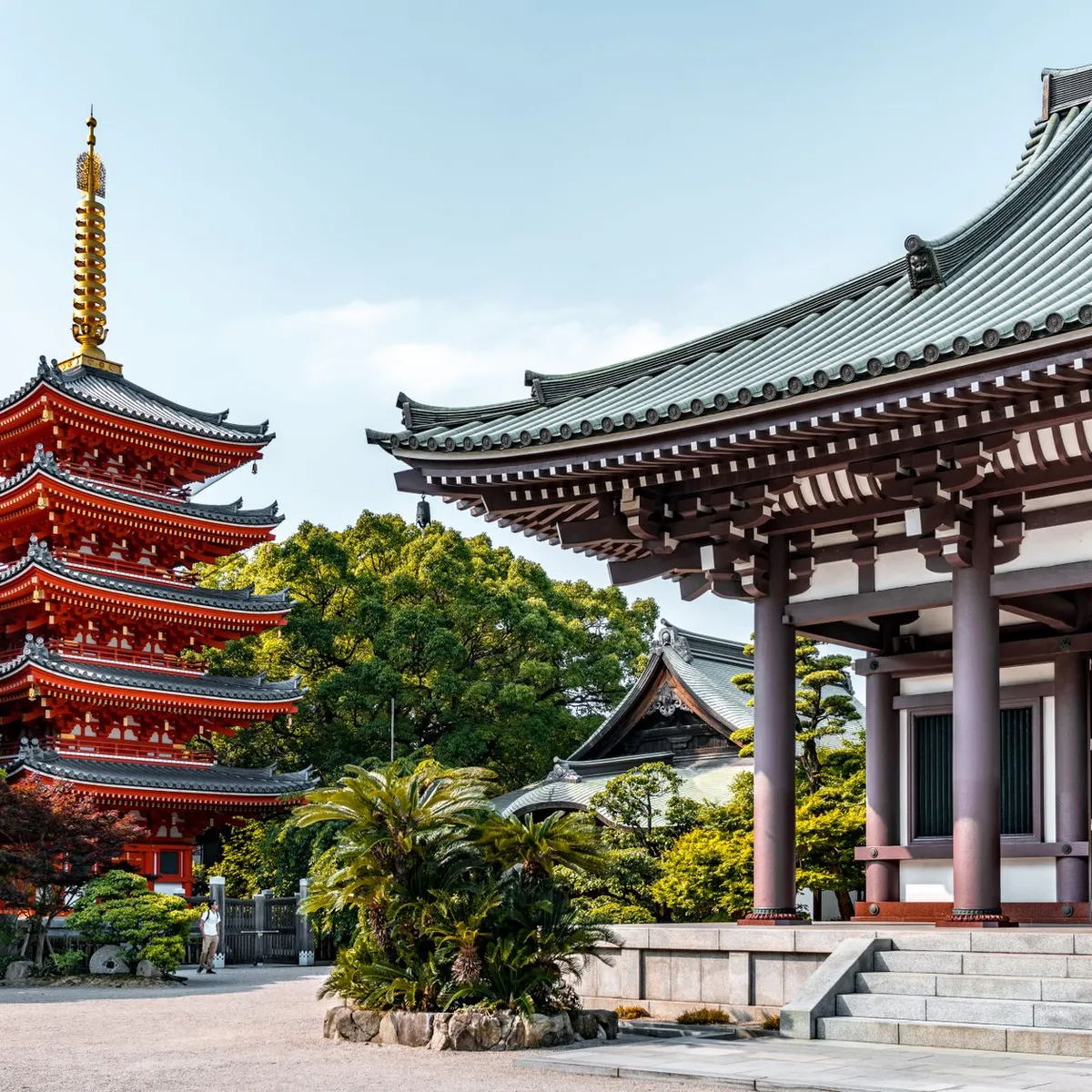
 Photo: Gije Cho / Pexels
Fukuoka
Fukuoka accessibility for wheelchair users
Compare Fukuoka by accessibility, transport, terrain, healthcare, cost, weather, laws, reviews, and community notes.
Fukuoka accessibility scores
Compare Fukuoka by accessibility, transport, terrain, healthcare, cost, weather, and laws. General stats use public data and models. Community rows reflect member reviews and votes.
General stats
National benchmarks and estimates — your experience in this city may differ.
Community
Starts from our estimate — thumbs up nudge toward Excellent, down toward Poor. Reviews use 1–5 stars.
These figures combine public statistics, models, and live weather where available. Every city is different — treat this as a guide, and share what you know in the Reviews & Corrections tab.
Profile last updated 6/30/2026.
Fukuoka wheelchair accessibility guide
Research Fukuoka for wheelchair users and caregivers: getting around, terrain, healthcare, costs, climate, accessible things to do, and practical caveats before booking.
Last updated 6/30/2026At a glance
Fukuoka is a lively, food-focused Japanese city with good airport proximity and a lower cost estimate than many larger global hubs. The DB gives it an overall score of 74, with strong infrastructure but modest terrain and pavement signals. Use the estimate as from ~$3,409/mo, including housing from ~$1,835/mo. It is appealing for travelers who want a compact urban base, but wheelchair users should verify station elevators, hotel bathrooms, and older-street surfaces carefully.
Getting around
Fukuoka's airport is close to the city, and the subway is central to many visitor routes. During research, the attempted Fukuoka Subway English barrier-free URL returned a 404, but the official subway site was reachable in Japanese and showed normal service information plus tourist links. That means this draft keeps transport claims conservative: use the subway as a planning lead, but check individual station maps, elevators, accessible toilets, and staff support before relying on a route. Taxis may be needed for late nights or rainy days.
Terrain & mobility
The DB profile marks Fukuoka as mixed and sometimes hilly, with low OSM pavement confidence. Hakata, Tenjin, and waterfront routes may be easier than hillside or older residential areas. Expect tactile paving, narrow sidewalks in places, curb lips, construction, and crowded shopping arcades. Summer humidity and heavy rain can make long outdoor rolls uncomfortable even where slopes are manageable.
Healthcare & care
The OSM healthcare leads include Kego Hospital, Oikawa Hospital, and Saeki Internal Medicine Clinic, but these are not access guarantees. Fukuoka has larger medical resources across the metro area; for a longer stay, verify English support if needed, accessible exam rooms, imaging transfer arrangements, and how prescriptions or assistive-device repairs would be handled. Keep hospital routes simple during typhoon-season rain.
Costs & housing
The DB estimate is from ~$3,409/mo, with housing from ~$1,835/mo. Newer apartments near Hakata, Tenjin, or subway stations may be easier than older walk-ups, but verify elevator size, entrance thresholds, bathing setup, garbage-room access, and delivery drop-off. A cheaper flat with a small unit bath may not work for wheelchair users even if the building has an elevator.
Climate & comfort
Fukuoka has mild winters compared with northern Japan, but summers are hot, humid, and rainy. Typhoon-season disruptions, slick curb ramps, and crowded indoor stations can affect mobility. Heat-sensitive travelers should prioritize shaded routes, malls/underground passages, and air-conditioned rest stops.
Accessible things to do
Ohori Park— a major central park and lake route; verify current surface conditions and accessible restroom options.
Canal City Hakata— an indoor shopping and dining anchor useful in rain or heat; confirm elevator routes and accessible toilets.
Fukuoka Tower/Momochi seaside area— a recognizable waterfront plan; verify tower access, winds, and curb cuts before visiting.
Hakata Station and connected shopping areas— practical for food, transit, and bad-weather planning; confirm level-change routes during busy periods.
Community & language
Japanese is the default for housing, healthcare, and city services. English is more available around hotels, the airport, and major tourism points, but translated notes and reservation confirmations help a lot.
Would we recommend it?
Yes, cautiously. Fukuoka is attractive for cost, food, airport access, and urban convenience, but wheelchair users should treat detailed route and housing verification as mandatory rather than optional.
These figures combine public statistics, models, and live weather where available. Every city is different — treat this as a guide, and share what you know in the Reviews & Corrections tab.
Profile last updated 6/30/2026.