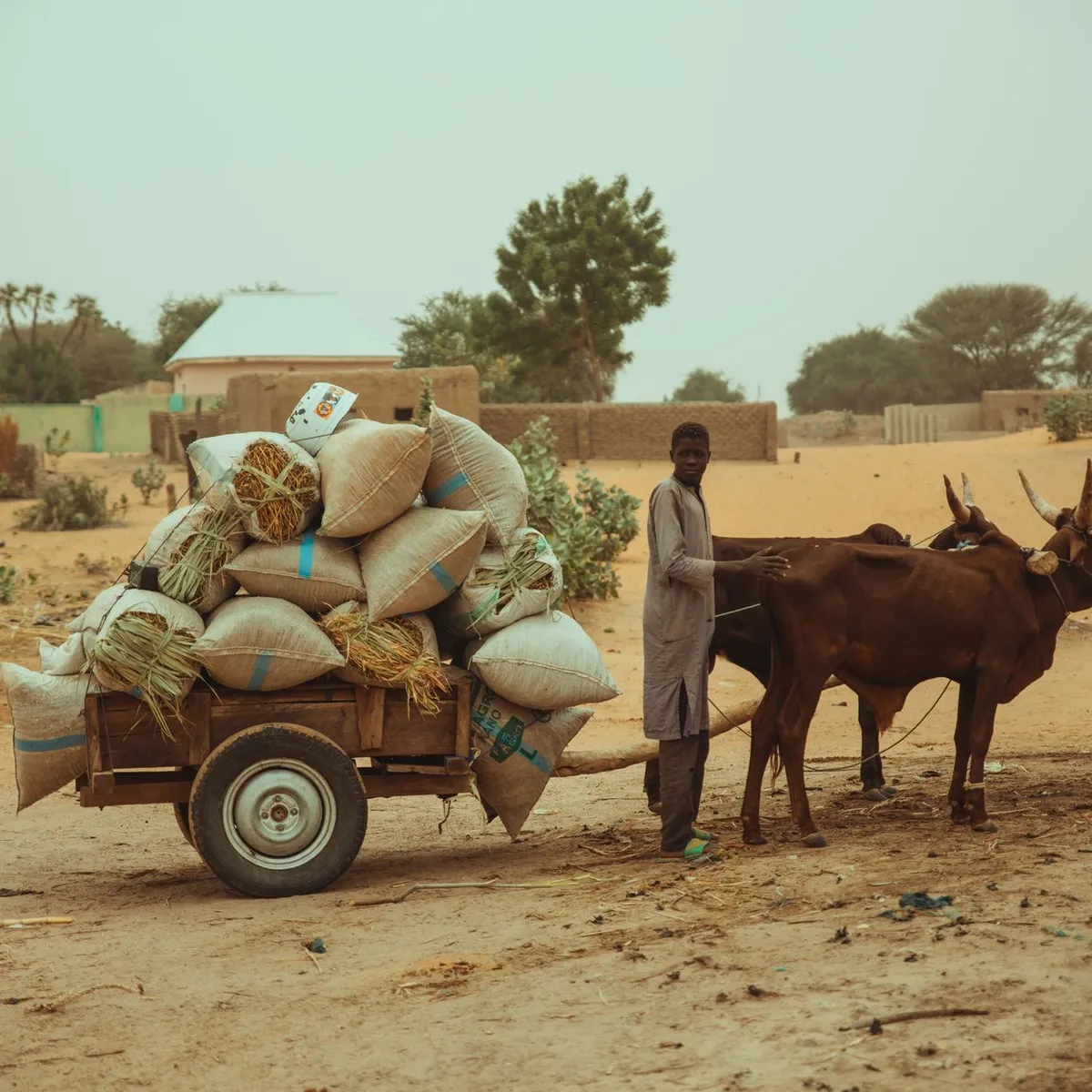
 Photo: alameen .ng / Pexels
Gao
Gao accessibility for wheelchair users
Compare Gao by accessibility, transport, terrain, healthcare, cost, weather, laws, reviews, and community notes.
Gao accessibility scores
Compare Gao by accessibility, transport, terrain, healthcare, cost, weather, and laws. General stats use public data and models. Community rows reflect member reviews and votes.
General stats
National benchmarks and estimates — your experience in this city may differ.
Community
Starts from our estimate — thumbs up nudge toward Excellent, down toward Poor. Reviews use 1–5 stars.
These figures combine public statistics, models, and live weather where available. Every city is different — treat this as a guide, and share what you know in the Reviews & Corrections tab.
Profile last updated 7/1/2026.
Gao wheelchair accessibility guide
Research Gao for wheelchair users and caregivers: getting around, terrain, healthcare, costs, climate, accessible things to do, and practical caveats before booking.
Last updated 7/1/2026At a glance
Gao is a historically important Niger River city, but it is a hard destination for wheelchair users and should be treated as a specialist, high-planning trip rather than an easy base. The live database gives it a low accessibility profile despite mostly flat terrain: pavements are often untagged or unpaved, wheelchair transport is weak, and current security conditions in northern Mali can override all normal travel planning. Use this guide as a practical risk screen, not a green light.
Getting around
Public step-free transport information could not be verified. Wikivoyage notes road links to Bamako and Niamey and river connections on the Niger, but these are not described as accessible services. Wheelchair users should plan private vehicle transfers with a driver who has seen the chair dimensions, can handle ramps or lifting safely, and can wait during errands. Avoid assuming sidewalks, curb cuts, or reliable night lighting.
Terrain & mobility
The DB terrain profile is encouraging on paper: gently rolling, all sampled points flat, and only about 69 m of elevation range. The harder issue is surface quality. The pavement profile is medium confidence, with very little good-surface tagging and dominant unpaved or dirt/sand surfaces. Manual-chair users should expect sand, dust, broken edges, and short hops by vehicle between stops.
Healthcare & care
OpenStreetMap-derived healthcare leads include Hôpital de Gao, Centre de Santé de Référence de Gao, Polyclinique Sahel santé, CSCom Djidara, and CS/COM Berrah. Treat these as location leads only and verify services, emergency capacity, language, payment, and physical access before relying on them. Bring medications, pressure-care supplies, spare tubes or caster parts, and a realistic evacuation plan.
Costs & housing
The database estimate is **from ~$2,230/mo**, with housing around ~$1,151/mo. The cost number should not be read as easy accessibility: step-free rooms, roll-in showers, generator backup, and staff able to assist transfers may be scarce. Ask for current photos of entrances, bathroom thresholds, bed height, and the route from vehicle drop-off to room.
Climate & comfort
Gao is hot, dry, dusty, and exposed. Heat management matters: shade, hydration, charging reliability for power chairs, and skin protection are essential. Dust can affect bearings, electronics, cushions, and respiratory comfort, so bring covers and cleaning supplies.
Accessible things to do
Tomb of Askia area— Wikivoyage identifies the Tomb of Askia as a UNESCO World Heritage site in Gao. Treat access as unverified and expect uneven ground; confirm security and local permission before any visit.
Niger River frontage— The river is central to Gao’s identity and can be a lower-exertion outing if viewed from a vehicle-accessible point. Do not assume ramps, rails, or paved promenades.
Central markets— Wikivoyage notes traditional markets and Marche Washington near the Askia Tomb. These are useful for orientation but likely crowded and uneven; go with a local helper and avoid peak heat.
Historic Songhai city context— Gao’s value is partly historical rather than venue-based. A guided driving loop past older quarters and landmarks may be more realistic than independent rolling.
Community & language
French is important for official and medical interactions, while Songhai, Tamasheq, Arabic, and other local languages may appear in daily life. Arrange a trusted local fixer before arrival; independent problem-solving can be hard if transport, security, or care needs change.
Would we recommend it?
Only for experienced wheelchair travellers with strong local support, current security clearance, and a private logistics plan. The flat terrain helps, but weak infrastructure, uncertain venue access, and regional safety risks make Gao unsuitable for most wheelchair users.
These figures combine public statistics, models, and live weather where available. Every city is different — treat this as a guide, and share what you know in the Reviews & Corrections tab.
Profile last updated 7/1/2026.