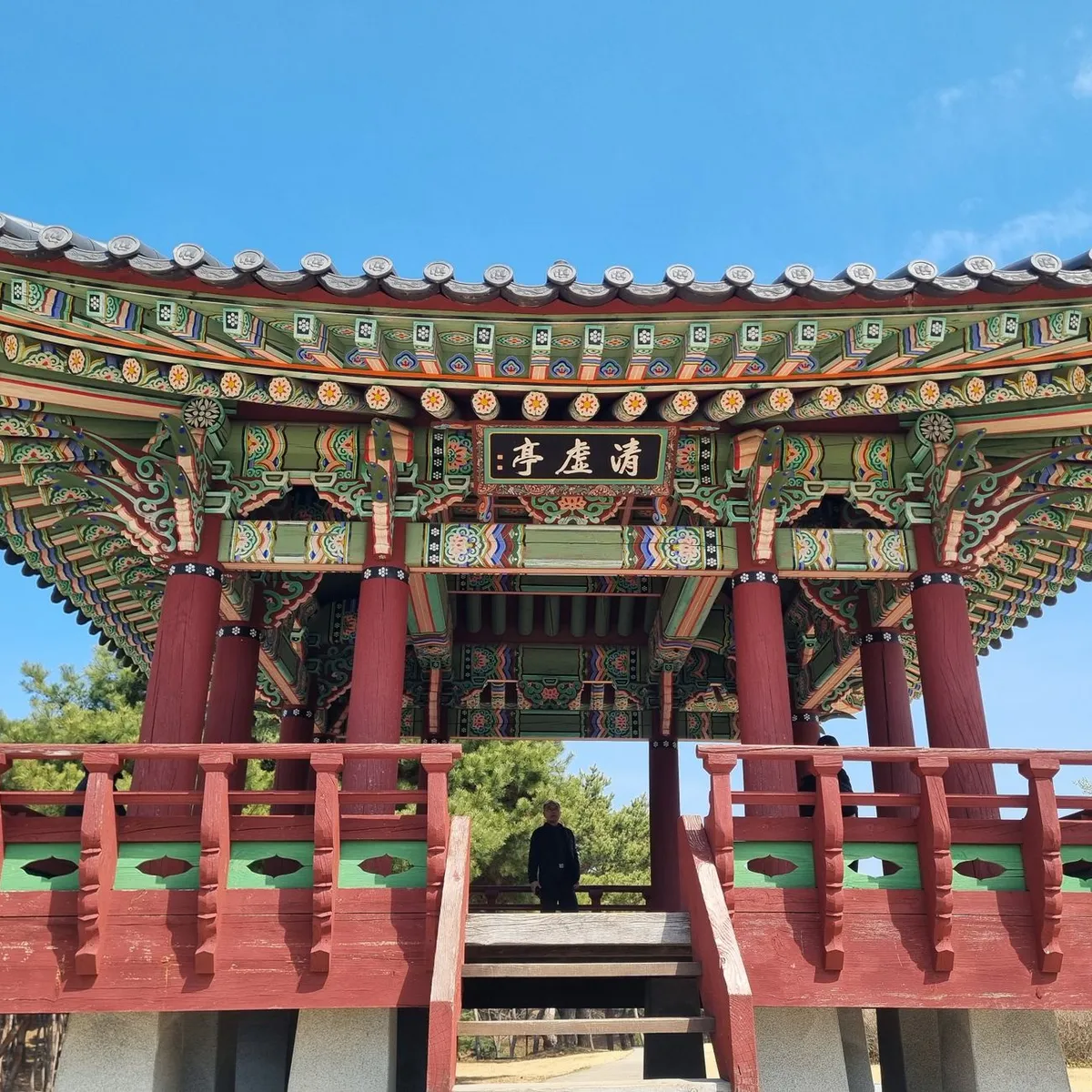
 Photo: Seongpack Cho / Pexels
Gyeongju
Gyeongju accessibility for wheelchair users
Compare Gyeongju by accessibility, transport, terrain, healthcare, cost, weather, laws, reviews, and community notes.
Gyeongju accessibility scores
Compare Gyeongju by accessibility, transport, terrain, healthcare, cost, weather, and laws. General stats use public data and models. Community rows reflect member reviews and votes.
General stats
National benchmarks and estimates — your experience in this city may differ.
Community
Starts from our estimate — thumbs up nudge toward Excellent, down toward Poor. Reviews use 1–5 stars.
These figures combine public statistics, models, and live weather where available. Every city is different — treat this as a guide, and share what you know in the Reviews & Corrections tab.
Profile last updated 7/2/2026.
Gyeongju wheelchair accessibility guide
Research Gyeongju for wheelchair users and caregivers: getting around, terrain, healthcare, costs, climate, accessible things to do, and practical caveats before booking.
Last updated 7/2/2026At a glance
Gyeongju is a practical mid-sized base for a wheelchair user who is comfortable verifying details locally rather than expecting a fully documented accessible-tourism ecosystem. RollVenture’s live profile puts it at overall score 70 with a monthly living-cost estimate from ~$2618/mo. Use that as a planning signal, not a guarantee: apartment step-free access, bathroom layout, elevator size, and personal-care availability still need direct confirmation before a longer stay. The strongest fit is for travelers who want a quieter regional city, day trips, and lower density than Seoul or Taipei; the weakest fit is for anyone who needs every attraction, clinic, and transit interchange pre-confirmed in English.
Getting around
Gyeongju works best with a planned taxi or hired-vehicle layer between heritage clusters. Rail and intercity buses connect the city region, but many famous sights sit outside a single compact step-free core. For wheelchair users, the safest routine is to base near the main station or a newer hotel cluster, ask accommodation staff to confirm elevator routes to platforms, and keep taxi backup for late evenings or rainy days. Intercity rail or express buses can work for day trips, but book assistance early, confirm lift/low-floor availability, and avoid assuming that a route shown on a map has step-free transfers. Sidewalk quality changes block by block, so short test trips are worth doing before committing to a neighborhood.
Terrain & mobility
This is the hilliest selected city: the live profile labels it very hilly, with max grades around 11.8%, only 56% flat samples, and historic surfaces including compacted or paving-stone areas. Choose accommodation carefully, keep routes short, and treat temples or tomb parks as assisted outings unless access is confirmed. RollVenture’s OSM pavement sample is only a lead, so treat the surface score as directional. Expect good asphalt on larger roads and mixed curb cuts, utility covers, tactile paving, narrow shopfront sidewalks, and occasional steep approaches around older districts or parks. A power chair or strong assistant gives more margin than a manual chair on sightseeing days. In hot or wet weather, plan fewer stops and use indoor breaks.
Healthcare & care
The stored healthcare leads are not strong central-city anchors and include OSM hospital entries around 15-19 km away. For a stay, identify a current Gyeongju or nearby Pohang/Ulsan hospital and confirm emergency access before travel. These are leads, not accessibility guarantees. Before arrival, identify one hospital or clinic that can communicate with your language needs, confirm wheelchair entry and appointment procedures, and keep medication names written in Korean/Chinese and English as relevant. For personal care, short stays should be arranged through accommodation or private providers before travel; do not assume same-day attendant care is easy to find.
Costs & housing
The live cost estimate is from ~$2618/mo, with local rent and transport generally below the largest capital-city cores but still variable by building age and proximity to rail. The main accessibility risk is housing quality: many older apartments or guesthouses may have entry steps, compact bathrooms, or elevators too small for larger mobility devices. Ask for photos/video of the entrance, elevator, bathroom threshold, shower, bed clearance, and route from street to room before paying.
Climate & comfort
Summers are hot and humid, winters can be cold, and outdoor heritage sites expose visitors to sun, wind, and rain. Start early and keep museum/hotel breaks. Summer heat, monsoon rain, and winter cold can make curb ramps, slopes, and transfers harder than the map suggests. Build in rest days, choose lodging with reliable heating/air-conditioning, and keep one indoor fallback for every outdoor plan.
Accessible things to do
Bulguksa Temple— a signature UNESCO-listed site; confirm step-free visitor routes, slope management, and accessible toilets because temple grounds are historic.
Bomun Lake / Bomun Tourist Complex— a better candidate for flatter paths, hotels, and rest stops than mountain temples; verify curb cuts around the lake.
Gyeongju National Museum— an indoor cultural anchor and likely the most predictable heritage stop; confirm elevators and wheelchair loan/current facilities.
Daereungwon / central tomb area— central historic landscape with broad outdoor routes in parts, but surfaces and entrances need checking after rain.
Community & language
Tourist sites have better signage than ordinary errands, but Korean-language calls are still useful for access checks. Hotels around Bomun may be more accustomed to visitors than small guesthouses. English support is uneven outside major tourist counters and international hotels. Translation apps help, but save addresses in the local script and ask venues to confirm accessibility in writing. Disability rights and public-access expectations are improving, yet the practical experience is still site-by-site.
Would we recommend it?
Yes for culture-focused travelers who can handle hills with assistance or powered mobility. No as an easy first wheelchair destination in Korea unless the trip is carefully routed around accessible transport and flatter sites. It is most promising for independent wheelchair users who like regional cities and can verify access in advance. It is less suitable as a first destination if you need extensive English-language access documentation, guaranteed step-free sightseeing, or dependable on-demand personal care. A short scouting stay before a long relocation would be the sensible path.
These figures combine public statistics, models, and live weather where available. Every city is different — treat this as a guide, and share what you know in the Reviews & Corrections tab.
Profile last updated 7/2/2026.
Reviews & corrections
Share your experience or suggest a data correction. Both appear publicly; admin updates official city scores and costs separately.
Log in to write a review or suggest a correction.
No reviews or corrections yet.