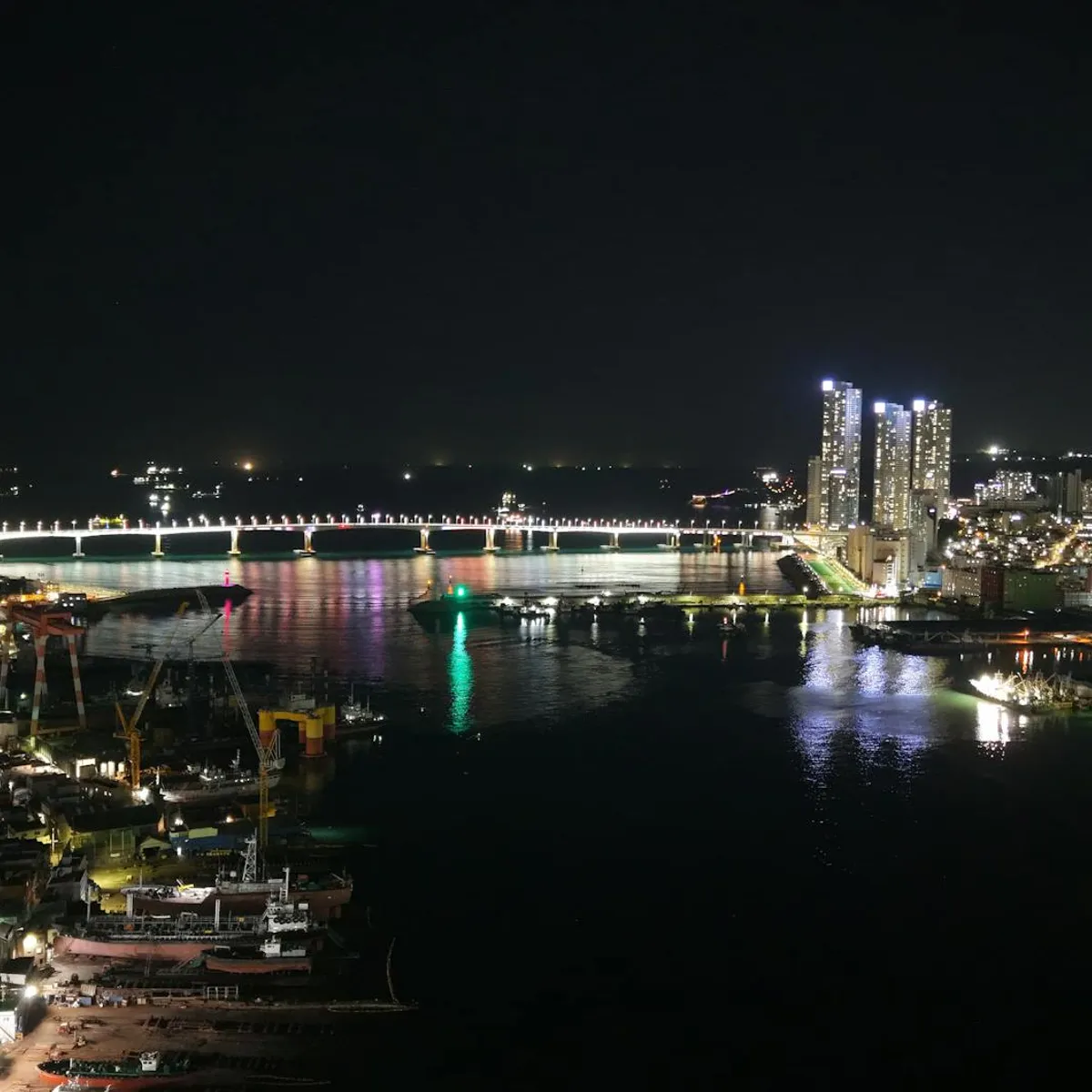
 Photo: Jhany Blue / Pexels
Pohang
Pohang accessibility for wheelchair users
Compare Pohang by accessibility, transport, terrain, healthcare, cost, weather, laws, reviews, and community notes.
Pohang accessibility scores
Compare Pohang by accessibility, transport, terrain, healthcare, cost, weather, and laws. General stats use public data and models. Community rows reflect member reviews and votes.
General stats
National benchmarks and estimates — your experience in this city may differ.
Community
Starts from our estimate — thumbs up nudge toward Excellent, down toward Poor. Reviews use 1–5 stars.
These figures combine public statistics, models, and live weather where available. Every city is different — treat this as a guide, and share what you know in the Reviews & Corrections tab.
Profile last updated 6/30/2026.
Pohang wheelchair accessibility guide
Research Pohang for wheelchair users and caregivers: getting around, terrain, healthcare, costs, climate, accessible things to do, and practical caveats before booking.
Last updated 6/30/2026At a glance
Pohang is a coastal South Korean city with better pavement signals than many same-score candidates, but it still needs careful route planning. The live row shows high-confidence pavement data, a mostly urban mix of asphalt and paving-stone surfaces, and a hilly terrain label with moderate elevation variation. It is more promising for wheelchair users who stay near the coast or central districts and use taxis for longer jumps. DB costs are from ~$2,741/mo, with housing from ~$1,079/mo.
Getting around
Plan on a mix of taxi, private car, and short rolls rather than assuming every bus or sidewalk link will work. South Korea has improving accessible transport, but local stop design, curb height, and vehicle availability can vary. For intercity arrival, confirm station elevator routes and accessible taxi options before booking. Within Pohang, choose a hotel near the waterfront, hospital, or specific attraction to reduce transfers.
Terrain & mobility
The sampled terrain is hilly, with a maximum sampled grade around 3.7% and an elevation range around 166 m. That is manageable in selected coastal areas but tiring if routes climb inland. Pavement data is a strength: high confidence, 36% good surface share, and no poor-surface share in the sample, though many ways remain untagged. Watch for tactile paving edges, drainage channels, curb lips, and beach-adjacent sand.
Healthcare & care
The DB lists several OSM healthcare leads close to the center, including Pohang Semyung Christian Hospital and rehabilitation/orthopedic-related listings. Treat the OSM list as a starting point only: confirm current departments, appointment requirements, language support, and step-free entrances. For longer stays, arrange prescriptions and therapy before arrival and keep a Seoul or Daegu backup plan for specialized care.
Costs & housing
The DB estimate is from ~$2,741/mo, including housing from ~$1,079/mo. Accessible housing may be the harder piece than general rent. Korean apartments can have raised bathroom thresholds, narrow wet rooms, and small elevators, so request measurements and photos. Hotels are easier for short stays, but still verify roll-in shower details and parking/drop-off access.
Climate & comfort
Pohang has cold but not extreme winters and humid, rainy summers. DB climate records show heavier rain in July through September, with September especially wet. Summer humidity can affect fatigue and skin care; winter wind along the coast can be uncomfortable for slower outdoor routes. Keep indoor alternatives for rain days.
Accessible things to do
Yeongildae Beach / waterfront promenade area— A good candidate for coastal views and food stops, but verify paved sections, curb cuts, and beach-sand boundaries.
Space Walk area— A visually distinctive landmark; wheelchair users should treat the structure itself as uncertain and focus on nearby viewpoints unless access is confirmed.
Homigot Sunrise Square— A coastal outing with open-space appeal; check parking/drop-off distance, wind exposure, and toilet access before committing.
Jukdo Market area— Useful for food culture, but expect crowds, wet surfaces, narrow aisles, and uneven thresholds; best with a companion.
Community & language
Korean is the working language. Larger hotels and medical centers may have some English support, but written Korean access questions are helpful. Ask very specific questions about elevators, slopes, shower thresholds, and taxi pickup points.
Would we recommend it?
Yes, cautiously. Pohang has decent pavement signals and useful healthcare leads, but hills, rain, and venue-by-venue access checks keep it from being an easy destination.
These figures combine public statistics, models, and live weather where available. Every city is different — treat this as a guide, and share what you know in the Reviews & Corrections tab.
Profile last updated 6/30/2026.