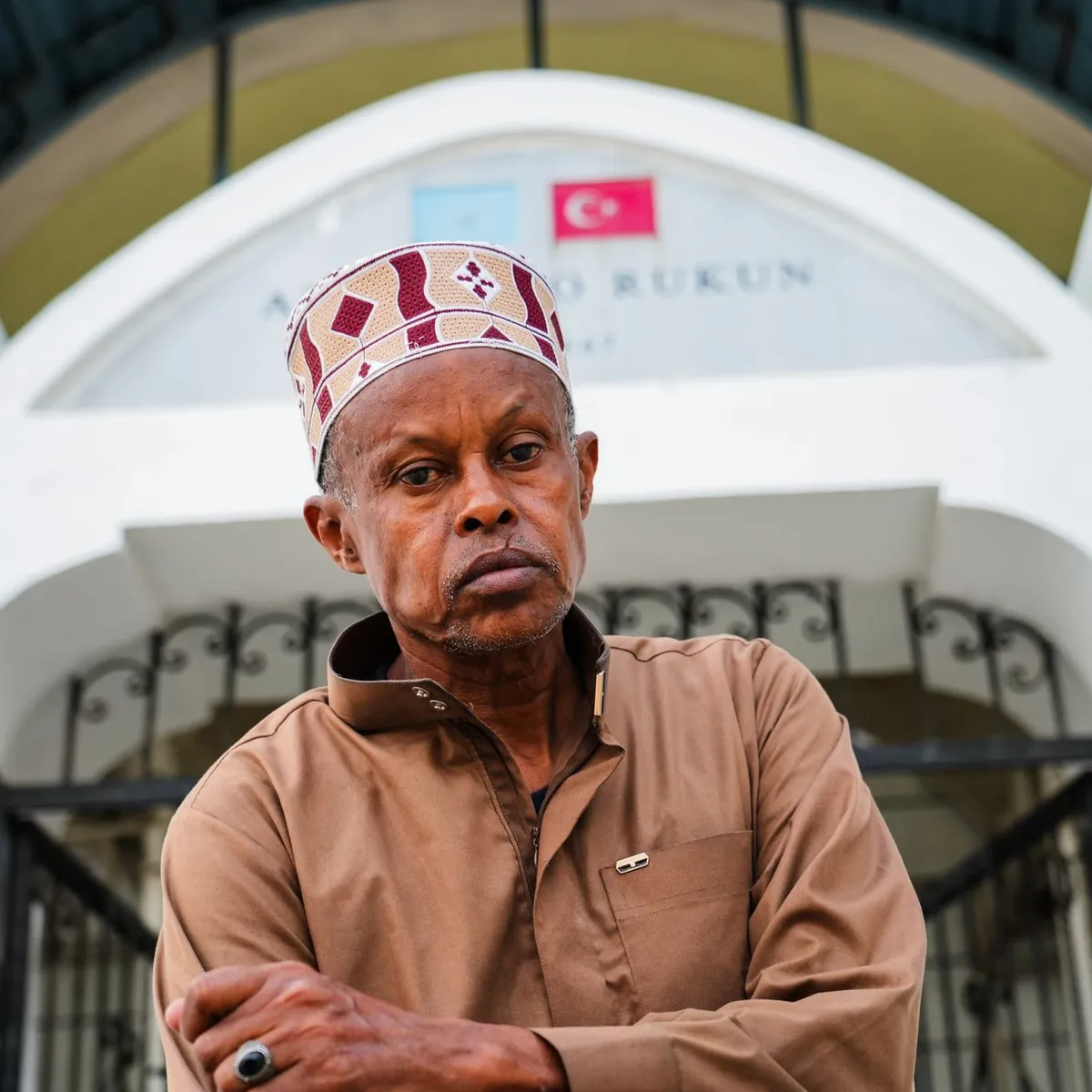
 Photo: ibrahim sakhawi / Pexels
Hargeysa
Hargeysa accessibility for wheelchair users
Compare Hargeysa by accessibility, transport, terrain, healthcare, cost, weather, laws, reviews, and community notes.
Hargeysa accessibility scores
Compare Hargeysa by accessibility, transport, terrain, healthcare, cost, weather, and laws. General stats use public data and models. Community rows reflect member reviews and votes.
General stats
National benchmarks and estimates — your experience in this city may differ.
Community
Starts from our estimate — thumbs up nudge toward Excellent, down toward Poor. Reviews use 1–5 stars.
These figures combine public statistics, models, and live weather where available. Every city is different — treat this as a guide, and share what you know in the Reviews & Corrections tab.
Profile last updated 7/1/2026.
Hargeysa wheelchair accessibility guide
Research Hargeysa for wheelchair users and caregivers: getting around, terrain, healthcare, costs, climate, accessible things to do, and practical caveats before booking.
Last updated 7/1/2026At a glance
Hargeysa is the capital of Somaliland and a major highland city, with airport links, markets, livestock-trading heritage, and access to the Laas Geel rock-art site outside town. It is not a conventional accessible-tourism destination. The live row shows low accessibility, low ramp availability, and limited wheelchair transport, while Wikivoyage emphasizes that visitors usually need planning because there is little tourism infrastructure. The database estimates costs from ~$2,191/mo, with housing around ~$1,133/mo.
Getting around
Wikivoyage notes Hargeisa International Airport and an informal shared bus system, but for wheelchair users the practical answer is a private car and a trusted local contact. Do not rely on shared buses, spontaneous taxis, or walking between errands. Roads and driver behavior can be unpredictable, and airport-to-hotel transfers should be arranged before arrival. Ask hotels or NGOs to recommend drivers who can handle folding chairs and wait through appointments.
Terrain & mobility
The terrain profile is hilly, with modest sampled grades but a highland setting around 1,300 m. The pavement profile is high-confidence and dominated by unpaved, untagged, and asphalt ways. That means dust, rough shoulders, missing curb cuts, and uneven compounds are central barriers. A manual wheelchair user should expect pushing assistance outside controlled hotel or office environments. Power-chair users should confirm charging, dust protection, and vehicle loading before committing.
Healthcare & care
The DB healthcare profile lists several nearby OpenStreetMap hospital leads, including Gargaar Multi Specialty Hospital, Kaah Medical Centre, Haldoor Hospital, and Adna Adan Hospital. These are not accessibility audits. Before travel, identify one primary emergency facility and call about step-free entry, imaging, pharmacy, and transfer assistance. Bring critical supplies, copies of prescriptions, and a contingency plan for evacuation or travel to a larger regional medical hub if complex care is needed.
Costs & housing
The row estimates monthly costs from ~$2,191. Accessible housing should be verified more strictly than usual: no entrance step, wide bathroom door, roll-in or low-threshold shower, stable electricity, water reliability, and a safe vehicle drop-off. A hotel that works for NGO travelers may still fail wheelchair requirements, so request a video walkthrough.
Climate & comfort
Hargeysa is drier and cooler than many lowland African cities. DB climate data shows mild-to-warm averages, with rain peaks around April-May and again mid-year. Dust, sun exposure, and cool evenings are practical concerns. Carry water, sun protection, and layers, and avoid long outdoor markets when wind or dust is high.
Accessible things to do
Hargeysa central market area— A culturally important but difficult lead; consider a short accompanied visit with a nearby drop-off rather than a long independent push.
Independence Monument / MiG jet memorial area— A city landmark that can often be approached as a brief vehicle-supported stop; verify paving and curb cuts locally.
Laas Geel rock-art excursion— A major regional sight outside the city; treat as a scenic/off-road day trip with no step-free guarantees, suitable only with strong assistance.
Livestock market viewpoint— Hargeysa is known for camel and livestock trading; use a driver-supported edge-of-market look rather than entering crowded rough areas.
Community & language
Somali is the main language. English may work with hotels, NGOs, and some medical staff, but a local fixer or driver is highly valuable. Somaliland-specific entry rules and security expectations should be checked before travel.
Would we recommend it?
Only for experienced, supported wheelchair travelers with a clear reason to be in Somaliland. Hargeysa has real cultural interest and named healthcare leads, but access conditions are rough and venue-level accessibility information is thin.
These figures combine public statistics, models, and live weather where available. Every city is different — treat this as a guide, and share what you know in the Reviews & Corrections tab.
Profile last updated 7/1/2026.