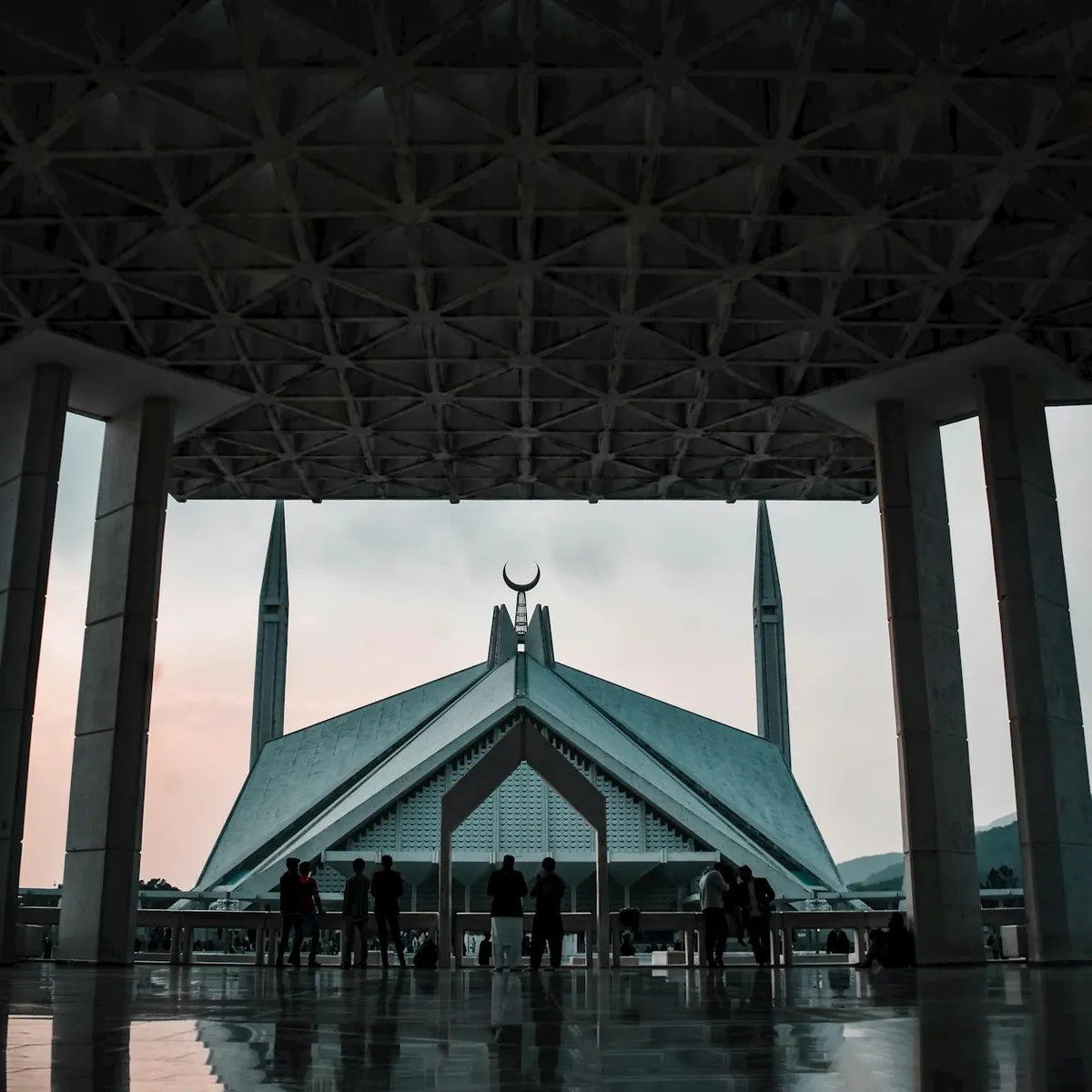
 Photo: Hassan Shah / Pexels
Islamabad
Islamabad accessibility for wheelchair users
Compare Islamabad by accessibility, transport, terrain, healthcare, cost, weather, laws, reviews, and community notes.
Islamabad accessibility scores
Compare Islamabad by accessibility, transport, terrain, healthcare, cost, weather, and laws. General stats use public data and models. Community rows reflect member reviews and votes.
General stats
National benchmarks and estimates — your experience in this city may differ.
Community
Starts from our estimate — thumbs up nudge toward Excellent, down toward Poor. Reviews use 1–5 stars.
These figures combine public statistics, models, and live weather where available. Every city is different — treat this as a guide, and share what you know in the Reviews & Corrections tab.
Profile last updated 6/30/2026.
Islamabad wheelchair accessibility guide
Research Islamabad for wheelchair users and caregivers: getting around, terrain, healthcare, costs, climate, accessible things to do, and practical caveats before booking.
Last updated 6/30/2026At a glance
Islamabad is one of Pakistan’s easier big-city bases in theory: planned sectors, major hospitals, green spaces, landmarks, and a calmer layout than many older South Asian cities. The database still scores wheelchair access very low, mainly because ramps, sidewalks, and transport cannot be assumed. Costs are estimated from ~$1,717/mo, with housing around ~$915/mo. For wheelchair users, Islamabad is best approached as a private-car city with carefully chosen step-light venues.
Getting around
Do not rely on ordinary buses or spontaneous ride-hailing for wheelchair access. Islamabad and Rawalpindi have metrobus/BRT corridors, but station access, crowding, lifts, and last-mile paths should be checked locally before use. A private vehicle with a known driver is more predictable for Faisal Mosque, Pakistan Monument, museums, hospitals, and shopping areas. Sector addresses are easier to navigate than old-city lanes, but crossings and curb ramps may still fail.
Terrain & mobility
The city sits near the Margalla Hills. The terrain profile is very hilly overall, even though many planned sectors are flatter than the hillside attractions. Pavement data is low-confidence, with most ways untagged and only limited asphalt confirmation. Expect missing curb cuts, security barriers, steep site approaches, and uneven parking-to-door routes. Keep outings short enough that a failed entrance does not ruin the day.
Healthcare & care
OpenStreetMap healthcare leads include Ali Medical Centre, PAF Hospital, Bilquis Memorial Hospital, International Islamic Medical Centre, and Poly Clinic Hospital. These should be verified directly for accessible entrances, elevators, emergency access, imaging, and attendant policies. Islamabad is still a stronger care base than remote northern routes, so it can work as a staging city before mountain travel.
Costs & housing
The row estimates living costs from ~$1,717/mo. Accessible housing should be checked by video: entrance, lift size, bathroom doorway, shower threshold, bed height, backup power, and parking. Gated or higher-end buildings may have smoother entrances but can still have bathroom steps. Budget for private transport and possibly a helper.
Climate & comfort
Summers can be hot, monsoon rain can flood or damage sidewalks, and winter evenings can be chilly. Air quality and traffic vary by season and corridor. Plan outdoor visits early, carry water, and keep a backup indoor stop if security or weather blocks a landmark.
Accessible things to do
Faisal Mosque— Islamabad’s signature landmark; exterior plazas may be the most feasible part, but confirm prayer-hall entry and toilet access before going.
Pakistan Monument and museum area— A major planned-city sight with parking access; verify ramps, surface grades, and lifts locally.
Lok Virsa Museum— A practical cultural stop if staff confirm entrance and gallery access by phone.
Rawal Lake / Lake View Park drive— Use as a scenic car-based outing with short paved stops; avoid assuming lakeside paths are continuous or step-free.
Community & language
Urdu is widely used, and English is common in hospitals, hotels, universities, and government-adjacent services. Written addresses and phone confirmation still help because “accessible” may be interpreted as “staff can carry” rather than step-free.
Would we recommend it?
Yes, cautiously, as a supported South Asian city base. Islamabad has stronger services and clearer navigation than many nearby destinations, but wheelchair users still need private transport, pre-verified housing, and conservative venue planning.
These figures combine public statistics, models, and live weather where available. Every city is different — treat this as a guide, and share what you know in the Reviews & Corrections tab.
Profile last updated 6/30/2026.