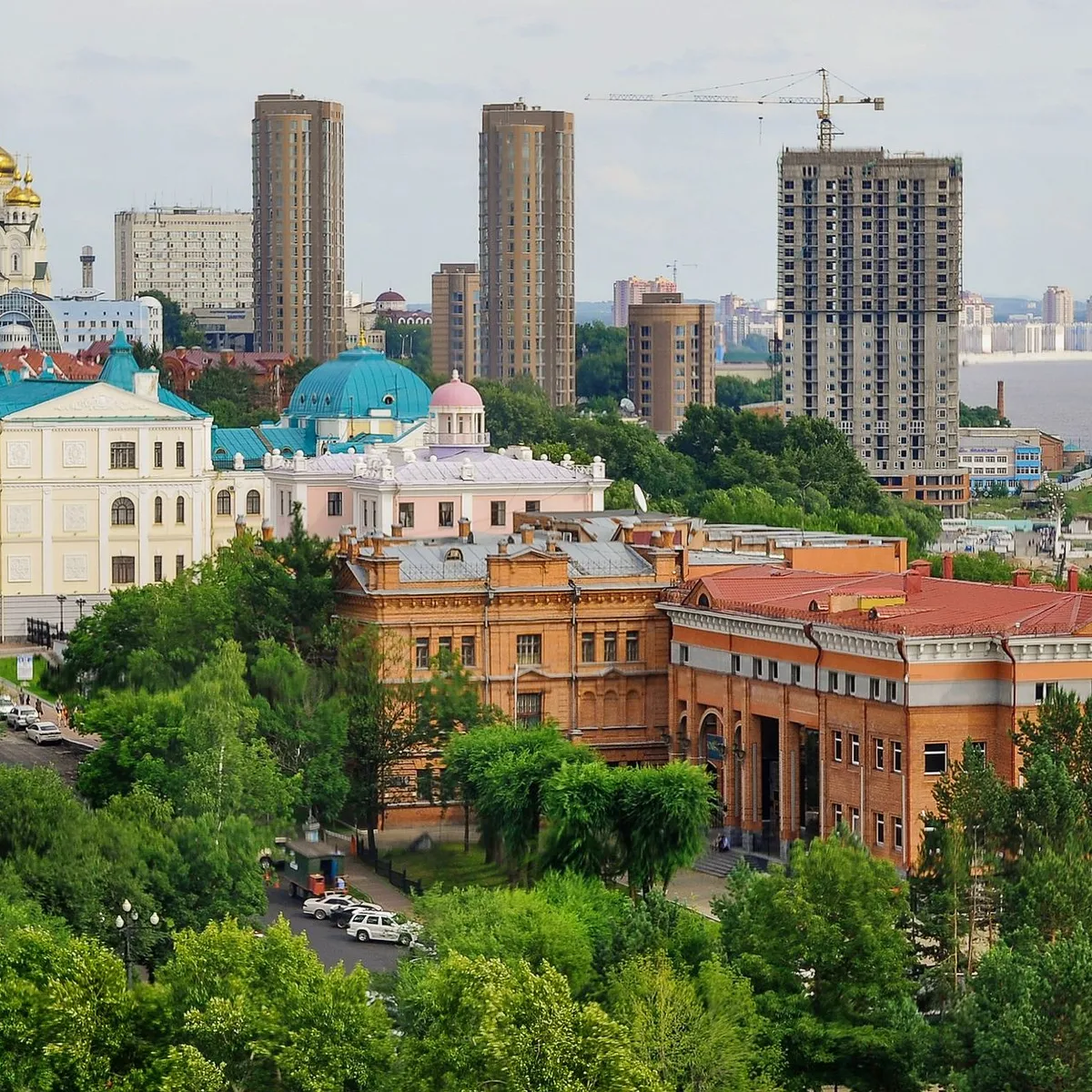
 Photo: Александр / Pexels
Khabarovsk Vtoroy
Khabarovsk Vtoroy accessibility for wheelchair users
Compare Khabarovsk Vtoroy by accessibility, transport, terrain, healthcare, cost, weather, laws, reviews, and community notes.
Khabarovsk Vtoroy accessibility scores
Compare Khabarovsk Vtoroy by accessibility, transport, terrain, healthcare, cost, weather, and laws. General stats use public data and models. Community rows reflect member reviews and votes.
General stats
National benchmarks and estimates — your experience in this city may differ.
Community
Starts from our estimate — thumbs up nudge toward Excellent, down toward Poor. Reviews use 1–5 stars.
These figures combine public statistics, models, and live weather where available. Every city is different — treat this as a guide, and share what you know in the Reviews & Corrections tab.
Profile last updated 7/1/2026.
Khabarovsk Vtoroy wheelchair accessibility guide
Research Khabarovsk Vtoroy for wheelchair users and caregivers: getting around, terrain, healthcare, costs, climate, accessible things to do, and practical caveats before booking.
Last updated 7/1/2026At a glance
Khabarovsk Vtoroy appears to represent the rail-side/urban area of Khabarovsk rather than a separate tourist district. It can be practical for travelers using the Trans-Siberian corridor, but wheelchair users should plan conservatively. The database shows moderate scores, from ~$2,626/mo, and a gentler terrain profile than many hilly cities. The harder parts are winter, patchy pavement tagging, older buildings, and the need to verify lifts or step-free routes one stop at a time.
Getting around
Khabarovsk-1 railway station is a major Trans-Siberian stop, and Wikivoyage lists it as the main rail gateway. For wheelchair travel, contact the rail operator well ahead for boarding assistance, carriage access, and station routing. Within the city, buses, trams, and trolleybuses exist, but step-free reliability should not be assumed. Use taxis for first arrivals, medical appointments, and winter days, and keep addresses in Russian for drivers.
Terrain & mobility
Stored terrain data is favorable: gently rolling, low maximum sampled grade, and a modest elevation range. Pavement is the bigger caveat. OSM surface samples have medium confidence, only a small share tagged as good, and some gravel/ground or untagged ways. Snow and ice are major seasonal barriers, with database climate data showing very cold winters and roughly 56 snowy days per year. Summer rolls near central squares and the Amur embankment are more realistic than winter independence.
Healthcare & care
OpenStreetMap healthcare leads include Yunilab, City Polyclinic No. 16, a trauma point, and several children’s or infectious-disease hospitals. These are leads only. Confirm adult services, accessible entrances, elevator availability, appointment systems, and whether foreign-language help is available. Carry translated medical summaries and do not rely on a clinic name alone to indicate wheelchair access.
Costs & housing
The database estimate is from ~$2,626/mo, with housing around $1,356. Modern hotels near the center or station are more likely to have elevators than older apartments, but shower access, threshold heights, and winter entrance clearing must be checked. Ask specifically about lift dimensions, ramp slope, and whether a room can be reached without stairs during snow season.
Climate & comfort
This is a severe-climate city: monthly averages range from about -20°C in winter to 22°C in summer. Cold, ice, slush, and heavy clothing affect transfers, battery range, and hand function. Summer and early autumn are the best windows for a lower-risk visit.
Accessible things to do
Far East Regional Museum— Wikivoyage describes this as one of the oldest and strongest museums in the Russian Far East. Confirm entrance steps, cloakroom access, and internal lifts before visiting.
Far Eastern Art Museum— A central museum on Shevchenko Street; useful because it can pair with nearby museum stops, but verify door thresholds and accessible toilets.
Komsomolskaya Square and Amur viewpoints— Central squares and river viewpoints offer lower-effort sightseeing when weather is good; surfaces and curb cuts still need checking block by block.
Dynamo Park— A large central park with ponds and paths. It is likely more manageable in dry summer weather than after snow or rain, and restroom access should be verified.
Cathedral of the Transfiguration / Glory Square— A prominent city landmark with Amur views. Treat access as partly outdoor and slope-dependent; confirm step-free entry if entering the cathedral matters.
Community & language
Russian is the working language. English may be limited outside hotels or tourist-facing offices, so translation apps, written addresses, and pre-arranged assistance are important. Local help can make the city much easier, especially for transport and healthcare.
Would we recommend it?
Only for purposeful travelers. Khabarovsk Vtoroy/Khabarovsk can be done with rail planning, local assistance, and summer timing, but it is not an easy accessibility destination. It is better for travelers who have a reason to be in the Russian Far East than for a first wheelchair-accessible city break.
These figures combine public statistics, models, and live weather where available. Every city is different — treat this as a guide, and share what you know in the Reviews & Corrections tab.
Profile last updated 7/1/2026.