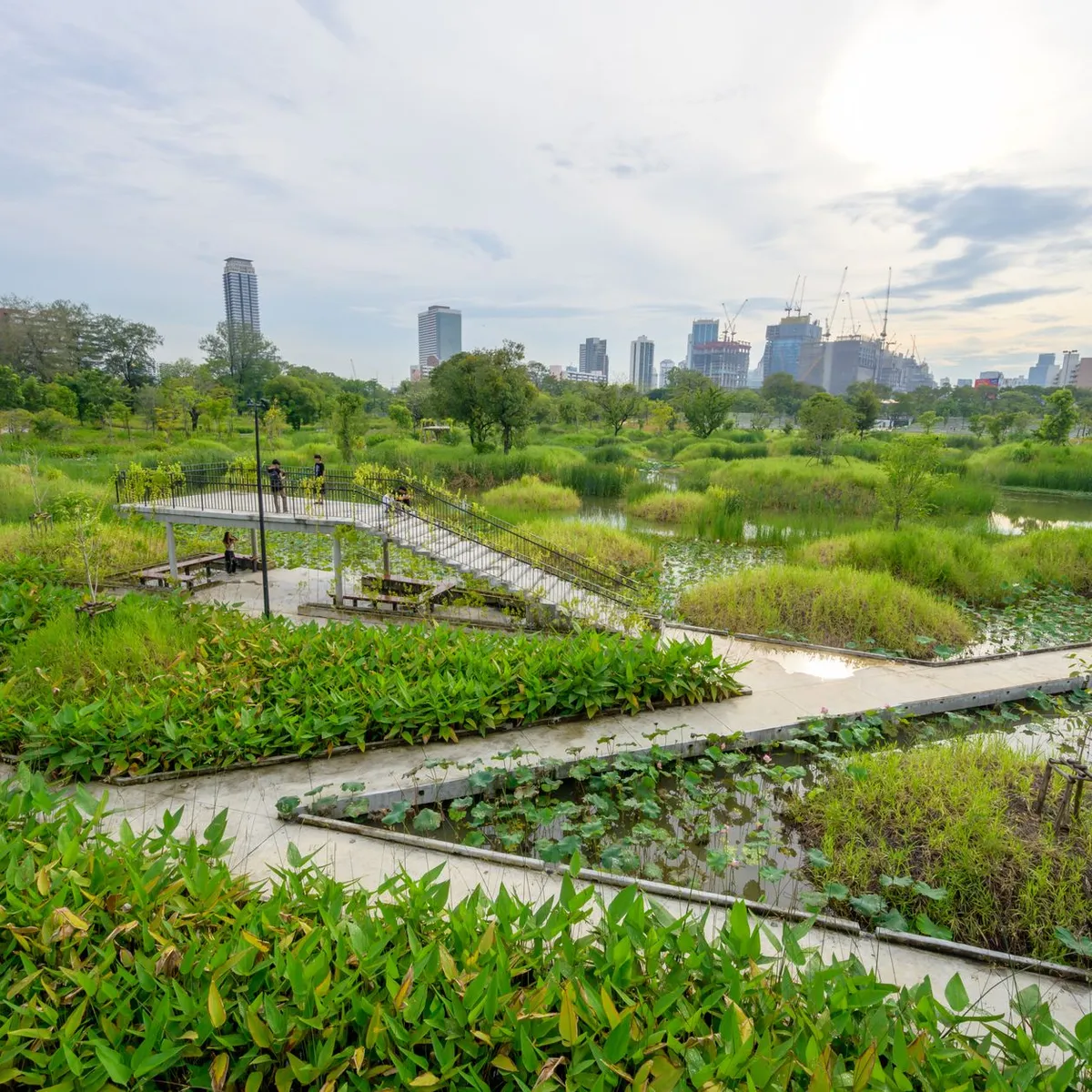
 Photo: Jame_9bkk / Pexels
Khlong Luang
Khlong Luang accessibility for wheelchair users
Compare Khlong Luang by accessibility, transport, terrain, healthcare, cost, weather, laws, reviews, and community notes.
Khlong Luang accessibility scores
Compare Khlong Luang by accessibility, transport, terrain, healthcare, cost, weather, and laws. General stats use public data and models. Community rows reflect member reviews and votes.
General stats
National benchmarks and estimates — your experience in this city may differ.
Community
Starts from our estimate — thumbs up nudge toward Excellent, down toward Poor. Reviews use 1–5 stars.
These figures combine public statistics, models, and live weather where available. Every city is different — treat this as a guide, and share what you know in the Reviews & Corrections tab.
Profile last updated 6/30/2026.
Khlong Luang wheelchair accessibility guide
Research Khlong Luang for wheelchair users and caregivers: getting around, terrain, healthcare, costs, climate, accessible things to do, and practical caveats before booking.
Last updated 6/30/2026At a glance
Khlong Luang is a large district north of Bangkok in Pathum Thani province, shaped by universities, industrial estates, canals, and big-road suburban development. It is not a classic walkable tourist city, but it can work as a practical base if you need the Rangsit or Thammasat University area and can rely on cars. The DB profile is very flat and inexpensive, with friendly-country indicators, but the accessibility score is low because pavement data is sparse and wheelchair transport cannot be assumed.
Getting around
Do not plan this as a sidewalk-first destination. The district spreads along highways and canals, so door-to-door taxis, private transfers, or rides from a local contact are the safest mobility layer. If using rail around Rangsit or the Thammasat University halt, confirm current elevator status and the gap between station and destination; even an 800-meter connection can be uncomfortable in heat or rain. Hotels and serviced apartments should be asked for photos of ramps, lifts, bathroom drains, and whether staff can keep a step-free path clear.
Terrain & mobility
The terrain profile is one of Khlong Luang's strengths: mostly flat, near sea level, and with very small sampled elevation changes. The weakness is pavement confidence. OSM shows many untagged roads and only a small share of good tagged surface, so a route may be flat but still interrupted by drainage channels, driveway lips, missing curb cuts, or fast traffic. Powered mobility and a vehicle plan will be easier than relying on manual wheelchair pushing between sites.
Healthcare & care
OSM healthcare leads include local health-promoting hospitals/clinics, Phatara-Thonburi Hospital, and AIT Medical Clinic near the academic zone. Treat those as starting points and verify language support, emergency capability, ramps, lifts, and appointment procedures. Bangkok's larger hospitals are reachable by road in non-peak traffic, but travel time can change sharply.
Costs & housing
The DB estimate is from ~$1,539/mo, including housing around $452 and home-aid around $399. This is attractive by regional standards, but accessible inventory must be verified building by building. Newer condos near universities may have lifts yet still fail on bathroom turning space or step-up balconies.
Climate & comfort
The main comfort issue is central Thailand's heat, humidity, heavy rain, and occasional flooding around low-lying roads. Plan shaded transfers, indoor breaks, and flexible timing. A flat district is not automatically easy when crossings are wide and weather is punishing.
Accessible things to do
Thammasat University Rangsit area— a large campus district with wider internal roads than the old urban core; verify building-specific access and shuttle options.
National Science Museum Thailand / Technopolis area— a major nearby science-campus destination; the official site was protected during checking, so confirm opening hours and step-free access directly.
Asian Institute of Technology area— useful for academic visitors; check current visitor policies, clinic access, and campus transport before arrival.
Future Park Rangsit / nearby malls— not in the district core but often more predictable for lifts, toilets, food, and air-conditioning than street attractions.
Community & language
Thai is the default language, with English more common around universities and international institutes. Written accessibility details may be limited, so screenshots, maps, and Thai-language notes from a hotel can help.
Would we recommend it?
Yes as a practical, car-based suburban base near Rangsit/Thammasat, not as an independent sightseeing city. The flat terrain and low cost are positives; weak sidewalk certainty and heat are the main cautions.
These figures combine public statistics, models, and live weather where available. Every city is different — treat this as a guide, and share what you know in the Reviews & Corrections tab.
Profile last updated 6/30/2026.
Reviews & corrections
Share your experience or suggest a data correction. Both appear publicly; admin updates official city scores and costs separately.
Log in to write a review or suggest a correction.
No reviews or corrections yet.