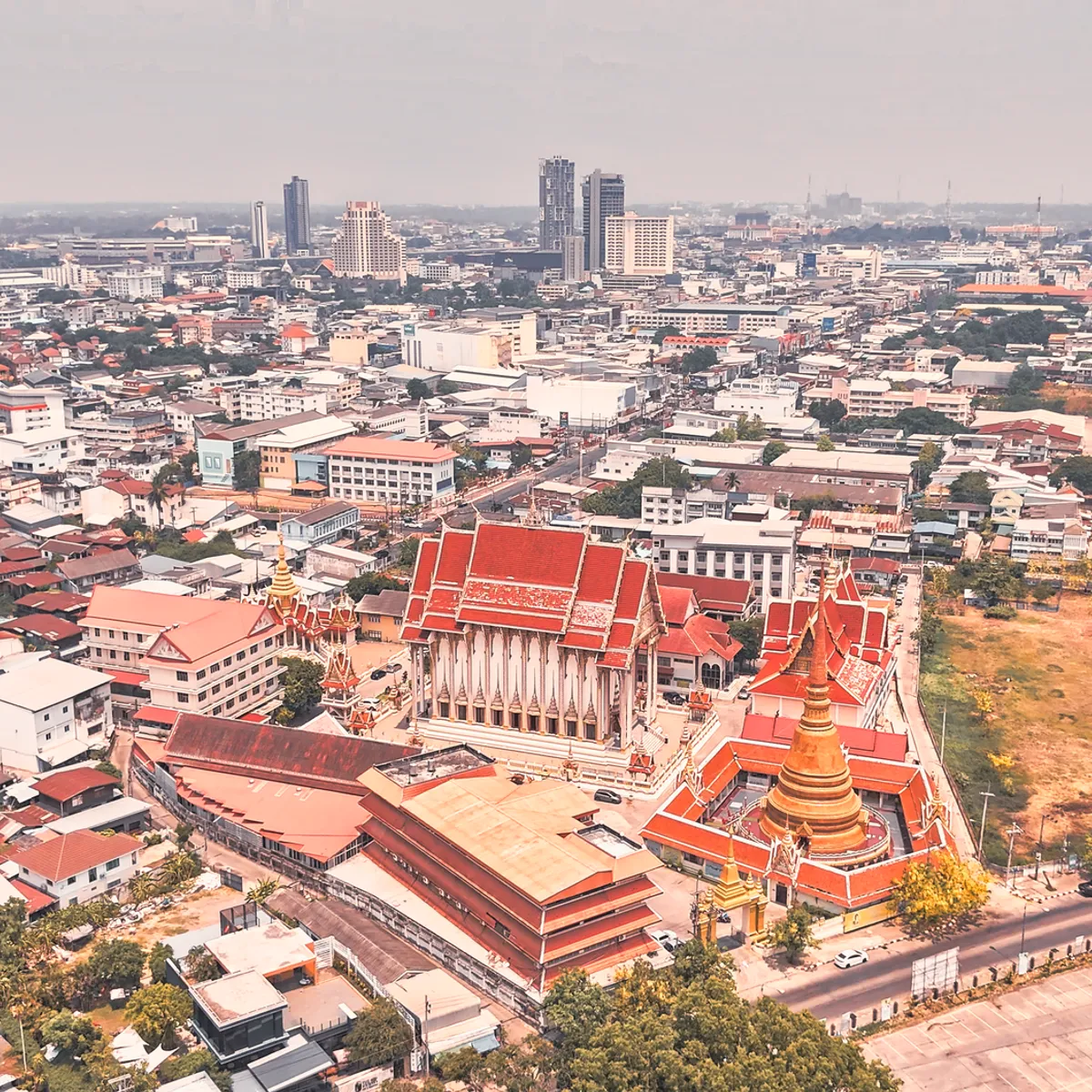
 Photo: LayG Traveller / Pexels
Phitsanulok
Phitsanulok accessibility for wheelchair users
Compare Phitsanulok by accessibility, transport, terrain, healthcare, cost, weather, laws, reviews, and community notes.
Phitsanulok accessibility scores
Compare Phitsanulok by accessibility, transport, terrain, healthcare, cost, weather, and laws. General stats use public data and models. Community rows reflect member reviews and votes.
General stats
National benchmarks and estimates — your experience in this city may differ.
Community
Starts from our estimate — thumbs up nudge toward Excellent, down toward Poor. Reviews use 1–5 stars.
These figures combine public statistics, models, and live weather where available. Every city is different — treat this as a guide, and share what you know in the Reviews & Corrections tab.
Profile last updated 6/30/2026.
Phitsanulok wheelchair accessibility guide
Research Phitsanulok for wheelchair users and caregivers: getting around, terrain, healthcare, costs, climate, accessible things to do, and practical caveats before booking.
Last updated 6/30/2026At a glance
Phitsanulok is a lower-cost northern Thai city with flat terrain, major hospitals, and important temples, but accessibility is uneven and often informal. The DB model puts monthly living from ~$1,637/mo and housing from ~$479/mo, with a low accessibility score of 45. It can work for wheelchair users who are comfortable arranging private transport, choosing a modern hotel, and treating temple and market visits as carefully scouted outings rather than guaranteed step-free experiences.
Getting around
Do not assume spontaneous accessible public transport. Local mobility is likely to depend on private cars, hotel-arranged vans, Grab/taxi-style rides where available, and short assisted transfers. The railway station connects Phitsanulok with Bangkok and northern routes, but wheelchair users should contact the railway in advance about boarding assistance, accessible toilets, and platform changes. Tuk-tuks and songthaews are usually not suitable for independent wheelchair boarding.
Terrain & mobility
Terrain is the city's strongest point: RollVenture's profile labels Phitsanulok mostly flat, with very small sampled grades and average elevation around 38 m. The harder issue is sidewalks. The pavement profile is low-confidence and dominated by untagged surfaces, concrete, paved, and asphalt entries; expect broken curbs, utility poles, drainage edges, and motorbikes blocking paths. Plan routes around short distances, shaded stops, and malls or hospital complexes where surfaces are more predictable.
Healthcare & care
The DB healthcare profile lists Bangkok Hospital Phitsanulok, Pitsanuvej Hospital, Buddhachinaraj Hospital, and other nearby hospital leads from OSM. Bangkok Hospital Phitsanulok has an active English-language web presence, which is useful for international patients; still verify step-free entrances, specialist availability, medication refills, and whether staff can coordinate transfers from a hotel. For long stays, ask about home nursing and accessible physiotherapy before committing to a rental.
Costs & housing
Phitsanulok is affordable by international standards, with modelled monthly living from ~$1,637/mo. Accessible housing is the gating factor. Many inexpensive rentals may have thresholds, wet bathrooms without grab bars, narrow doors, or no lift. A serviced apartment or newer hotel may be safer for an initial stay while you inspect longer-term options.
Climate & comfort
Expect hot weather, heavy rain in the wet season, and air-quality swings during regional burning periods. Heat management matters: schedule temple visits early, carry water, and choose lodging with reliable air conditioning and backup charging options.
Accessible things to do
Wat Phra Si Rattana Mahathat / Wat Yai— the city's signature temple and Phra Buddha Chinnarat site; verify ramp/threshold conditions and go at quiet times because temple compounds can include steps and uneven surfaces.
Nan River promenade sections— good for a low-cost evening roll if you identify smooth paved stretches and accessible road crossings first.
Bangkok Hospital Phitsanulok area cafés/services— not a tourist attraction, but a practical accessible anchor for errands, air conditioning, and medical proximity.
Sgt. Maj. Thawee Folk Museum / local museum stops— useful cultural option if current staff confirm step-free entry, exhibit-room spacing, and toilets before you arrive.
Community & language
Thai is essential outside hospitals and hotels. English may work at private hospitals and some tourism businesses, but bring translated accessibility phrases and photos of your chair measurements. Thai hospitality helps, but assistance can mean lifting, so state clearly what is safe for your body and equipment.
Would we recommend it?
Yes, cautiously, for budget-minded wheelchair users who can self-direct logistics and accept informal accessibility. It is strongest for flat terrain, hospital presence, and cost; weakest for public transport and sidewalk reliability.
These figures combine public statistics, models, and live weather where available. Every city is different — treat this as a guide, and share what you know in the Reviews & Corrections tab.
Profile last updated 6/30/2026.