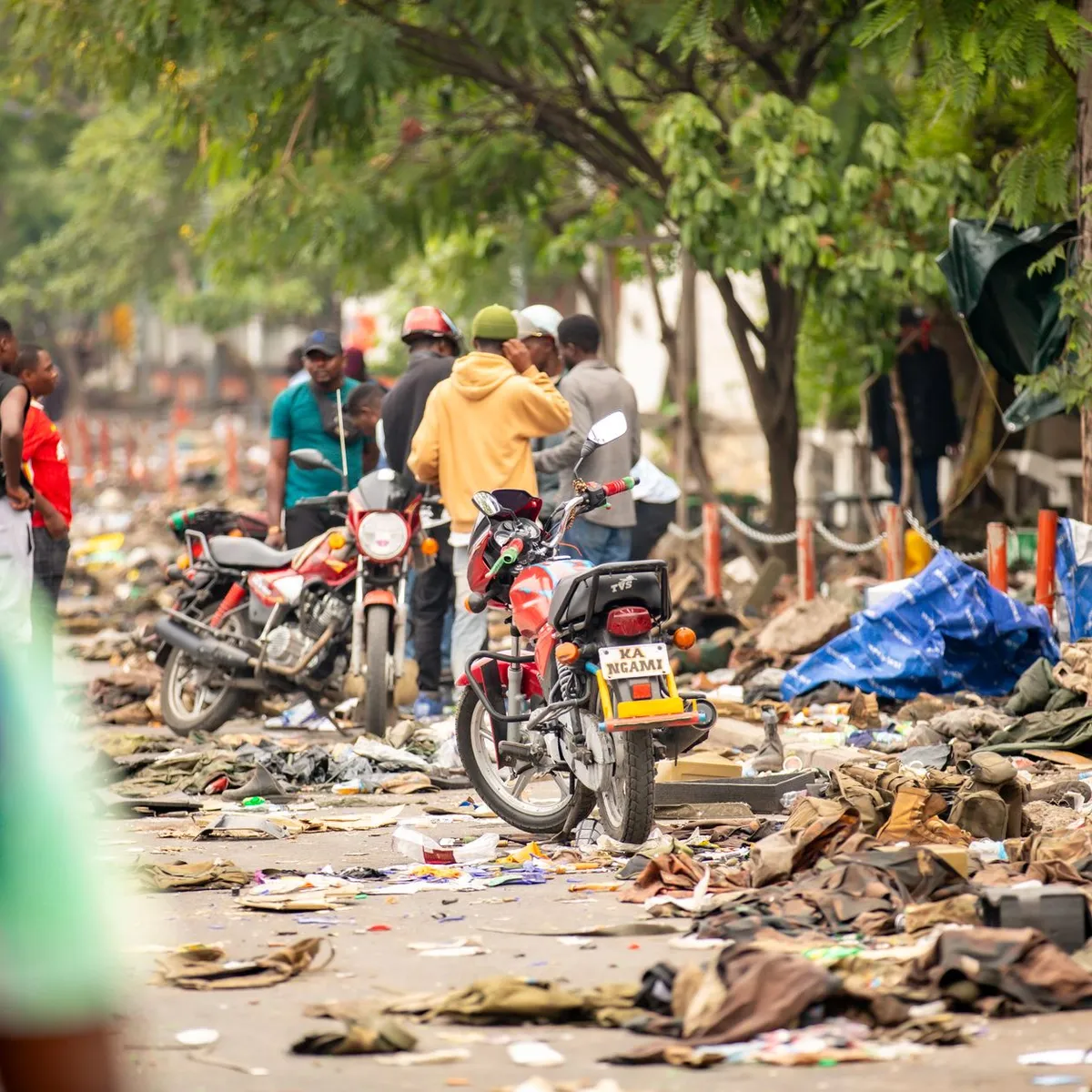
 Photo: Safi Erneste / Pexels
Kinshasa
Kinshasa accessibility for wheelchair users
Compare Kinshasa by accessibility, transport, terrain, healthcare, cost, weather, laws, reviews, and community notes.
Kinshasa accessibility scores
Compare Kinshasa by accessibility, transport, terrain, healthcare, cost, weather, and laws. General stats use public data and models. Community rows reflect member reviews and votes.
General stats
National benchmarks and estimates — your experience in this city may differ.
Community
Starts from our estimate — thumbs up nudge toward Excellent, down toward Poor. Reviews use 1–5 stars.
These figures combine public statistics, models, and live weather where available. Every city is different — treat this as a guide, and share what you know in the Reviews & Corrections tab.
Profile last updated 7/1/2026.
Kinshasa wheelchair accessibility guide
Research Kinshasa for wheelchair users and caregivers: getting around, terrain, healthcare, costs, climate, accessible things to do, and practical caveats before booking.
Last updated 7/1/2026At a glance
Kinshasa is one of Africa's largest cities, a major cultural centre on the Congo River, and a difficult wheelchair destination. The live row shows weak accessibility scores, hilly terrain, limited infrastructure, and only medium-confidence pavement data. The city can work for a prepared visitor with a private driver, vetted accommodation, and local assistance, but it should not be treated as a spontaneous roll-around city. The main value is access to government, music, river views, and urban Congolese culture in a place where support logistics must be planned carefully.
Getting around
Do not rely on public transport for step-free travel. Use a trusted private driver or organization-arranged vehicle, and keep daily routes compact around Gombe or the district where medical and hotel support are strongest. Traffic, road conditions, and security conditions vary by area. Confirm whether a wheelchair can stay assembled or must be folded, and avoid late returns after events unless you have a known driver waiting.
Terrain & mobility
OpenTopoData marks the city as hilly, with an average sampled elevation around 300 m and maximum sampled grades around 4%. That does not sound extreme, but combined with broken sidewalks, drainage channels, dirt shoulders, and busy roads it can be tiring. OSM pavement data is medium-confidence and dominated by untagged, asphalt, dirt, and concrete surfaces. Expect good access only inside specific hotels, offices, clinics, and selected venues, not across the street network.
Healthcare & care
The DB healthcare leads are OSM-derived and should be verified before use: Centre Hospitalier Biopharma, Centre de Rééducation pour Handicapés Physiques, Clinique Bucco Dentaire, Centre medical Office des Routes, and Centre de Transfusion Sanguine. The rehabilitation-centre lead is especially relevant to mobility users, but still needs direct confirmation. Bring extra medication, charger backups, and documentation in French where possible. The row estimates home aide costs from ~$440/mo, but finding a reliable aide through a hotel, clinic, NGO, or employer contact is more important than price.
Costs & housing
The row estimates monthly living from ~$2,536/mo and housing from ~$1,288/mo. Accessible housing should be verified by video: entrance threshold, lift, backup power, bathroom turning space, bed height, and vehicle drop-off. Higher-cost hotels or serviced apartments in secure districts may be more practical than cheaper housing.
Climate & comfort
Kinshasa is hot and humid, with a dry season roughly June to September and heavy rain in wetter months. Rain can worsen dirt approaches and drainage crossings. Air-conditioning, shaded waiting space, and reliable electricity are important comfort and safety features.
Accessible things to do
National Museum of the Democratic Republic of Congo— a major cultural stop; verify step-free entrance, lifts, and accessible toilets before going.
Académie des Beaux-Arts— a useful art-focused outing; ask ahead about campus surfaces and gallery access.
Congo River / Boulevard du 30 Juin drive— best handled as a vehicle-based route with planned stops rather than a long sidewalk roll.
Marché Central or smaller craft markets— culturally rich but crowded and uneven; visit with assistance and avoid peak times.
Lola ya Bonobo day trip— a known conservation site outside the core city; only consider after confirming vehicle access, paths, toilets, and weather.
Community & language
French is the key language for hotels, clinics, and official contacts; Lingala is common locally. A bilingual local assistant is strongly recommended.
Would we recommend it?
Only for experienced travelers or necessary stays. Kinshasa is culturally important and service-rich by regional standards, but wheelchair access needs heavy pre-arrangement and conservative daily planning.
These figures combine public statistics, models, and live weather where available. Every city is different — treat this as a guide, and share what you know in the Reviews & Corrections tab.
Profile last updated 7/1/2026.