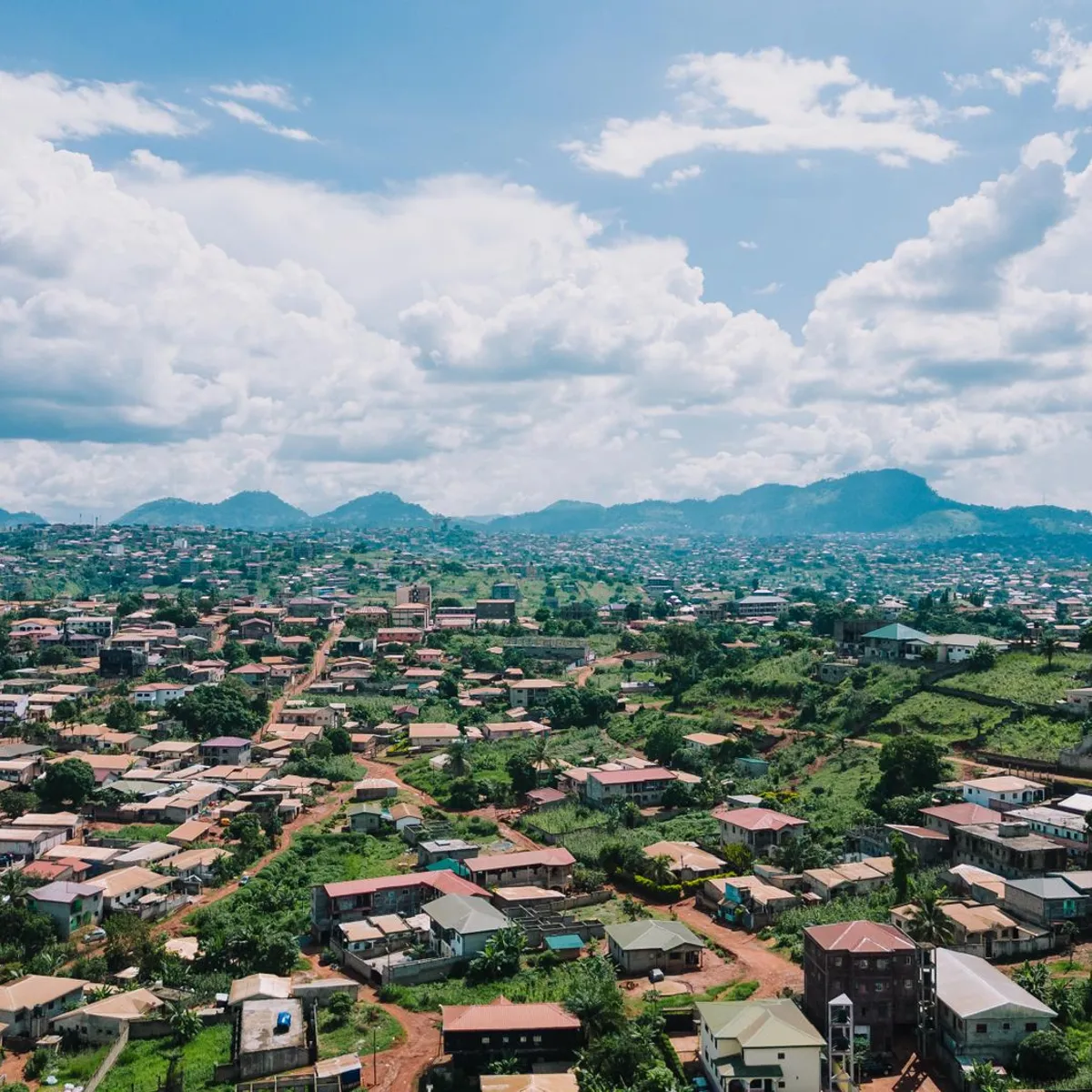
 Photo: K / Pexels
Kisangani
Kisangani accessibility for wheelchair users
Compare Kisangani by accessibility, transport, terrain, healthcare, cost, weather, laws, reviews, and community notes.
Kisangani accessibility scores
Compare Kisangani by accessibility, transport, terrain, healthcare, cost, weather, and laws. General stats use public data and models. Community rows reflect member reviews and votes.
General stats
National benchmarks and estimates — your experience in this city may differ.
Community
Starts from our estimate — thumbs up nudge toward Excellent, down toward Poor. Reviews use 1–5 stars.
These figures combine public statistics, models, and live weather where available. Every city is different — treat this as a guide, and share what you know in the Reviews & Corrections tab.
Profile last updated 7/1/2026.
Kisangani wheelchair accessibility guide
Research Kisangani for wheelchair users and caregivers: getting around, terrain, healthcare, costs, climate, accessible things to do, and practical caveats before booking.
Last updated 7/1/2026At a glance
Kisangani is a major city in DR Congo and the capital of Tshopo Province, located on the Congo River system. It has more services than smaller regional towns, but RollVenture's scores still show a difficult wheelchair environment: low access, limited ramp availability, modest infrastructure, and heavy reliance on informal transport. Costs are estimated from ~$2,342/mo, with housing from ~$1,198/mo.
The city may work for people with a strong local reason to be there, but it is not a casual accessible-travel choice. Treat every claim as needing local verification.
Getting around
Plan around private vehicles arranged through a trusted host, employer, NGO, hotel, or clinic. Public transport and motorcycles are not practical wheelchair solutions. Kisangani's scale means distances can be significant, so lodging location matters: choose a base near the clinic, work site, or family contact you will use most. Roads and shoulders may be rough even where the terrain itself is not steep.
Terrain & mobility
The DB terrain profile is relatively gentle, with low maximum grade and all sampled points flat, but pavement is the limiting factor. OSM pavement data is high confidence and dominated by untagged, unpaved, paved, and asphalt ways. That suggests many routes may be level but still hard to roll because of dust, mud, potholes, drainage, and missing curb ramps. During rain, unpaved approaches can become a major barrier.
Healthcare & care
OpenStreetMap healthcare leads near the centre include Du Canon, Rheoboth, Hôpital du Cinquantenaire, and Hôpital Général de Kisangani; these are not verified for access. Before arrival, ask exactly which hospital has emergency intake, imaging, pharmacy stock, accessible toilets, and step-free entrance. If you need pressure-care supplies, catheter supplies, wheelchair repair, or complex medication, bring redundancy and check evacuation coverage.
Costs & housing
Use the stored estimate of from ~$2,342/mo as a planning baseline. Accessible housing will be rare. Prioritise secure compounds, ground-floor rooms, paved vehicle-to-door routes, generator/solar backup, mosquito control, bathroom dimensions, and reliable water. A slightly more expensive room with a usable entrance can be better value than cheaper housing that requires lifting every day.
Climate & comfort
Kisangani is hot, humid, and rainy. Heat management, hydration, and skin protection matter. Rain can affect road surfaces, transfer safety, and travel time, so avoid stacking medical appointments and errands on the same day unless you have a dependable vehicle.
Accessible things to do
Boulevard Lumumba / central drive route— the city page identifies Boulevard Lumumba as a visible urban landmark; consider it a private-vehicle orientation route, not a guaranteed roll.
Our Lady of the Rosary Cathedral— a central landmark shown in the city profile; verify entrance steps, threshold, and interior access before visiting.
Tshopo River viewpoints— river views can be worthwhile if reached by vehicle; check surface, slope, and safe drop-off points.
Rond-Point du Canon— a recognizable central point; best treated as a drive-by landmark unless local contacts confirm safe pedestrian conditions.
Community & language
French is essential for medical, transport, and official coordination; Swahili and local languages are also common. Bring written medical notes in French if possible. A trusted local fixer or host is not optional for most wheelchair users here.
Would we recommend it?
Generally no for independent wheelchair travel. Yes only for necessary trips with a strong local support network, private transport, and a conservative healthcare plan. The terrain is not the main problem; infrastructure, road surfaces, and service reliability are.
These figures combine public statistics, models, and live weather where available. Every city is different — treat this as a guide, and share what you know in the Reviews & Corrections tab.
Profile last updated 7/1/2026.
Reviews & corrections
Share your experience or suggest a data correction. Both appear publicly; admin updates official city scores and costs separately.
Log in to write a review or suggest a correction.
No reviews or corrections yet.