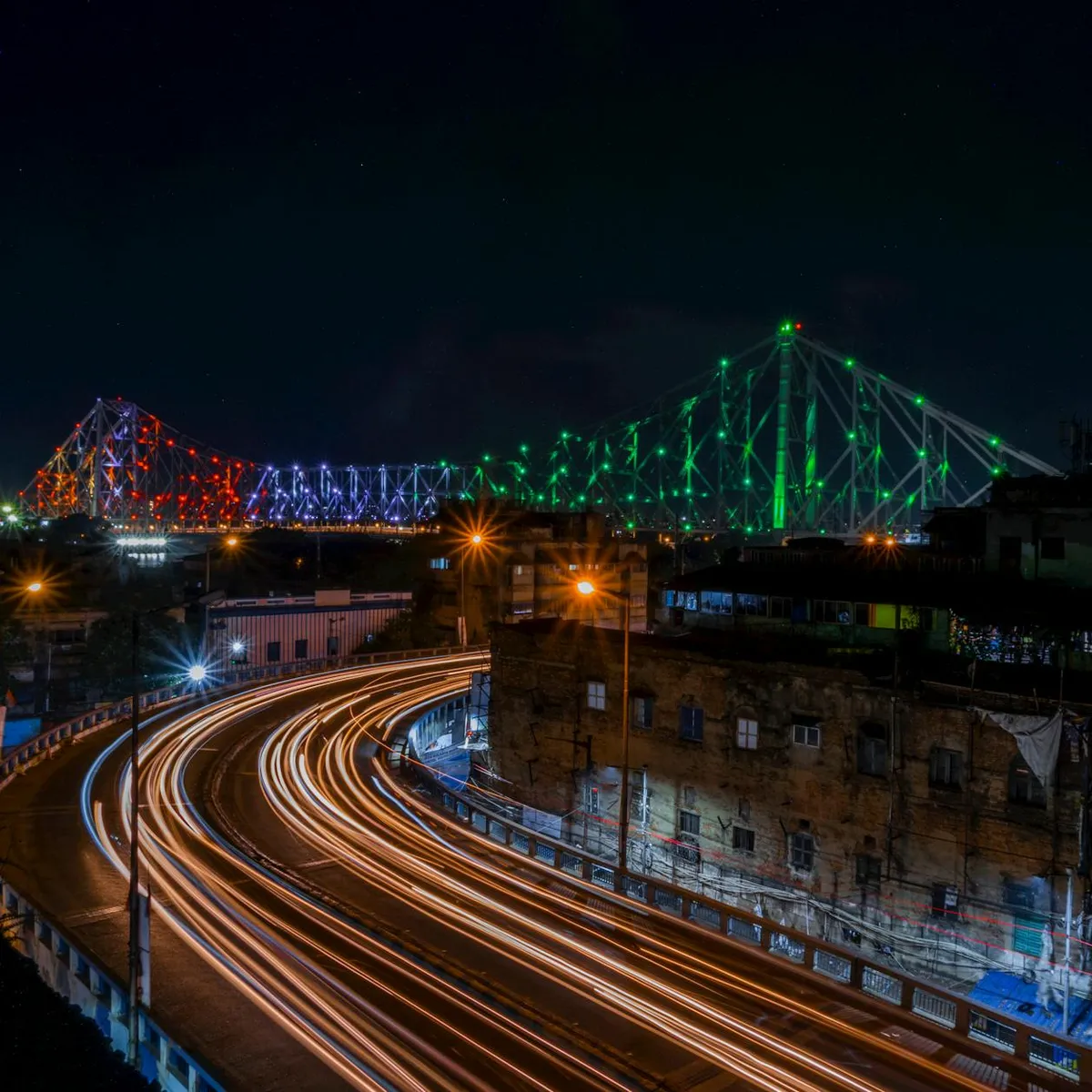
 Photo: Kuntal Biswas / Pexels
Kolkata
Kolkata accessibility for wheelchair users
Compare Kolkata by accessibility, transport, terrain, healthcare, cost, weather, laws, reviews, and community notes.
Kolkata accessibility scores
Compare Kolkata by accessibility, transport, terrain, healthcare, cost, weather, and laws. General stats use public data and models. Community rows reflect member reviews and votes.
General stats
National benchmarks and estimates — your experience in this city may differ.
Community
Starts from our estimate — thumbs up nudge toward Excellent, down toward Poor. Reviews use 1–5 stars.
These figures combine public statistics, models, and live weather where available. Every city is different — treat this as a guide, and share what you know in the Reviews & Corrections tab.
Profile last updated 6/30/2026.
Kolkata wheelchair accessibility guide
Research Kolkata for wheelchair users and caregivers: getting around, terrain, healthcare, costs, climate, accessible things to do, and practical caveats before booking.
Last updated 6/30/2026At a glance
Kolkata is a huge, culture-heavy city on the Hooghly River with a useful but uneven accessibility profile. The strongest positives are flat terrain, major hospitals near the central core, plentiful taxis/app cars, and a large supply of hotels and serviced apartments. The harder parts are broken or crowded footpaths, limited curb-ramp continuity, older tram/rail infrastructure, heat, monsoon flooding, and very busy street crossings. RollVenture's live row estimates living costs from ~$1,629/mo, with housing from ~$762/mo, but wheelchair users should budget extra for door-to-door transport and a building with reliable lifts.
Getting around
Plan around private car transfers rather than assuming a fully step-free public-transport day. Kolkata Metro, suburban rail, buses, ferries, taxis, and app cars can all be useful, but station access and pedestrian approaches need stop-by-stop checking. App cars are usually the simplest default for wheelchair users who can transfer; a non-folding chair or hoist needs a prearranged van. Keep itineraries compact around central Kolkata, Maidan, Park Street, Esplanade, BBD Bagh, or Salt Lake/New Town to reduce exhausting transfers.
Terrain & mobility
The city is mostly flat: the DB terrain sample shows an average elevation around 11 m and very low grades. That helps with rolling effort, but pavement is the real limitation. The OSM pavement sample has low confidence and only a small share of explicitly good surfaces, so expect missing curb cuts, parked vehicles on footpaths, construction plates, and slick paving during rain. Monsoon drainage can turn short distances into car-transfer trips.
Healthcare & care
Central healthcare leads in the live row include Calcutta Medical College & Hospital and Eden Hospital, with other hospitals and specialty facilities listed by OpenStreetMap. Treat these as proximity leads, not accessibility guarantees: call ahead about ramps, lift access, appointment routing, and whether an attendant can stay with you. Kolkata's large private-care market is helpful for arranging diagnostics or home support, but transfer equipment and wheelchair repairs should be lined up before arrival.
Costs & housing
Costs are favorable for a large metro by global standards, but accessible housing is not automatic. Prioritize newer apartment towers or business hotels with lift redundancy, step-free entrance photos, roll-in shower confirmation, and generator backup. Ask for exact door widths and bathroom threshold photos rather than relying on “accessible room” wording.
Climate & comfort
Heat, humidity, air pollution, and the June-September monsoon are the main comfort issues. Build rest breaks into museum days, avoid afternoon transfers in peak heat, and keep medication in a cooled bag. Winter is the easiest season for longer outdoor routes.
Accessible things to do
Victoria Memorial— a major museum-and-garden anchor near the Maidan; verify lift/entrance routing and garden path conditions before visiting.
Indian Museum— central, high-value indoor stop; call ahead for accessible entrance and lift status because older museum buildings can have route changes.
Maidan and Prinsep Ghat riverfront— flatter open-air routes can work well with a companion, but surfaces and crossing points vary.
Eco Park, New Town— a newer planned leisure area where step-free paths are more plausible than in the old core; confirm current gate and restroom access.
Community & language
Bengali is the local language, with Hindi and English widely used in hotels, hospitals, and tourism settings. Disability awareness varies: concise written access requests, photos, and a local assistant/interpreter make logistics much easier.
Would we recommend it?
Yes for experienced wheelchair travelers who want a major Indian cultural city and can pay for private transfers. It is not a low-friction destination: choose newer accommodation, keep routes compact, and verify every entrance before you go.
These figures combine public statistics, models, and live weather where available. Every city is different — treat this as a guide, and share what you know in the Reviews & Corrections tab.
Profile last updated 6/30/2026.