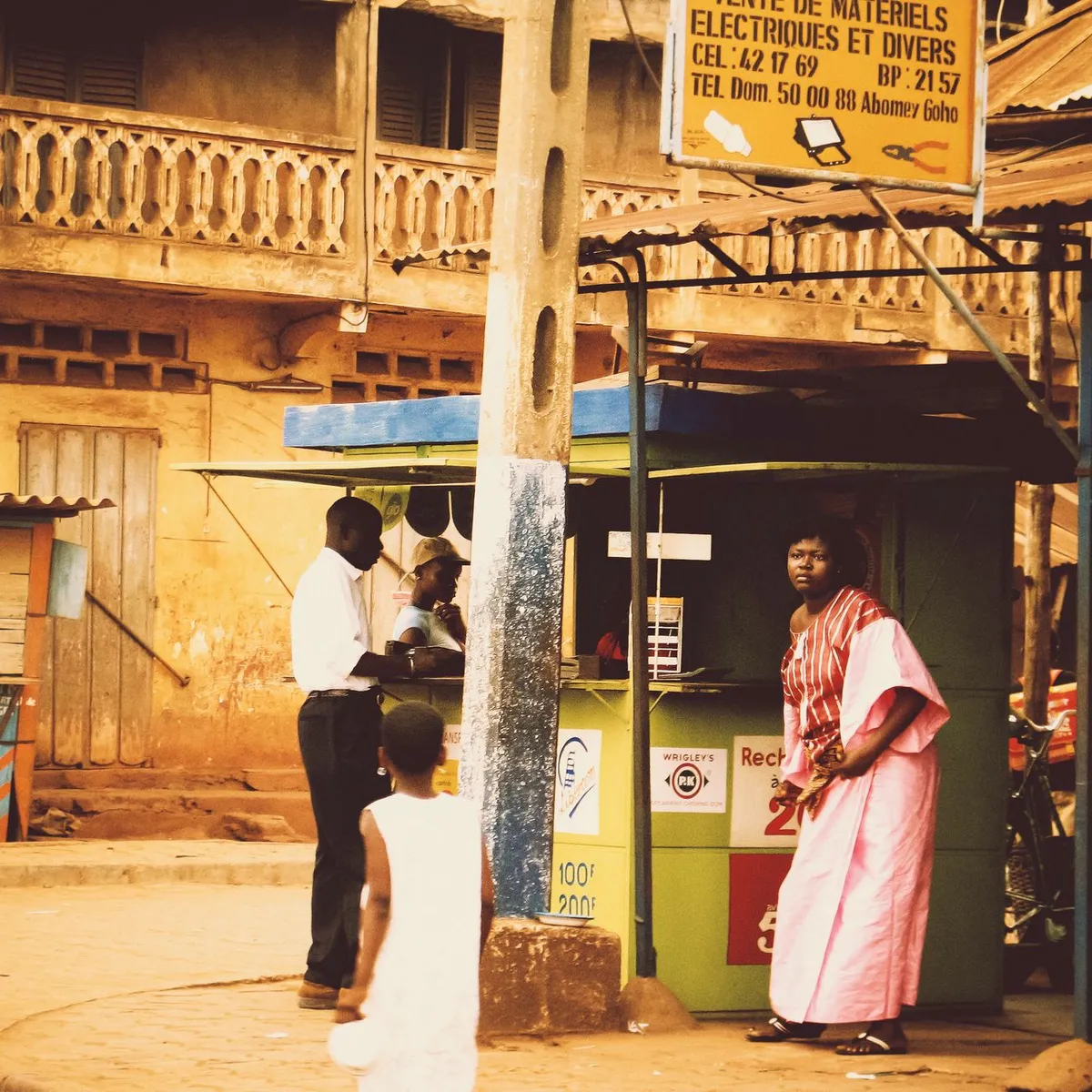
 Photo: Hans Eiskonen / Pexels
Kousséri
Kousséri accessibility for wheelchair users
Compare Kousséri by accessibility, transport, terrain, healthcare, cost, weather, laws, reviews, and community notes.
Kousséri accessibility scores
Compare Kousséri by accessibility, transport, terrain, healthcare, cost, weather, and laws. General stats use public data and models. Community rows reflect member reviews and votes.
General stats
National benchmarks and estimates — your experience in this city may differ.
Community
Starts from our estimate — thumbs up nudge toward Excellent, down toward Poor. Reviews use 1–5 stars.
These figures combine public statistics, models, and live weather where available. Every city is different — treat this as a guide, and share what you know in the Reviews & Corrections tab.
Profile last updated 7/1/2026.
Kousséri wheelchair accessibility guide
Research Kousséri for wheelchair users and caregivers: getting around, terrain, healthcare, costs, climate, accessible things to do, and practical caveats before booking.
Last updated 7/1/2026At a glance
Kousséri is a Far North Cameroon city on the Logone and Chari river frontier opposite N’Djamena, Chad. Its biggest wheelchair-accessibility advantage is terrain: RollVenture’s profile is mostly flat, with all sampled points flat and a low elevation range. Its biggest disadvantages are infrastructure, heat, security context, and weak disability-access enforcement. The city works better as a practical border/market base with local contacts than as an easy tourism destination.
Getting around
Plan on hired cars, motorcycle alternatives that may not work for wheelchair users, and informal local transport. The DB wheelchair-transport score is low, so accessible vans should not be expected. Because Kousséri forms a cross-border urban area with N’Djamena across the Logone/Chari rivers, travelers should also verify border status, bridge/road conditions, documents, and whether a driver can stay with them through errands.
Terrain & mobility
Terrain is favorable on paper: the city sits around 290 m elevation and the sampled profile is mostly flat. Surface quality is less reassuring. OSM-derived pavement data is low-confidence and dominated by untagged, unpaved, ground, and dirt surfaces. A wheelchair user should prepare for sand, dust, missing curb cuts, and roads shared with market traffic.
Healthcare & care
The healthcare profile lists several OSM leads within roughly 4–6 km, including Centre de santé Polyclinique, Centre de santé Ardep Djoumal, Centre de santé Roi Faycal, Centre de santé Bololo, and Le Bon Samaritain Hospital. These are not accessibility guarantees. Call ahead, ask about steps and ramps, and keep N’Djamena referral options in mind if border movement is possible and safe.
Costs & housing
DB estimates put monthly living costs from ~$2,336/mo, including housing from ~$1,195/mo. Accessible housing should be verified by photos or video: entrance path, compound surface, bathroom turning space, shower threshold, generator/backup power, and whether a caregiver can stay nearby.
Climate & comfort
Kousséri has a hot semi-arid climate context. Heat management is central: schedule errands early, carry water, protect batteries and medication from heat, and avoid long waits at exposed river or border areas. Dust can also irritate skin and equipment, so bring wipes, gloves, and a simple caster/bearing cleaning routine.
Accessible things to do
Chari River viewpoint— Public reference images identify views of the Chari River from Kousséri; choose a roadside or paved viewpoint and avoid soft banks.
Logone/Chari confluence area— The city is defined by the river boundary with N’Djamena; verify safety and surface conditions before approaching the water.
Kousséri market town centre— The city is described as a market town; visit with a helper and avoid the busiest periods if crowds limit maneuvering.
Historic Kousséri / Fort Fureau context— Public references note the former Fort Fureau name and the Battle of Kousséri; treat this as a historical orientation walk/drive rather than a formal accessible attraction.
Community & language
French is important for administration; Arabic varieties and local languages are common. Disability access is unlikely to be documented online, so local calls matter.
Would we recommend it?
Only with strong local support. Kousséri is flat, but heat, dirt surfaces, weak access infrastructure, and cross-border complexity make it unsuitable for independent wheelchair travel.
These figures combine public statistics, models, and live weather where available. Every city is different — treat this as a guide, and share what you know in the Reviews & Corrections tab.
Profile last updated 7/1/2026.