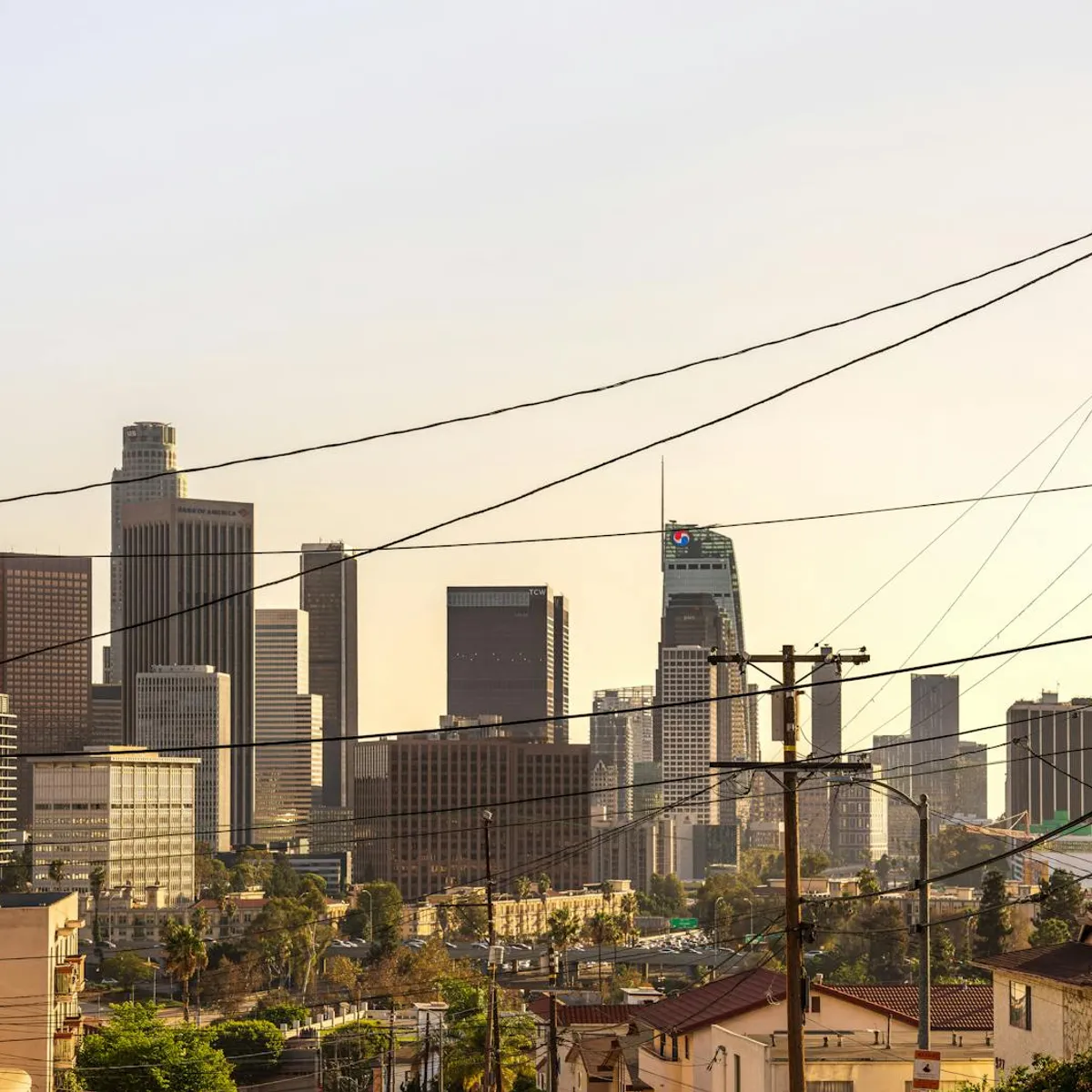
 Photo: Simon Steiner / Pexels
Los Angeles
Los Angeles accessibility for wheelchair users
Compare Los Angeles by accessibility, transport, terrain, healthcare, cost, weather, laws, reviews, and community notes.
Los Angeles accessibility scores
Compare Los Angeles by accessibility, transport, terrain, healthcare, cost, weather, and laws. General stats use public data and models. Community rows reflect member reviews and votes.
General stats
National benchmarks and estimates — your experience in this city may differ.
Community
Starts from our estimate — thumbs up nudge toward Excellent, down toward Poor. Reviews use 1–5 stars.
These figures combine public statistics, models, and live weather where available. Every city is different — treat this as a guide, and share what you know in the Reviews & Corrections tab.
Profile last updated 6/30/2026.
Los Angeles wheelchair accessibility guide
Research Los Angeles for wheelchair users and caregivers: getting around, terrain, healthcare, costs, climate, accessible things to do, and practical caveats before booking.
Last updated 6/30/2026At a glance
Los Angeles can work well for wheelchair users who want major museums, beaches, and medical depth, but it is spread out and expensive. RollVenture estimates living costs from ~$5459/mo and housing from ~$3136/mo. The city has strong ADA protections and many accessible venues, yet the practical experience depends heavily on neighborhood, sidewalk condition, transit elevator status, and whether you have access to a wheelchair-ready vehicle or reliable paratransit backup.
Getting around
LA Metro's official accessibility guide says Metro is committed to accessible bus and rail service and states that all Metro buses and rail lines are wheelchair accessible. That is a good baseline, but the region is huge. Use Metro for corridors that match your destination, check elevator/service alerts, and budget extra time for transfers. Rideshare WAV supply can vary. If you need daily care or frequent appointments, choose housing near the services instead of assuming cross-city trips will be easy.
Terrain & mobility
The DB marks Los Angeles as hilly, with a medium-confidence pavement profile. Downtown, Hollywood, hillside neighborhoods, and beach approaches can feel very different. Curb cuts are common but not universal, and broken sidewalks, steep driveways, long blocks, and heat exposure can make short distances tiring. Santa Monica and newer museum campuses are often easier than hillside residential areas.
Healthcare & care
The DB healthcare leads are OSM-derived and should be treated as starting points, not guarantees. Los Angeles also has deep specialty-care capacity across major hospital systems, but provider networks, insurance, and appointment travel time are the big constraints. Before relocating, confirm wheelchair-accessible exam rooms, transfer assistance, and whether home-care agencies cover the exact neighborhood.
Costs & housing
Accessible housing is the hardest part. The cost row is already high, and no-step entries, elevators, roll-in showers, and parking can push rents up. Ask for measurements, bathroom photos, elevator dimensions, and parking/curb details. A cheaper apartment far from transit, care, or clinics can cost more in rides and fatigue.
Climate & comfort
The climate is a major advantage: mild winters and many dry days. Heat waves, wildfire smoke, and long sun exposure still matter. Plan shade, battery range, backup charging, and indoor alternatives for poor-air days.
Accessible things to do
The Getty Center— Official visitor information describes accessibility services, including accessible parking and visitor accommodations; the campus has elevators, ramps, and tram logistics to verify.
LACMA— The museum publishes accessibility information and is a strong indoor option with nearby cultural stops.
The Broad— A central, modern museum with visitor accessibility information; timed entry helps reduce waiting stress.
Griffith Observatory— Publishes accessibility details, but parking, grades, crowds, and shuttle planning are important before visiting.
Santa Monica Pier / beach path— Good for a classic LA day when conditions are dry; verify beach wheelchair availability and pier crowding.
Community & language
English and Spanish are widely used. Disability communities, adaptive recreation groups, and specialist providers are easier to find here than in many cities, but coordination is still fragmented.
Would we recommend it?
Yes, with planning and budget. LA has excellent attractions and healthcare depth, but it is not a spontaneous wheelchair city. Choose a neighborhood around your real weekly needs, not the postcard map.
These figures combine public statistics, models, and live weather where available. Every city is different — treat this as a guide, and share what you know in the Reviews & Corrections tab.
Profile last updated 6/30/2026.
Reviews & corrections
Share your experience or suggest a data correction. Both appear publicly; admin updates official city scores and costs separately.
Log in to write a review or suggest a correction.
No reviews or corrections yet.