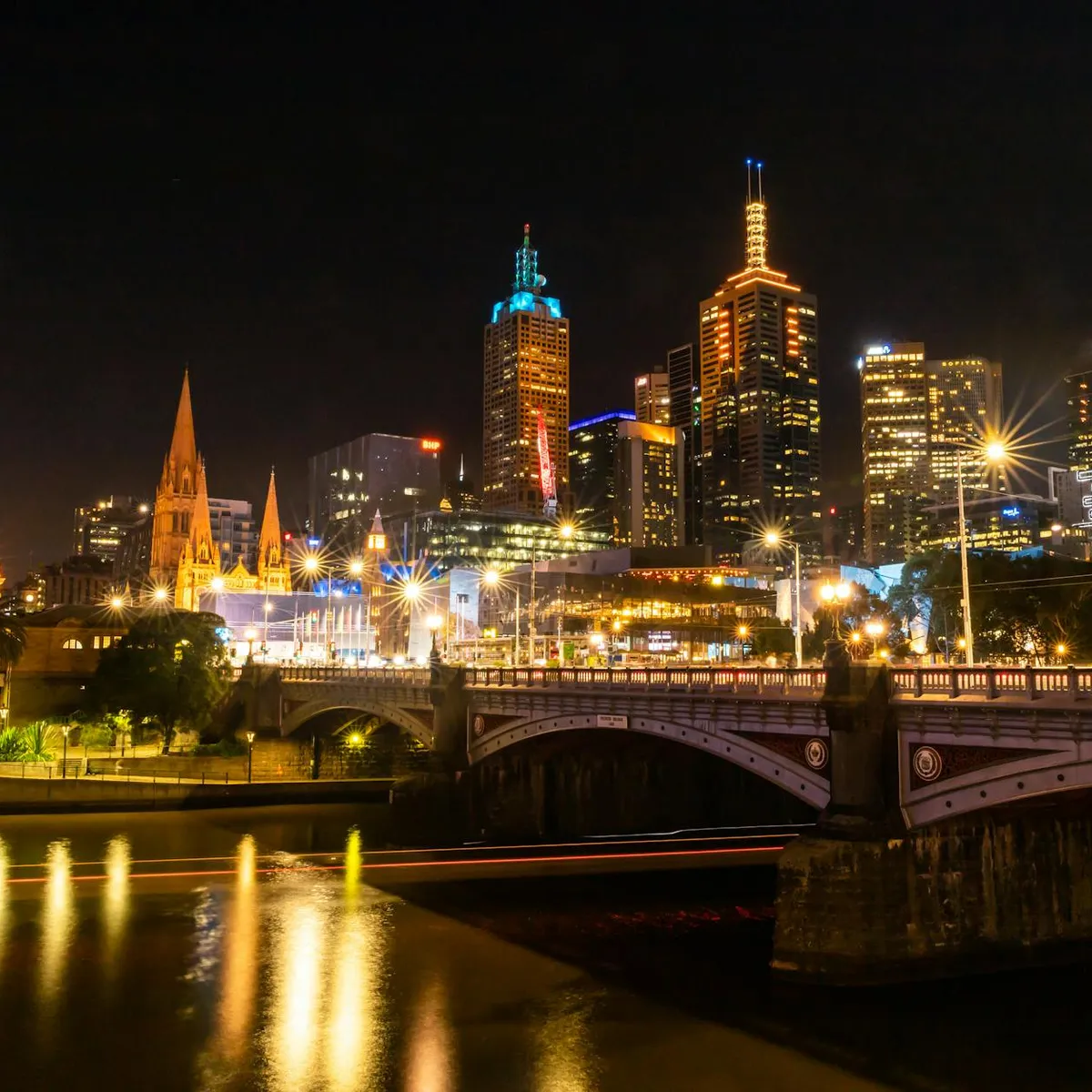
 Photo: Mitchell Luo / Pexels
Melbourne
Melbourne accessibility for wheelchair users
Compare Melbourne by accessibility, transport, terrain, healthcare, cost, weather, laws, reviews, and community notes.
Melbourne accessibility scores
Compare Melbourne by accessibility, transport, terrain, healthcare, cost, weather, and laws. General stats use public data and models. Community rows reflect member reviews and votes.
General stats
National benchmarks and estimates — your experience in this city may differ.
Community
Starts from our estimate — thumbs up nudge toward Excellent, down toward Poor. Reviews use 1–5 stars.
These figures combine public statistics, models, and live weather where available. Every city is different — treat this as a guide, and share what you know in the Reviews & Corrections tab.
Profile last updated 6/30/2026.
Melbourne wheelchair accessibility guide
Research Melbourne for wheelchair users and caregivers: getting around, terrain, healthcare, costs, climate, accessible things to do, and practical caveats before booking.
Last updated 6/30/2026At a glance
Melbourne is one of RollVenture’s stronger big-city options for wheelchair users: large hospitals, a mature public-transport network, many modern cultural venues, and generally good central pavements. The trade-offs are cost, weather changes, and the need to check tram stops carefully; not every older tram stop or heritage building is equally simple.
Getting around
Public Transport Victoria publishes network-wide accessibility information and Melbourne’s tram, train, and bus system covers the city well. For wheelchair users, the practical rule is to plan station/stops in advance: many central railway stations have lifts and staff, low-floor trams work best from platform stops, and some older streetside tram stops still require a different route. Taxis and rideshare WAV availability should be booked ahead rather than assumed at peak times.
Terrain & mobility
The database profile marks Melbourne as gently rolling, with low sampled grades and a high-confidence pavement profile: mostly asphalt, paved, or concrete surfaces. The CBD grid, Southbank, Docklands, and museum precincts are generally more predictable than older laneways, bluestone edges, and steep approaches in inner suburbs. Rain and tram tracks can make manual-chair crossings more tiring.
Healthcare & care
The Royal Melbourne Hospital City Campus is a major Parkville hospital anchor, and the curated database profile also lists Royal Talbot Rehabilitation Centre in Kew for specialist rehabilitation. Treat hospital access as strong, but verify outpatient entrances, drop-off points, and any equipment-repair or personal-care provider before travel.
Costs & housing
The database estimate is **from ~$4,283/mo**, with housing the largest line item. Accessible apartments are more realistic in newer CBD, Docklands, Southbank, Carlton, or inner-suburb buildings than in older terrace housing. Ask for lift dimensions, shower photos, bed height, balcony thresholds, and whether step-free parking/drop-off is included.
Climate & comfort
Melbourne has mild-to-warm summers, cool winters, and changeable weather. Database climate rows show winter averages around 9-10°C and frequent wet days, while summer can bring hot spells. Heating matters in winter; A/C is worth confirming for summer, especially in west-facing apartments.
Accessible things to do
National Gallery of Victoria— NGV publishes access information, including wheelchair access, accessible toilets, companion/carer support, and visitor services. It is one of the safest central cultural picks, but special exhibitions may have busy circulation.
Melbourne Museum and Carlton Gardens— Museums Victoria provides accessibility information for Melbourne Museum, and the surrounding Carlton Gardens give step-free outdoor time near the city. Confirm current lifts and exhibition-specific access before booking.
Royal Botanic Gardens Melbourne— The gardens are a practical outdoor option with many formed paths, but slopes and path surfaces vary; plan a shorter loop and use official visitor accessibility guidance or staff advice.
Southbank and Yarra River promenade— A central, mostly step-free rolling route with dining and arts venues nearby. Crowds, bridge ramps, and event closures are the main caveats.
Queen Victoria Market— Good for food and local life, with many level market aisles, but crowds, older surfaces, and bathroom location checks matter.
Community & language
English is the main language, and Melbourne is multicultural with strong disability-rights expectations under Australian law. Venue staff are usually used to access questions, but detailed measurements are still best requested in writing.
Would we recommend it?
Yes, especially for wheelchair users who want a major English-speaking city with strong hospitals, culture, and transport coverage. Budget carefully and plan tram routes by accessible stops rather than assuming every stop works.
These figures combine public statistics, models, and live weather where available. Every city is different — treat this as a guide, and share what you know in the Reviews & Corrections tab.
Profile last updated 6/30/2026.