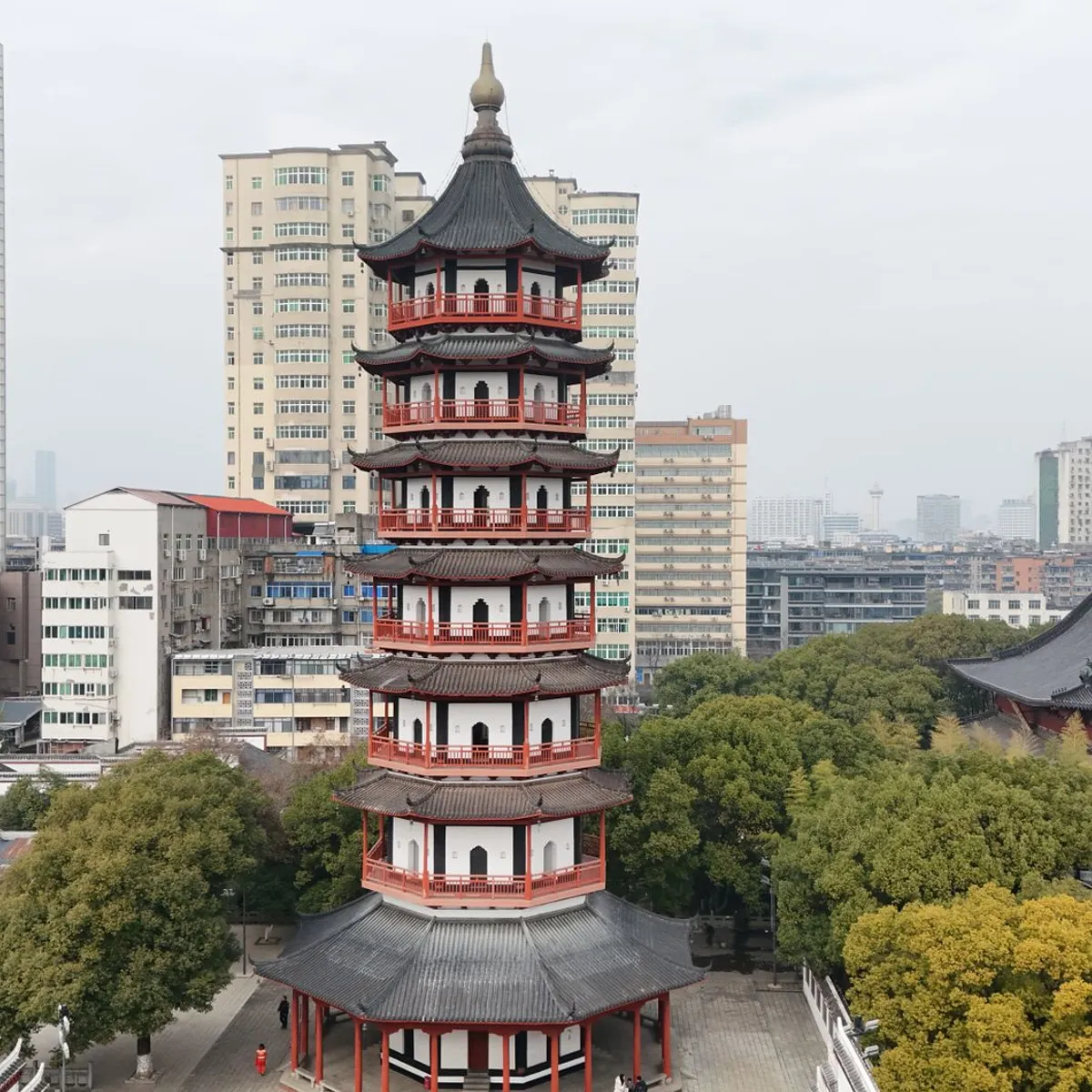
 Photo: CHINA YU / Pexels
Nanchang
Nanchang accessibility for wheelchair users
Compare Nanchang by accessibility, transport, terrain, healthcare, cost, weather, laws, reviews, and community notes.
Nanchang accessibility scores
Compare Nanchang by accessibility, transport, terrain, healthcare, cost, weather, and laws. General stats use public data and models. Community rows reflect member reviews and votes.
General stats
National benchmarks and estimates — your experience in this city may differ.
Community
Starts from our estimate — thumbs up nudge toward Excellent, down toward Poor. Reviews use 1–5 stars.
These figures combine public statistics, models, and live weather where available. Every city is different — treat this as a guide, and share what you know in the Reviews & Corrections tab.
Profile last updated 6/30/2026.
Nanchang wheelchair accessibility guide
Research Nanchang for wheelchair users and caregivers: getting around, terrain, healthcare, costs, climate, accessible things to do, and practical caveats before booking.
Last updated 6/30/2026At a glance
Nanchang is a large Jiangxi capital with a useful urban core, a metro system, major hospitals in the wider center, and a lower cost profile than China’s biggest coastal cities. RollVenture’s live row shows living costs from ~$2,360/mo, housing from ~$918/mo, transport from ~$218/mo, medical from ~$152/mo, and home aid from ~$549/mo. For a wheelchair user, the city looks possible for a planned stay, but not a low-friction one: the DB pavement sample is low-confidence and mostly untagged, so sidewalks, kerbs, and station-to-door routes should be checked block by block.
Getting around
Use Nanchang Metro and taxis/ride-hailing as the backbone rather than assuming bus access. The city has rail and air links, and the Wikipedia transport section verifies metro, rail, air, road, and water transport categories, but it does not document step-free details. Treat every transfer as something to confirm in Chinese with the hotel, station, or driver. Staying near a metro stop, the Gan River core, or a hospital cluster reduces long pavement gaps.
Terrain & mobility
The DB terrain profile is mostly manageable for a riverside city: average elevation about 39 m, 88% flat samples, and a max sampled grade of 5.9%, but it is still labelled hilly because the elevation range reaches 352 m. Pavement data is the weaker signal: 500 OSM samples, low confidence, and no meaningful tagged-surface coverage. Expect usable modern corridors around malls, stations, museums, and riverfront areas, then sudden kerbs, scooters, construction, or unmarked ramps elsewhere.
Healthcare & care
OSM leads include Jiangxi Maternal and Child Health Hospital, Nanchang Ninth Hospital, and community health centers around Pengjiaqiao, roughly 4-7 km from the city center. These are leads, not verified accessible providers. Before committing, confirm emergency department access, elevator routes, English or translation support, appointment booking, and whether a companion can assist with intake. For personal care, budget time for local introductions rather than assuming an agency can start immediately.
Costs & housing
The DB estimate puts housing from ~$918/mo and overall living from ~$2,360/mo. Accessible housing is the main uncertainty. Prioritize newer apartment towers or international hotels with elevator redundancy, wet-room photos, doorway measurements, and a no-step route from street to lift. Ask for a video walkthrough from curb to bathroom; a “barrier-free” label alone is not enough.
Climate & comfort
Nanchang has hot, humid summers and cool damp winters. Heat, rain, and slippery surfaces can make transfers harder than the raw terrain score suggests. Air-conditioning, dehumidification, and short covered routes matter for comfort.
Accessible things to do
Tengwang Pavilion— A verified landmark on the Gan River and one of China’s famous towers; confirm lifts and step-free routes before buying tickets.
Jiangxi Provincial Museum— A strong indoor option named in Nanchang landmark sources; ask the museum directly about accessible entrance, lifts, and toilets.
Bayi Square— A central public-space anchor; pavement and crossings should be checked, but it can work as a short, flexible outing.
Qiushui Square— Known for its music fountain area; choose dry weather and verify riverfront curb cuts and accessible taxi drop-off.
Community & language
Mandarin is essential for logistics. English support can be thin outside hotels, hospitals serving international patients, and major attractions, so keep addresses in Chinese and use a local contact for medical calls.
Would we recommend it?
Yes, cautiously, for travelers comfortable with Mandarin support and route verification. Nanchang offers good value and several urban anchors, but accessibility information is too sparse to treat it as easy.
These figures combine public statistics, models, and live weather where available. Every city is different — treat this as a guide, and share what you know in the Reviews & Corrections tab.
Profile last updated 6/30/2026.
Reviews & corrections
Share your experience or suggest a data correction. Both appear publicly; admin updates official city scores and costs separately.
Log in to write a review or suggest a correction.
No reviews or corrections yet.