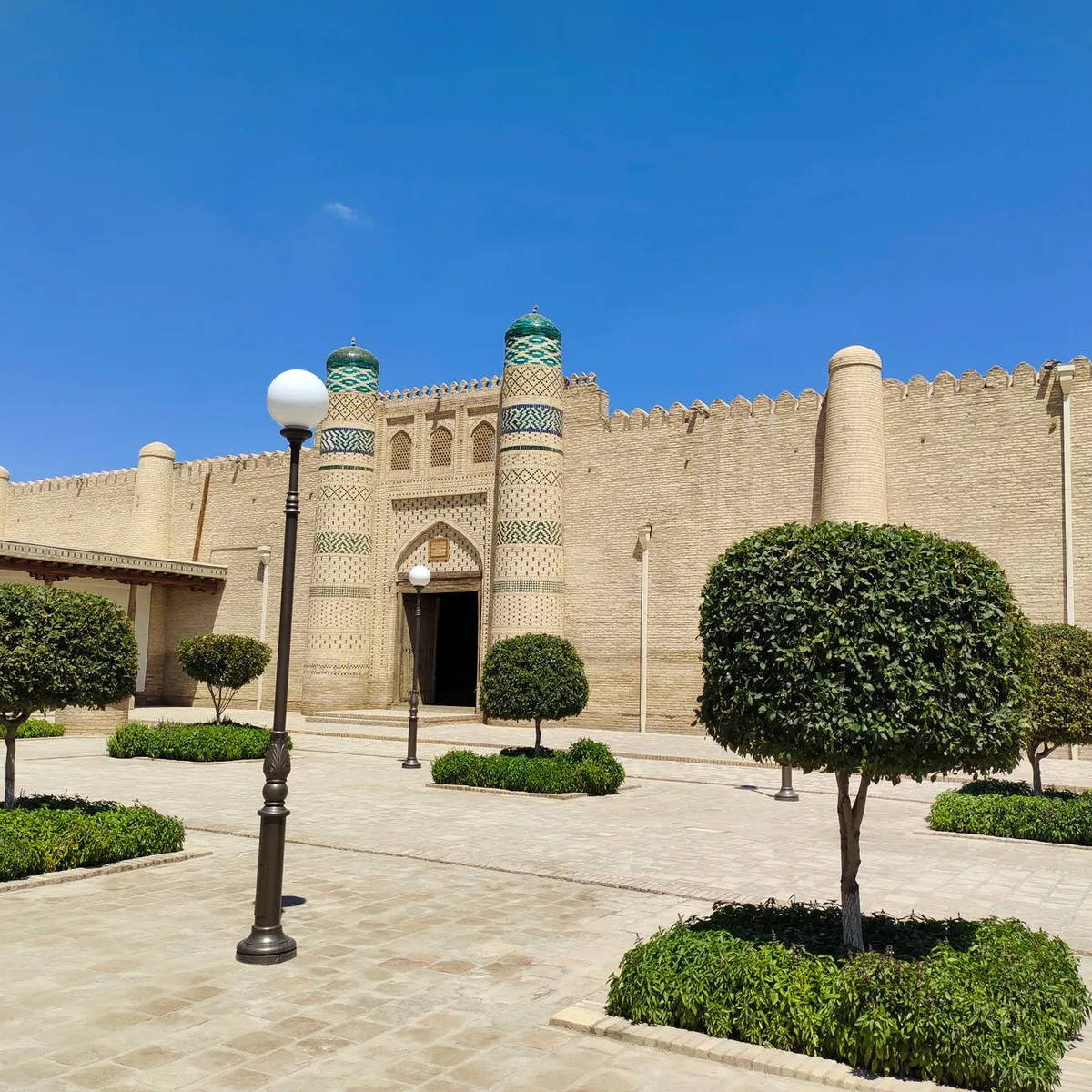
 Photo: Dilnoza A / Pexels
Olmaliq
Olmaliq accessibility for wheelchair users
Compare Olmaliq by accessibility, transport, terrain, healthcare, cost, weather, laws, reviews, and community notes.
Olmaliq accessibility scores
Compare Olmaliq by accessibility, transport, terrain, healthcare, cost, weather, and laws. General stats use public data and models. Community rows reflect member reviews and votes.
General stats
National benchmarks and estimates — your experience in this city may differ.
Community
Starts from our estimate — thumbs up nudge toward Excellent, down toward Poor. Reviews use 1–5 stars.
These figures combine public statistics, models, and live weather where available. Every city is different — treat this as a guide, and share what you know in the Reviews & Corrections tab.
Profile last updated 7/1/2026.
Olmaliq wheelchair accessibility guide
Research Olmaliq for wheelchair users and caregivers: getting around, terrain, healthcare, costs, climate, accessible things to do, and practical caveats before booking.
Last updated 7/1/2026At a glance
Olmaliq, also written Almalyk, is a mining and metallurgical city east of Tashkent in Uzbekistan. Wikipedia and BBC-sourced coverage identify it as a Soviet-developed company town tied to copper, lead, zinc, gold, silver, and barite extraction, with major smelting facilities operated by Almalyk MMC. For wheelchair users, the city is functional rather than leisure-oriented. RollVenture gives it a low accessibility score of 34, with modest infrastructure and weak wheelchair-transport scoring. Plan around private transport, verified lodging, and air-quality comfort.
Getting around
Olmaliq is roughly 65 km east of Tashkent, so the most predictable access is by private vehicle from the capital. Public transport may exist locally, but step-free boarding, securement, and assistance should not be assumed. For day trips or appointments, arrange a driver who understands chair dimensions and can wait during errands; spontaneous taxis may not fit rigid frames or power chairs.
Terrain & mobility
OpenTopoData classifies the city as mixed terrain, with grades up to about 8.8% and a sizable elevation range. That means some central streets may feel manageable while other routes become tiring or unsafe. OSM pavement data is low-confidence and dominated by untagged, unpaved, and asphalt surfaces. Expect gaps in curb cuts, rough shoulders, and construction-related obstructions. Air quality is an extra mobility issue because smelter pollution is documented in public sources.
Healthcare & care
OSM healthcare leads include a polyclinic, perinatal center, OKMK poliklinikasi, infectious-disease hospital, and city hospital. Treat these as starting points only. Verify the right department, lift access, entrance width, language support, and whether a companion can assist. For specialist care, Tashkent is likely the safer hub.
Costs & housing
RollVenture estimates costs from ~$2,182/mo, with about $1,140 housing, $308 food, $161 transport, $121 medical, $85 PT, and $367 home aid. Accessible apartments may be hard to find. Ask for video proof of the entrance, bathroom, elevator, backup heating, and whether industrial dust affects ventilation or filters.
Climate & comfort
Climate data shows an average around 15.1°C, warmest-month average around 29°C, coldest-month average around 2.8°C, and about 27 snowy days annually. Summers can be hot and polluted; winters can bring snow and slick curb ramps. Travelers with respiratory sensitivity should check local air quality and avoid long outdoor routes near industrial areas.
Accessible things to do
Olmaliq Orthodox Church— A documented local landmark; verify steps and doorway width before visiting.
Central civic streets— Useful for short orientation rolls if scouted first for curb cuts and traffic.
Almalyk MMC industrial heritage exterior— Source-backed city identity; view from public roads only and avoid restricted industrial areas.
Foothill viewpoints outside town— Terrain and geography support scenic drives, but treat them as vehicle-based stops.
Community & language
Uzbek and Russian are the practical languages. English may be limited. Have written phrases for “step-free entrance,” “elevator,” “wide bathroom,” and “wheelchair-accessible vehicle.”
Would we recommend it?
Only as a practical base for work, family, or a specific regional reason. Olmaliq’s costs are moderate, but hills, pollution, and weak verified accessibility make Tashkent a better default for most wheelchair travelers.
These figures combine public statistics, models, and live weather where available. Every city is different — treat this as a guide, and share what you know in the Reviews & Corrections tab.
Profile last updated 7/1/2026.
Reviews & corrections
Share your experience or suggest a data correction. Both appear publicly; admin updates official city scores and costs separately.
Log in to write a review or suggest a correction.
No reviews or corrections yet.