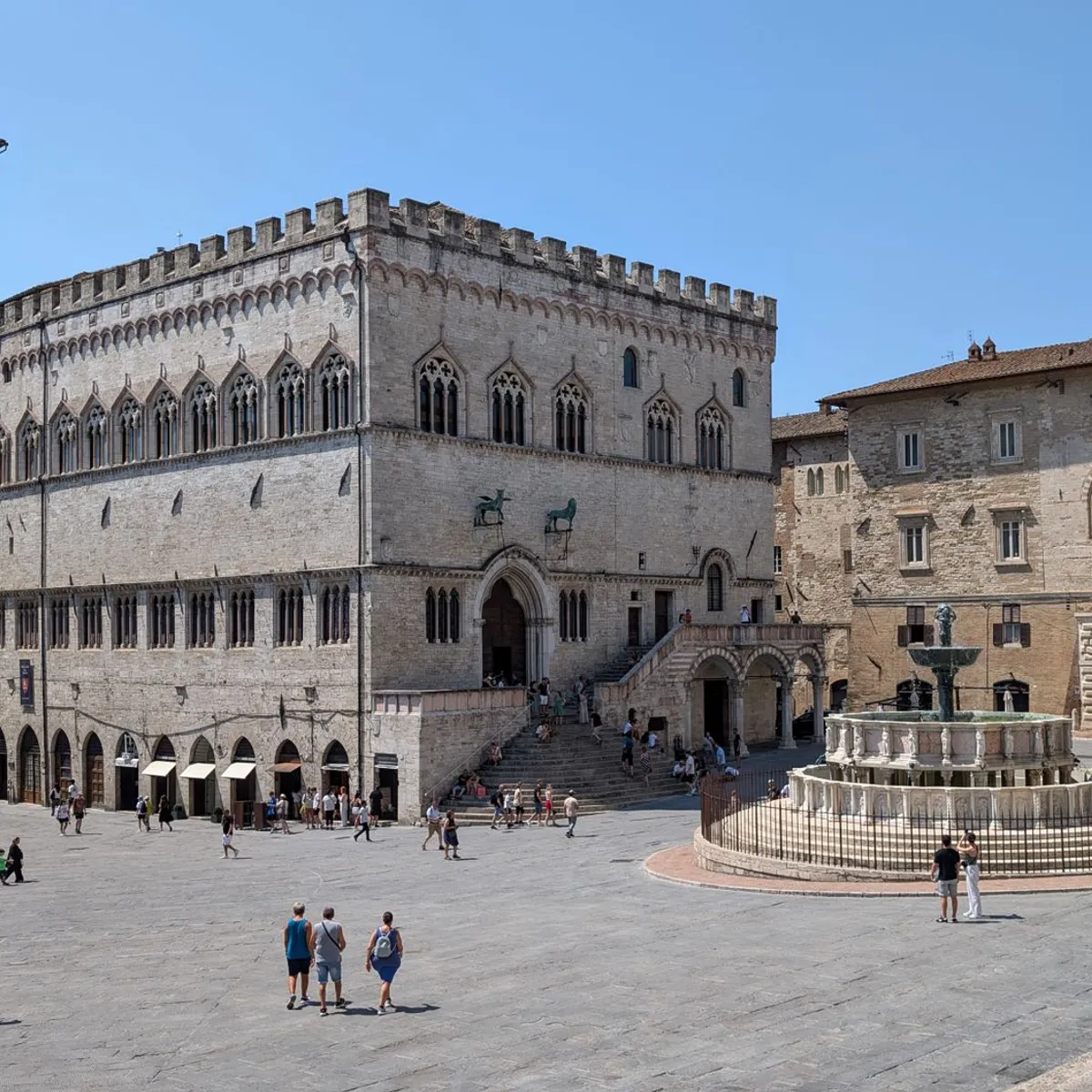
 Photo: George Piskov / Pexels
Perugia
Perugia accessibility for wheelchair users
Compare Perugia by accessibility, transport, terrain, healthcare, cost, weather, laws, reviews, and community notes.
Perugia accessibility scores
Compare Perugia by accessibility, transport, terrain, healthcare, cost, weather, and laws. General stats use public data and models. Community rows reflect member reviews and votes.
General stats
National benchmarks and estimates — your experience in this city may differ.
Community
Starts from our estimate — thumbs up nudge toward Excellent, down toward Poor. Reviews use 1–5 stars.
These figures combine public statistics, models, and live weather where available. Every city is different — treat this as a guide, and share what you know in the Reviews & Corrections tab.
Profile last updated 6/30/2026.
Perugia wheelchair accessibility guide
Research Perugia for wheelchair users and caregivers: getting around, terrain, healthcare, costs, climate, accessible things to do, and practical caveats before booking.
Last updated 6/30/2026At a glance
Perugia is beautiful, historic, and challenging. It sits on a hill, and the DB terrain profile confirms the reality: hilly terrain, a 337 m elevation range, and a max sampled grade around 6.2%. The row’s pavement sample is high-confidence but mixed, with only 30% good tagged surfaces and a lot of untagged or older paving. Costs start from ~$3,143/mo, including housing from ~$1,381/mo. This is a city for strong planning, not spontaneous rolling.
Getting around
Perugia’s historic centre is not car-friendly, and wheelchair users should plan around the minimetrò, elevators, escalator systems, and taxi drop-offs rather than trying to roll every climb. The minimetrò and station-area links can reduce elevation strain, but always check current lift access before travel. Regional rail and buses connect the lower city with Umbria, while the old centre rewards short, carefully chosen routes.
Terrain & mobility
Terrain is the dominant issue. The old city has slopes, stone paving, narrow passages, and sudden level changes. Some routes through the centre can be made manageable by using lifts, escalators, or the minimetrò, but a manual-chair user may need assistance on steeper segments. Prioritize accommodation on or near the same level as the places you will visit. In wet weather, stone paving can be slippery.
Healthcare & care
OSM healthcare leads in the row include Casa di Cura Liotti, Casa di Cura Villa Fiorita, CEMER, Healthcare poliambulatori, and Istituto Clinico Porta Sole near the centre. Treat these as starting points only. Confirm step-free entrances, lift access, appointment language, and whether accessible transport can reach the entrance without a steep push. For complex care, Perugia’s broader hospital network is more relevant than small central clinics.
Costs & housing
The DB estimate is from ~$3,143/mo, with housing from ~$1,381/mo. Accessible housing is the real constraint: many historic buildings have steps, small lifts, or bathrooms that were never designed for transfers. A newer apartment outside the old centre but near an accessible transit link may be more usable than a charming central flat.
Climate & comfort
Summers can be hot on exposed stone streets; winter is cooler and damp, with occasional slippery surfaces. Because the city is vertical, comfort depends on route design: avoid stacking multiple hill climbs into one day, and build in indoor breaks. Battery range matters for power-chair users.
Accessible things to do
Galleria Nazionale dell’Umbria— the museum publishes an accessibility page, making it one of the best pre-checkable cultural anchors in the centre.
Rocca Paolina— a key historic route and viewpoint area; use official visitor information and confirm lifts/escalator status before relying on it.
Piazza IV Novembre and Corso Vannucci— the central promenade is a manageable goal if approached from the right level, though paving and crowds require patience.
Minimetrò route to the centre— useful as a mobility tool and a low-effort city experience, subject to current lift and platform access.
Community & language
Italian is the default. English is common in tourism settings but less dependable for healthcare logistics or apartment maintenance. Perugia’s university presence helps with international feel, but disability-specific information can still be fragmented.
Would we recommend it?
Yes for experienced travellers who can manage slopes with planning, assistance, or power mobility. We would not recommend Perugia as an easy first Italian wheelchair base; the city is rewarding, but terrain and historic fabric are real barriers.
These figures combine public statistics, models, and live weather where available. Every city is different — treat this as a guide, and share what you know in the Reviews & Corrections tab.
Profile last updated 6/30/2026.