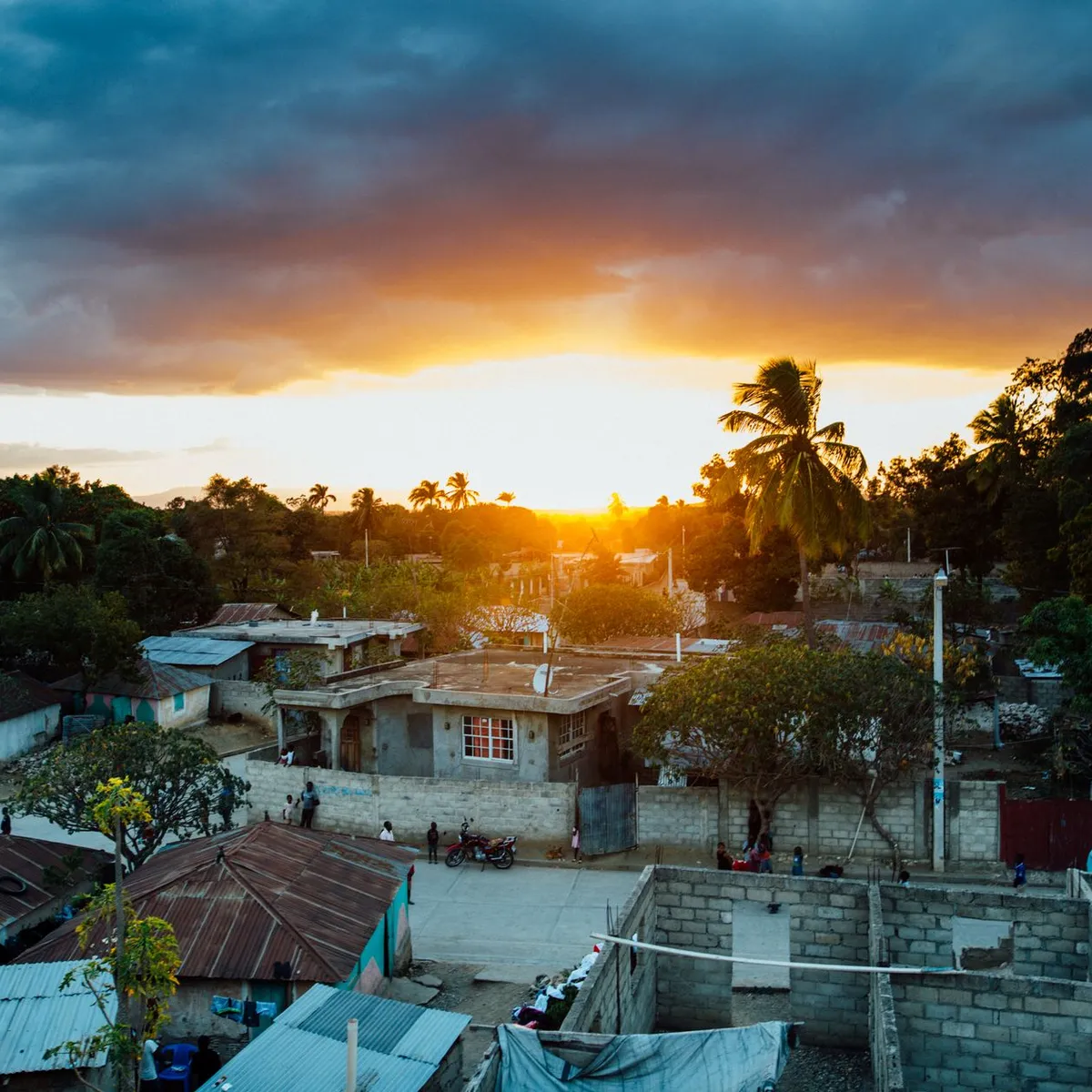
 Photo: K / Pexels
Port-au-Prince
Port-au-Prince accessibility for wheelchair users
Compare Port-au-Prince by accessibility, transport, terrain, healthcare, cost, weather, laws, reviews, and community notes.
Port-au-Prince accessibility scores
Compare Port-au-Prince by accessibility, transport, terrain, healthcare, cost, weather, and laws. General stats use public data and models. Community rows reflect member reviews and votes.
General stats
National benchmarks and estimates — your experience in this city may differ.
Community
Starts from our estimate — thumbs up nudge toward Excellent, down toward Poor. Reviews use 1–5 stars.
These figures combine public statistics, models, and live weather where available. Every city is different — treat this as a guide, and share what you know in the Reviews & Corrections tab.
Profile last updated 7/1/2026.
Port-au-Prince wheelchair accessibility guide
Research Port-au-Prince for wheelchair users and caregivers: getting around, terrain, healthcare, costs, climate, accessible things to do, and practical caveats before booking.
Last updated 7/1/2026At a glance
Port-au-Prince has major cultural and medical resources, but it is one of the hardest cities in this batch to recommend for wheelchair users. The stored profile shows very hilly terrain, poor pavement signals, limited disability infrastructure, and high costs for the region from ~$3,370/mo. Security and service reliability can change quickly, so any visit should be treated as high-planning, high-support travel.
Getting around
Use vetted private transport only. Do not assume sidewalks, public transit, or informal taxis will be wheelchair-accessible. Airport, hotel, clinic, and museum transfers should be arranged by a trusted operator who understands equipment size and can avoid steep or damaged streets. Keep routes short and build in backup plans for closures or security disruptions.
Terrain & mobility
OpenTopoData marks the area very hilly, with an 18% maximum sampled grade and 1,379 m elevation range. OSM pavement data is high-confidence but difficult: dirt, paved, untagged, and gravel surfaces are common, with 43% poor in the sample. That combination makes independent rolling unrealistic in many neighborhoods. Step-free lodging with vehicle-to-lobby access is essential.
Healthcare & care
OSM healthcare leads include Hôpital de l'Ofatma, St. Vincent, Hôpital-Maternité Sapiens, Centre d'Urgence de Turgeau des Médecins Sans Frontières, and Clinique de la Sante. These are leads only. Before travel, confirm which facilities are operating, emergency intake status, lift/ramp access, oxygen/medication availability, and evacuation insurance.
Costs & housing
The estimate is from ~$3,370/mo, with housing around $1,700. Choose security-vetted hotels or serviced housing rather than bargain stays. Ask for step-free room access, generator reliability, water supply, bathroom layout, and whether staff can support transfers during outages.
Climate & comfort
Heat, humidity, storms, road disruption, and power cuts all matter. Wheelchair batteries, pressure care, hydration, spare parts, and backup charging need a written plan. Avoid long outdoor itineraries and late returns.
Accessible things to do
Musée du Panthéon National Haïtien (MUPANAH)— a key museum near central Port-au-Prince; verify operating status, security, ramp/lift access, and toilets directly.
Champs de Mars area— useful for vehicle-based orientation near major civic landmarks, but do not plan independent rolling without local advice.
Iron Market / Marché en Fer— historically significant; crowds, thresholds, and security can be difficult, so consider only with a trusted guide and current confirmation.
Pétion-Ville hotel/cafe stops— often more practical for controlled outings than street sightseeing; choose venues with private drop-off and verified step-free entry.
These are included as conservative, support-heavy outing ideas rather than guaranteed accessible attractions. If current security advice, venue staffing, or medical backup is uncertain, skip sightseeing and keep movements limited to essential appointments.
Community & language
Haitian Creole and French are most useful; English is limited outside international hotels and NGOs. Local assistance is essential, but accessibility expectations should be stated in practical terms: no steps, wide doorway, working lift, safe drop-off.
Would we recommend it?
Generally no for independent wheelchair travel right now. Consider Port-au-Prince only for essential travel or highly supported visits with current security advice, vetted transport, and confirmed medical backup.
These figures combine public statistics, models, and live weather where available. Every city is different — treat this as a guide, and share what you know in the Reviews & Corrections tab.
Profile last updated 7/1/2026.