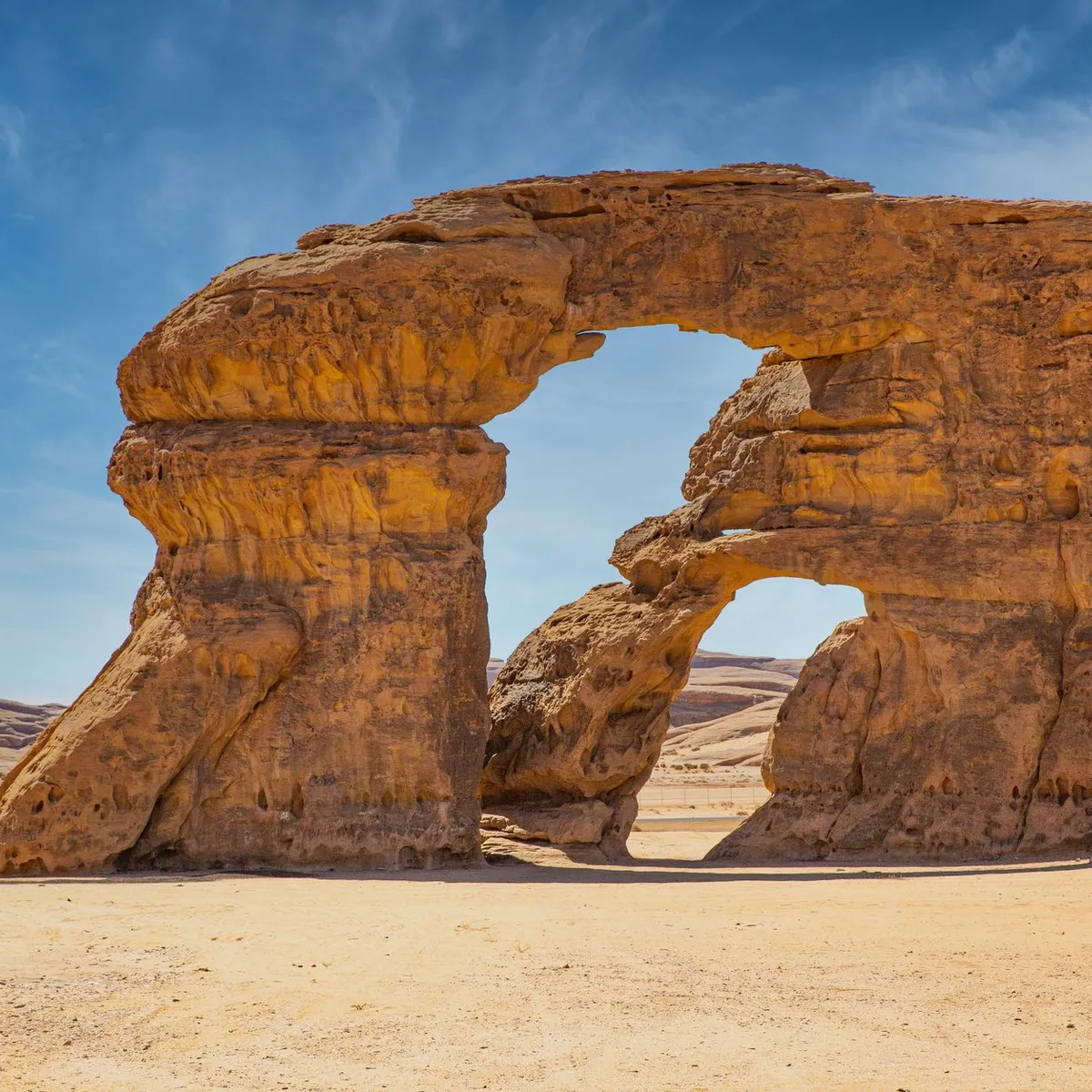
 Photo: Irfan Rahat / Pexels
Sakakah
Sakakah accessibility for wheelchair users
Compare Sakakah by accessibility, transport, terrain, healthcare, cost, weather, laws, reviews, and community notes.
Sakakah accessibility scores
Compare Sakakah by accessibility, transport, terrain, healthcare, cost, weather, and laws. General stats use public data and models. Community rows reflect member reviews and votes.
General stats
National benchmarks and estimates — your experience in this city may differ.
Community
Starts from our estimate — thumbs up nudge toward Excellent, down toward Poor. Reviews use 1–5 stars.
These figures combine public statistics, models, and live weather where available. Every city is different — treat this as a guide, and share what you know in the Reviews & Corrections tab.
Profile last updated 7/2/2026.
Sakakah wheelchair accessibility guide
Research Sakakah for wheelchair users and caregivers: getting around, terrain, healthcare, costs, climate, accessible things to do, and practical caveats before booking.
Last updated 7/2/2026At a glance
Sakakah is a practical but cautious RollVenture pick: an oasis city and Al-Jawf provincial capital with a compact urban core, hot-desert weather, and several heritage sites within or near the city. The live row scores it at 66 overall and 57 for accessibility, so this is not a low-friction wheelchair destination. Monthly living cost is listed from ~$2,090/mo, with housing from ~$622/mo. Treat those as planning estimates, not a guarantee of accessible housing supply.
Getting around
Sakakah is served by Al-Jawf Airport and, according to the researched city source, a Saudi Arabia Railways station on the Riyadh-Qurayyat line. Inside town, plan around private car, taxi, family driver, or arranged accessible transport rather than assuming spontaneous step-free public transport. Distances between the airport, rail station, hotels, hospitals, and heritage sites can be significant in heat, so pre-book vehicles with room for mobility equipment and confirm kerb-to-door drop-off.
Terrain & mobility
The DB terrain sample is encouraging: gently rolling, about 595 m average elevation, 1.8% max sampled grade, and 100% flat samples. The pavement profile is less reassuring: only 18% good tagged surfaces and medium confidence, with many untagged or asphalt ways. That combination means the city may feel physically flatter than many historic destinations, but surface certainty is mixed. Expect curb cuts, crossings, shade, and step-free entrances to vary by district.
Healthcare & care
OpenStreetMap-derived healthcare leads include Al-Shalhoub Health Center, medical supply/hospital points, dialysis, and several clinics within roughly 0.8-1.4 km of the centre. These are leads only; verify emergency capability, English-speaking staff, wheelchair entrances, imaging access, and prescription availability before relying on them. For care routines, book hotel support and transport first, then confirm hospital routes and backup options.
Costs & housing
The row estimates housing from ~$622/mo, transport from ~$225/mo, medical from ~$141/mo, and home aid from ~$572/mo. For wheelchair users, the biggest cost risk is not rent itself but finding a newer building with lifts, bathroom turning space, reliable cooling, and parking or drop-off that works in summer heat. Ask for recent photos, lift dimensions, and whether the route from street to room has thresholds.
Climate & comfort
Sakakah has a hot desert climate. Summer daytime heat can be severe, while winter is much milder and can be surprisingly cool at night. Build daily life around shaded routes, morning/evening errands, hydration, air-conditioned waiting space, and short outdoor transfers. Heat also affects battery range, skin care, and the margin for waiting outdoors for taxis.
Accessible things to do
Zabal Castle— a visible Sakakah landmark and heritage anchor. Treat accessibility as uncertain: confirm whether viewing is possible from vehicle-accessible areas if the structure itself has steps or uneven ground.
Rajajil standing stones— a major archaeological site near Sakakah, described in research as very ancient stone columns. Expect open ground, sun exposure, and limited facilities; visit only with local transport and assistance.
Al-Jawf old oasis / caravan-route context— the city’s identity is tied to oasis agriculture and historic routes. This is best approached as a driven orientation route with short, optional stops.
Dumat al-Jandal day trip— the nearby historic town is a stronger heritage outing than a casual stroll. Verify vehicle access and accessible toilets before committing, and avoid midday heat.
Community & language
Arabic is the default language. English may be available at hotels, airport-facing services, and some medical settings, but do not assume it for taxis, clinics, or heritage staff. Conservative dress and local norms matter. For longer stays, a local fixer or Arabic-speaking contact will reduce friction.
Would we recommend it?
Only for travelers who specifically want northern Saudi heritage and can arrange transport, translation, and medical backup in advance. The flatter terrain is a plus, but heat, sparse accessibility information, and uncertain visitor-site access make Sakakah a cautious recommendation rather than an easy base.
These figures combine public statistics, models, and live weather where available. Every city is different — treat this as a guide, and share what you know in the Reviews & Corrections tab.
Profile last updated 7/2/2026.