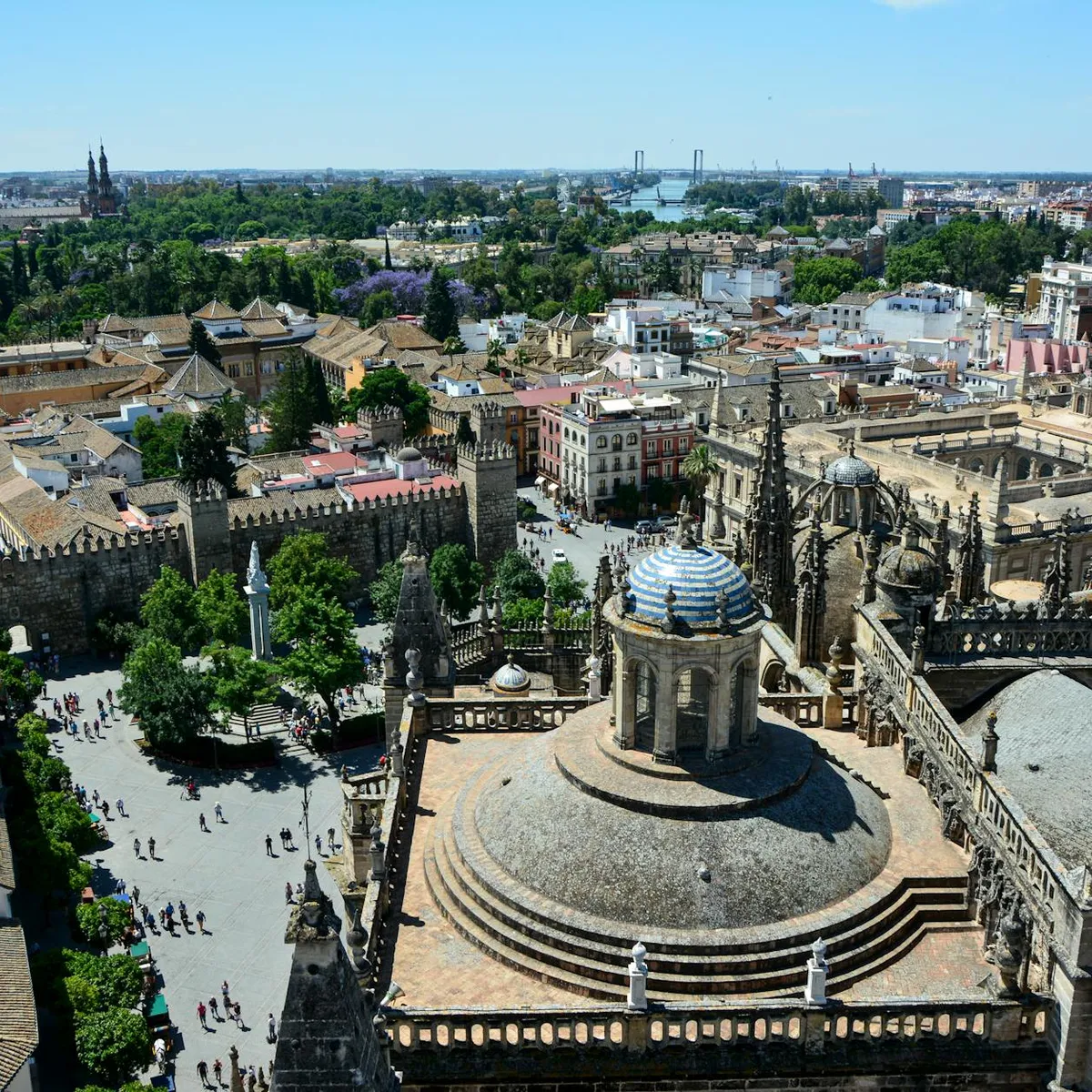
 Photo: Jose Luis Vanasco / Pexels
Sevilla
Sevilla accessibility for wheelchair users
Compare Sevilla by accessibility, transport, terrain, healthcare, cost, weather, laws, reviews, and community notes.
Sevilla accessibility scores
Compare Sevilla by accessibility, transport, terrain, healthcare, cost, weather, and laws. General stats use public data and models. Community rows reflect member reviews and votes.
General stats
National benchmarks and estimates — your experience in this city may differ.
Community
Starts from our estimate — thumbs up nudge toward Excellent, down toward Poor. Reviews use 1–5 stars.
These figures combine public statistics, models, and live weather where available. Every city is different — treat this as a guide, and share what you know in the Reviews & Corrections tab.
Profile last updated 6/30/2026.
Sevilla wheelchair accessibility guide
Research Sevilla for wheelchair users and caregivers: getting around, terrain, healthcare, costs, climate, accessible things to do, and practical caveats before booking.
Last updated 6/30/2026At a glance
Sevilla is attractive for climate, culture, food, and a mostly flat historic core, but wheelchair users should plan for cobbles, heat, crowds, and old-building access. The DB terrain profile is favorable: gently rolling, low sampled max grade, and high pavement confidence. The pavement profile also flags sett, paving stones, and some poorer surfaces, which matches the experience of many older Spanish centers. Budget from ~$3,280/mo, with housing from ~$1,696/mo.
Getting around
Use a mix of step-free walking/rolling routes, taxis, buses, tram/metro where practical, and careful hotel placement. Sevilla’s historic center is compact, but not every beautiful lane is comfortable. Ask hotels about curb-free arrival, elevator size, bathroom layout, and whether taxis can stop at the door during pedestrian-zone restrictions. For longer trips, verify current accessibility with TUSSAM/Metro de Sevilla and allow time for heat breaks.
Terrain & mobility
Sevilla is flatter than many European historic cities, which is a major advantage. The challenge is surface quality: stone, narrow sidewalks, crowds, restaurant terraces, and temporary event barriers can matter more than slope. Cathedral/Alcázar/Santa Cruz routes need extra attention. A power chair or strong assisted manual setup will make the old center easier; lightweight manual users should avoid the hottest hours and roughest lanes.
Healthcare & care
The DB healthcare profile includes OSM leads such as Hospital Universitario Virgen del Rocío as an emergency-capable hospital lead plus clinics. Treat these as starting points and verify departments, language support, insurance/private-pay rules, and accessible exam rooms before relying on them. Pharmacies are common, and Spain’s disability-law environment is moderate-to-strong, but appointment logistics and paperwork can still be slow.
Costs & housing
Accessible housing is mixed. Newer apartments outside the oldest core may be more practical than atmospheric central units with steps or tiny lifts. Ask for exact elevator dimensions, entrance threshold photos, shower type, air-conditioning reliability, street gradient, and whether the building is on a cobbled lane. Central location can reduce transport needs, but a slightly newer area near transit may be more comfortable.
Climate & comfort
Heat is the biggest comfort issue. Summer afternoons can be unsafe for some wheelchair users, especially with pressure-sore risk, medication sensitivity, or limited temperature regulation. Spring, late autumn, and mild winter are better. Shade, hydration, cooling towels, midday rest, and air-conditioned indoor stops are part of the access plan.
Accessible things to do
Real Alcázar de Sevilla— A must-see palace/garden complex; verify current wheelchair routes, garden surfaces, and ticket timing before visiting.
Catedral de Sevilla and Giralda area— Central and iconic, but surfaces and crowds require planning; confirm accessible entrance and route details.
Plaza de España / Parque de María Luisa— Broad outdoor routes can work well, though paving, bridges, and heat should be checked.
Archivo General de Indias— A central indoor cultural stop near the cathedral; verify entrance/elevator details and temporary exhibitions.
Community & language
Spanish is the main language; English is common in tourism but less reliable in healthcare and housing. Bring written access questions in Spanish and request photos. Local hospitality is generally warm, but do not rely on staff improvising step-free alternatives in old buildings.
Would we recommend it?
Yes, especially outside peak summer, for wheelchair users who can manage historic surfaces and plan around heat. Sevilla’s flatness is a real advantage; cobbles, crowds, and old-building access are the tradeoffs.
These figures combine public statistics, models, and live weather where available. Every city is different — treat this as a guide, and share what you know in the Reviews & Corrections tab.
Profile last updated 6/30/2026.