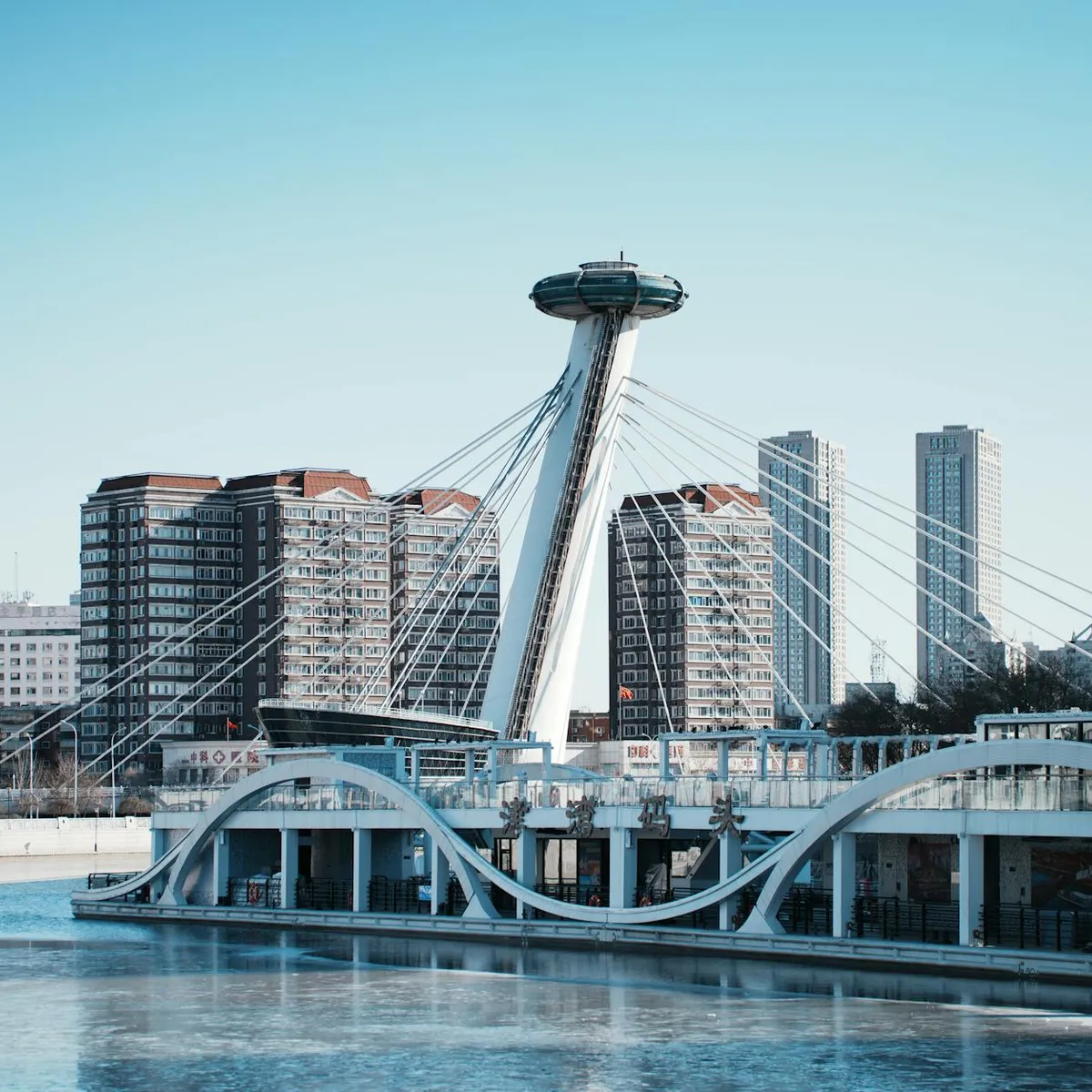
 Photo: 巍 鲍 / Pexels
Tianjin
Tianjin accessibility for wheelchair users
Compare Tianjin by accessibility, transport, terrain, healthcare, cost, weather, laws, reviews, and community notes.
Tianjin accessibility scores
Compare Tianjin by accessibility, transport, terrain, healthcare, cost, weather, and laws. General stats use public data and models. Community rows reflect member reviews and votes.
General stats
National benchmarks and estimates — your experience in this city may differ.
Community
Starts from our estimate — thumbs up nudge toward Excellent, down toward Poor. Reviews use 1–5 stars.
These figures combine public statistics, models, and live weather where available. Every city is different — treat this as a guide, and share what you know in the Reviews & Corrections tab.
Profile last updated 6/30/2026.
Tianjin wheelchair accessibility guide
Research Tianjin for wheelchair users and caregivers: getting around, terrain, healthcare, costs, climate, accessible things to do, and practical caveats before booking.
Last updated 6/30/2026At a glance
Tianjin is a huge, flat, coastal municipality with stronger infrastructure than many mid-sized Chinese cities, but accessibility still varies block by block. The RollVenture profile shows mostly flat terrain, high population, good safety, and living costs from ~$2,941/mo. For wheelchair users, the best strategy is to build daily life around newer districts, large hotels, malls, metro stations with confirmed elevators, and riverside or plaza routes, while treating older streets and heritage areas as assisted outings.
Getting around
Tianjin has an extensive metro and high-speed rail links to Beijing, but elevator reliability and station exits must be checked route by route. Large roads and long crossings can make short map distances feel bigger. Taxis and ride-hail are common, though wheelchair users should plan for standard sedans unless they have a local contact who can arrange a suitable vehicle. For rail, request station assistance and arrive early; Tianjin’s major stations are large and can involve long transfers.
Terrain & mobility
Terrain is the bright spot: the DB profile marks Tianjin as mostly flat, with minimal sampled grade. The harder issues are pavement continuity, curb design, crowds, construction barriers, and air quality. OSM pavement confidence is low and many surfaces are untagged, so do not assume every sidewalk is usable. Newer commercial areas, riverside promenades, and museum/plaza districts are likely easier than old concession lanes or market streets.
Healthcare & care
The DB healthcare profile lists several central OSM hospital leads, including Tianjin Yong’an Hospital and other hospital entries within a few kilometers. These are leads, not access guarantees. Tianjin’s scale means there are many hospitals, but foreigners and wheelchair users should verify international-department availability, accessible entrances, imaging/lab routes, appointment systems, and whether a companion can help with registration and payment steps.
Costs & housing
Use the stored estimates as a planning baseline: monthly living from ~$2,941/mo and housing from ~$1,413/mo. In practice, a wheelchair-friendly apartment in a newer lift building may cost more than the citywide estimate. Ask for building age, lift redundancy, step-free lobby access, bathroom threshold photos, wet-room drainage, and proximity to a step-free metro exit or reliable car pickup.
Climate & comfort
Tianjin has cold winters, hot humid summers, and periods of poor air quality or dust. Winter snow/ice can disrupt curb cuts and ramps; summer heat makes long exposed crossings tiring. Indoor malls and museums are useful comfort buffers.
Accessible things to do
Tianjin Museum / Cultural Center area— large modern civic buildings and plazas are among the better bets; confirm elevator and toilet details before going.
Five Great Avenues (Wudadao)— historic streets with architecture and cafes; choose shorter, flatter segments and expect uneven kerbs.
Haihe riverside and Italian Style Town— scenic central areas with paved promenades in parts; crowds, bridges, and older paving require route checking.
Tianjin Eye area— a recognizable landmark best approached as a riverside viewpoint unless ride boarding access has been confirmed.
Community & language
Mandarin is essential for detailed access logistics. Larger hotels and hospitals may have some English, but taxi, maintenance, and apartment conversations are much easier with a Chinese-speaking helper. Disability access is improving in major cities, yet enforcement and maintenance are inconsistent.
Would we recommend it?
Yes for experienced China travelers who can use local help and choose modern districts carefully. The flat terrain and big-city infrastructure are strong advantages, but Tianjin is not a low-friction destination unless housing, station elevators, and medical access are verified in advance.
These figures combine public statistics, models, and live weather where available. Every city is different — treat this as a guide, and share what you know in the Reviews & Corrections tab.
Profile last updated 6/30/2026.
Reviews & corrections
Share your experience or suggest a data correction. Both appear publicly; admin updates official city scores and costs separately.
Log in to write a review or suggest a correction.
No reviews or corrections yet.