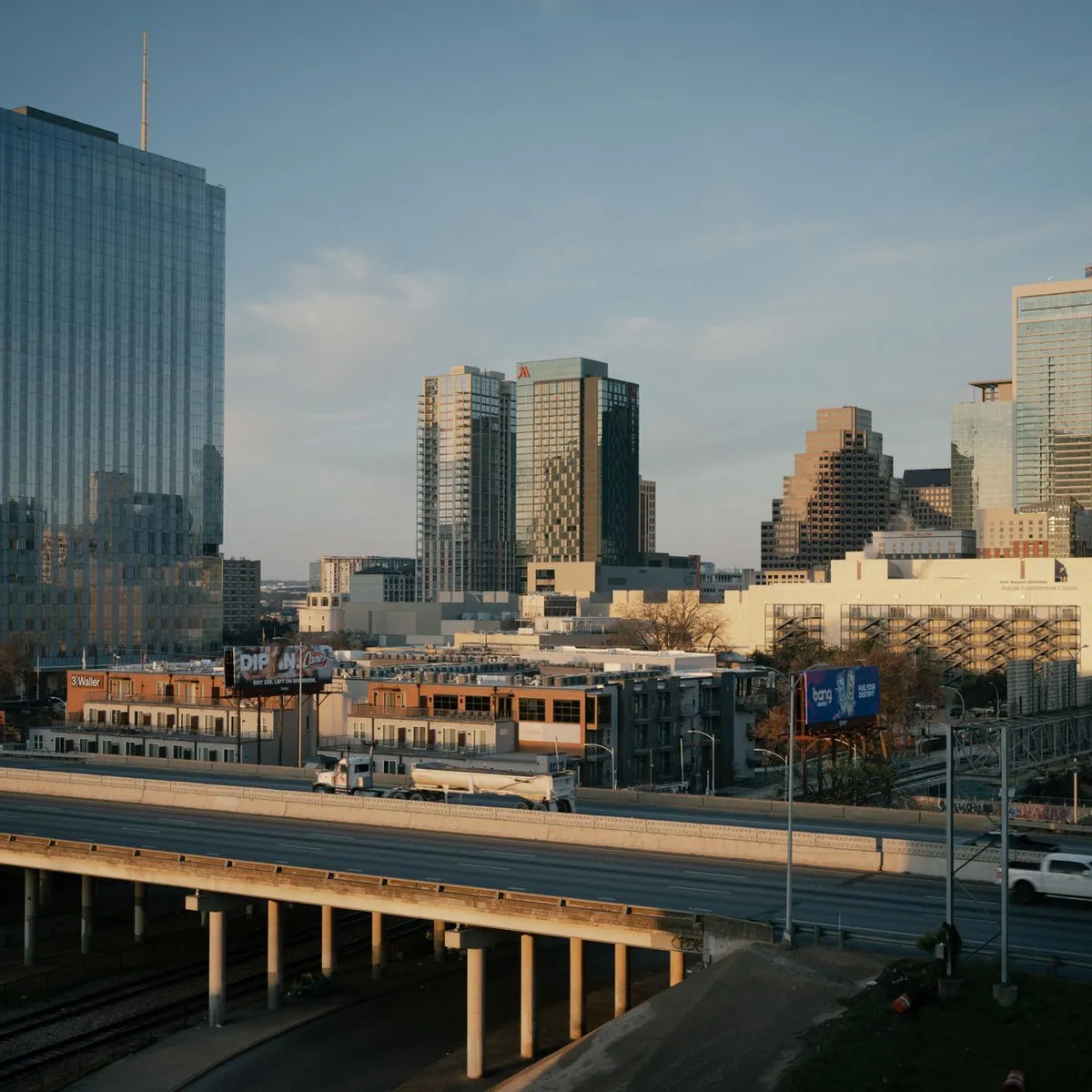
 Photo: Thomas balabaud / Pexels
Austin
Austin accessibility for wheelchair users
Compare Austin by accessibility, transport, terrain, healthcare, cost, weather, laws, reviews, and community notes.
Austin accessibility scores
Compare Austin by accessibility, transport, terrain, healthcare, cost, weather, and laws. General stats use public data and models. Community rows reflect member reviews and votes.
General stats
National benchmarks and estimates — your experience in this city may differ.
Community
Starts from our estimate — thumbs up nudge toward Excellent, down toward Poor. Reviews use 1–5 stars.
These figures combine public statistics, models, and live weather where available. Every city is different — treat this as a guide, and share what you know in the Reviews & Corrections tab.
Profile last updated 6/30/2026.
Austin wheelchair accessibility guide
Research Austin for wheelchair users and caregivers: getting around, terrain, healthcare, costs, climate, accessible things to do, and practical caveats before booking.
Last updated 6/30/2026At a glance
Austin is a practical but expensive U.S. base for wheelchair users who want strong medical options, a deep event calendar, and a city that is improving faster than many Sun Belt peers. RollVenture's live profile puts monthly living cost from ~$4,325/mo and housing from ~$2,128/mo, so the main trade-off is cost rather than isolation. The best experience is usually in central, north-central, and campus-adjacent areas where sidewalks, hospitals, buses, museums, and rideshare coverage are closer together. Treat outdoor plans carefully in summer heat.
Getting around
CapMetro publishes an accessibility program for Austin public transit, and this is the first place to confirm current bus, rail, paratransit, and reduced-fare details. Buses are generally the most useful fixed-route option for daily errands, while MetroRail is more corridor-specific. Book extra buffer for transfers, late-night trips, and large-event days around downtown or the University of Texas. Wheelchair taxis are not something to assume on demand; arrange specialized transport or paratransit early if transfers are hard.
Terrain & mobility
The DB terrain sample labels Austin gently rolling, with modest central grades but enough hills, curb ramps, driveway cuts, and construction detours to matter. The pavement profile is high-confidence with many asphalt or paved ways, yet greenbelt edges, older sidewalks, and entertainment districts can still be uneven. Downtown, the Capitol/UT area, Mueller, and newer mixed-use zones are usually easier than older residential pockets.
Healthcare & care
The city has strong hospital coverage. The profile includes Dell Seton Medical Center at The University of Texas downtown and St. David's Rehabilitation Hospital in north Austin. Use these as planning anchors, not guarantees of appointment access. If you need personal care attendants, rehab, durable medical equipment, or accessible housing modifications, set those up before arrival because Austin's cost pressure can make short-notice support expensive.
Costs & housing
Use the RollVenture cost estimate as a starting point: from ~$4,325/mo overall and ~$2,128/mo housing. Accessible units in newer buildings may be available but expensive, and step-free entry does not mean bathroom clearance, roll-in shower, reachable laundry, or safe parking. Ask for photos, doorway measurements, elevator outage history, and backup plans during storms or heat waves.
Climate & comfort
Austin's biggest comfort risk is heat. Summer afternoons can make long waits at unsheltered stops or outdoor venues unsafe. Plan early starts, indoor breaks, hydration, and air-conditioned backup routes. Spring and fall are easier, but storms can flood low crossings and make curb ramps unreliable.
Accessible things to do
Bullock Texas State History Museum— the official accessibility page describes accessible parking near garage elevators, push-button or sensor doors, elevators from the garage to the entrance, and free wheelchair checkout.
Blanton Museum of Art— the museum maintains an accessibility page; it is a good indoor anchor near UT when heat or storms make outdoor plans difficult.
CapMetro-accessible downtown/campus loop— use CapMetro's accessibility information to plan bus or rail-linked stops around the Capitol, UT, museums, and food corridors; verify elevator/stop conditions on the day.
Dell Seton / Waterloo Park area— useful as a practical orientation zone because major healthcare, downtown paths, and newer public-space design are close together; check event closures and grades.
Community & language
English is the default, Spanish is common, and disability-rights language is familiar because U.S. ADA expectations are well established. Austin also has large tech, university, music, and healthcare communities, so peer advice is easier to find than in smaller cities.
Would we recommend it?
Yes, for wheelchair users with a U.S.-level budget who value healthcare access, transit planning tools, and year-round culture. It is less attractive if heat sensitivity, high rent, or unreliable last-mile transport would dominate daily life.
These figures combine public statistics, models, and live weather where available. Every city is different — treat this as a guide, and share what you know in the Reviews & Corrections tab.
Profile last updated 6/30/2026.