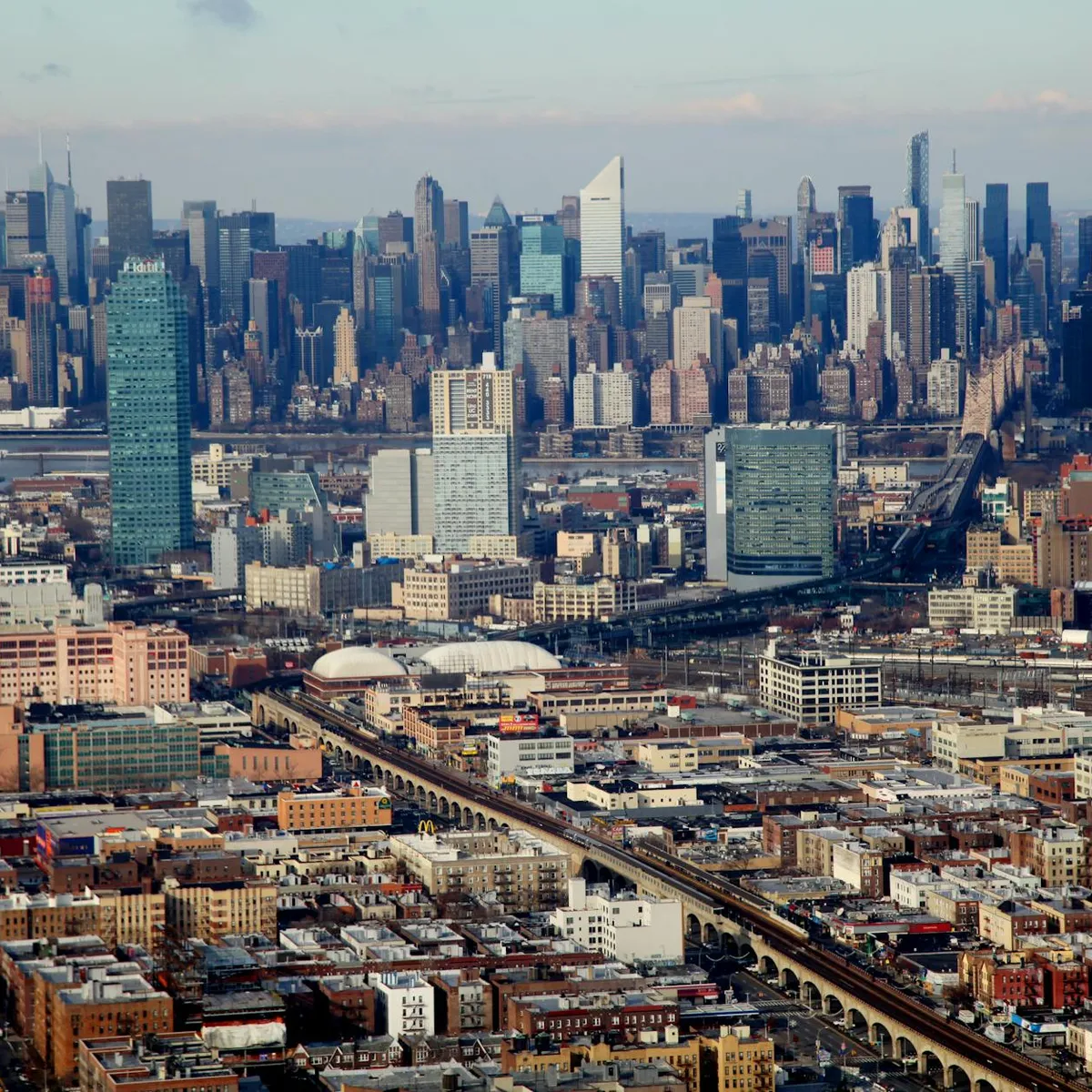
 Photo: Almir reis / Pexels
Queens
Queens accessibility for wheelchair users
Compare Queens by accessibility, transport, terrain, healthcare, cost, weather, laws, reviews, and community notes.
Queens accessibility scores
Compare Queens by accessibility, transport, terrain, healthcare, cost, weather, and laws. General stats use public data and models. Community rows reflect member reviews and votes.
General stats
National benchmarks and estimates — your experience in this city may differ.
Community
Starts from our estimate — thumbs up nudge toward Excellent, down toward Poor. Reviews use 1–5 stars.
These figures combine public statistics, models, and live weather where available. Every city is different — treat this as a guide, and share what you know in the Reviews & Corrections tab.
Profile last updated 6/30/2026.
Queens wheelchair accessibility guide
Research Queens for wheelchair users and caregivers: getting around, terrain, healthcare, costs, climate, accessible things to do, and practical caveats before booking.
Last updated 6/30/2026At a glance
Queens is a practical New York base for wheelchair users who want airport access, diverse neighborhoods, major hospitals, and somewhat more space than Manhattan. RollVenture estimates costs from ~$4445/mo and housing from ~$2305/mo. It is still expensive and not uniformly accessible, but the borough's flatter terrain in many areas, high pavement score, and access to buses, subways, LIRR, ferries, and paratransit can make it workable with neighborhood-specific planning.
Getting around
Use the MTA's accessibility information before every trip. More subway stations are becoming accessible, but elevator outages and station gaps still define the experience. Buses are often the most predictable wheelchair option for local trips, though traffic is slow. LIRR can be useful from accessible stations. For airport days, JFK and LaGuardia connections require extra transfer planning; do not assume the shortest map route is the easiest wheelchair route.
Terrain & mobility
The DB profile is gently rolling with high pavement confidence. Much of Queens is easier than steep parts of Manhattan or the Bronx, but curb cuts, snow piles, tree-root sidewalk damage, and long avenue crossings are real barriers. Waterfront areas like Long Island City can be newer and smoother; older commercial strips can have steps into small businesses.
Healthcare & care
The DB healthcare leads include several OSM-derived facilities and nearby city hospitals; verify exact location, entrance, and service type before relying on them. Queens residents also use Manhattan and Long Island medical systems. For ongoing care, choose housing based on the clinics you actually need and confirm paratransit eligibility, appointment windows, and building doorman/elevator reliability.
Costs & housing
The housing estimate starts from ~$2305/mo. Accessible units may still require tradeoffs: elevator buildings, wider bathrooms, and no-step entries are easier in newer developments but cost more. Ask for actual doorway widths, bathtub versus roll-in shower, elevator outage history, package/entry access, and distance to an accessible transit stop.
Climate & comfort
Summers are humid, winters bring slush and curb-ramp blockages, and nor'easters can disrupt transit. A building with reliable heat, elevator service, and nearby groceries is more important than a pretty but isolated block.
Accessible things to do
Flushing Meadows Corona Park— Large, mostly open parkland with major cultural anchors; verify restroom and path conditions for the specific area.
Queens Museum— Publishes visitor/accessibility information and is a strong indoor anchor near the park.
MoMA PS1— Contemporary art venue in Long Island City with accessibility information; check elevator/gallery status before visiting.
Gantry Plaza State Park— Waterfront paths and skyline views can be very wheelchair-friendly in good weather.
Queens Botanical Garden— Publishes access information; paths and seasonal surfaces should be checked before arrival.
Community & language
Queens is one of the most multilingual places in the U.S. English is enough for official services, while Spanish, Chinese, Korean, Bengali, Russian, and many other languages are common locally. That diversity helps with food and community but can make provider matching important.
Would we recommend it?
Yes for people who want New York access with somewhat more space and flatter routes than Manhattan. It is best if you choose a transit-accessible, elevator-served neighborhood and build backup plans for elevators, snow, and traffic.
These figures combine public statistics, models, and live weather where available. Every city is different — treat this as a guide, and share what you know in the Reviews & Corrections tab.
Profile last updated 6/30/2026.