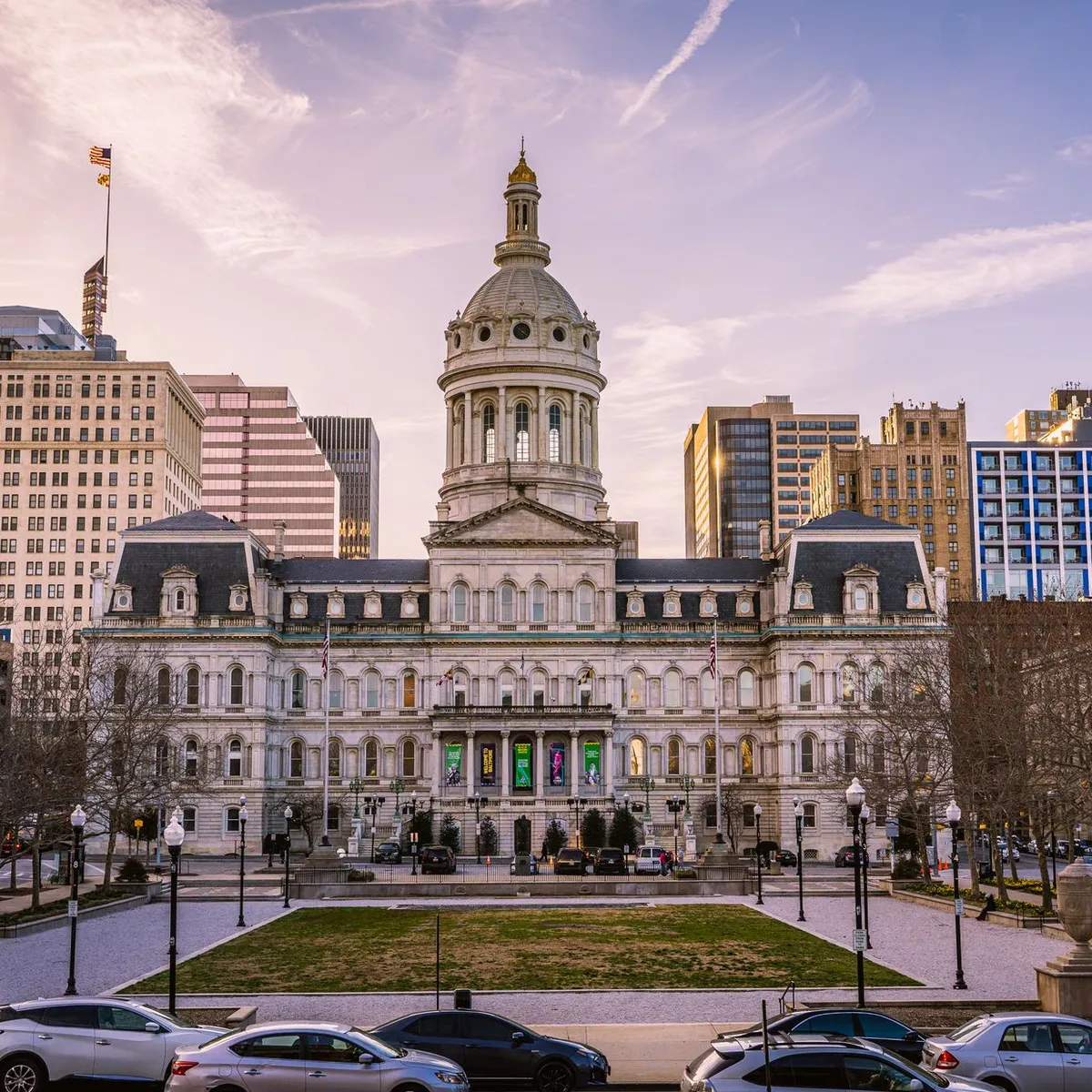
 Photo: Styves Exantus / Pexels
Baltimore
Baltimore accessibility for wheelchair users
Compare Baltimore by accessibility, transport, terrain, healthcare, cost, weather, laws, reviews, and community notes.
Baltimore accessibility scores
Compare Baltimore by accessibility, transport, terrain, healthcare, cost, weather, and laws. General stats use public data and models. Community rows reflect member reviews and votes.
General stats
National benchmarks and estimates — your experience in this city may differ.
Community
Starts from our estimate — thumbs up nudge toward Excellent, down toward Poor. Reviews use 1–5 stars.
These figures combine public statistics, models, and live weather where available. Every city is different — treat this as a guide, and share what you know in the Reviews & Corrections tab.
Profile last updated 6/30/2026.
Baltimore wheelchair accessibility guide
Research Baltimore for wheelchair users and caregivers: getting around, terrain, healthcare, costs, climate, accessible things to do, and practical caveats before booking.
Last updated 6/30/2026At a glance
Baltimore can work for wheelchair users who want a major East Coast city with hospitals, waterfront attractions, and rail/bus links, but it needs block-by-block planning. The RollVenture row scores accessibility high and terrain as gently rolling, while cost is still expensive but below Denver/Portland. Budget from ~$4,100/mo, with housing from ~$1,906/mo. The strongest areas for a short stay are near the Inner Harbor, Harbor East, Mount Vernon, and transit-connected medical/cultural clusters.
Getting around
Maryland Transit Administration’s accessibility page says MTA is committed to a transit system everyone can use, describes ADA/Section 504 access, reduced fares, bus accessibility, and MobilityLink paratransit. MobilityLink is described as ADA-compliant paratransit for people unable to use fixed-route services, available within three quarters of a mile of local bus routes and train service in Baltimore City and nearby counties. For everyday use, still check elevator status, Light Rail/Metro Subway station details, bus stop conditions, and sidewalk construction.
Terrain & mobility
The DB terrain profile is gently rolling, with a 1.9% sampled max grade and medium pavement confidence. The waterfront and downtown grids are usually the easiest. North-south trips can add grades, older brick or patched sidewalks, curb-ramp inconsistencies, and traffic crossings. After storms, drainage and snow piles can block curb cuts. Manual-chair users should plan shorter segments and use transit/rideshare for hillier neighborhoods.
Healthcare & care
Baltimore is a major medical city, but the DB healthcare profile for this specific row lists OSM clinic leads rather than flagship hospitals, so do not treat it as a full care directory. For a real stay, separately verify Johns Hopkins, University of Maryland, rehab services, wheelchair seating in clinics, accessible imaging, transfer equipment, and insurance network status. The row estimates medical costs around $214/mo, PT around $150/mo, and home aid around $886/mo; actual U.S. care costs may be much higher.
Costs & housing
Accessible housing is the main filter. Newer waterfront or downtown buildings may offer elevators and step-free entrances, but rents and parking can jump quickly. Older rowhouse neighborhoods often have steps, narrow doors, and steep approaches. Ask for measured doorways, roll-in shower photos, elevator reliability, trash/mail access, curb-to-lobby route, and whether paratransit pickups can stop safely.
Climate & comfort
Baltimore has humid summers, cold snaps, rain, and occasional snow/ice. Summer heat can make long waterfront rolls tiring. Winter weather is less constant than northern cities but can create curb-ramp blockages. Plan indoor cooling stops, shaded routes, and flexible transport during storms.
Accessible things to do
National Aquarium / Inner Harbor— A signature waterfront anchor; verify timed entry, elevator routes, crowds, and accessible seating before visiting.
Baltimore Museum of Art— A major cultural stop near Johns Hopkins; check current accessibility and drop-off details.
Walters Art Museum— A central museum option in Mount Vernon; verify elevators and entrance route.
Fort McHenry National Monument and Historic Shrine— Meaningful history site with visitor planning information; outdoor surfaces and weather require checking.
Community & language
English is the working language. Baltimore has strong healthcare, university, arts, and disability-service ecosystems, but neighborhood conditions vary sharply. Local peer advice is valuable for finding reliable curb cuts, safe crossings, and practical accessible housing.
Would we recommend it?
Yes, for users who want healthcare access and East Coast culture at a lower cost than some peer cities. It is not a carefree roll: choose the neighborhood carefully, verify transit elevators and sidewalk routes, and treat older housing with caution.
These figures combine public statistics, models, and live weather where available. Every city is different — treat this as a guide, and share what you know in the Reviews & Corrections tab.
Profile last updated 6/30/2026.
Reviews & corrections
Share your experience or suggest a data correction. Both appear publicly; admin updates official city scores and costs separately.
Log in to write a review or suggest a correction.
No reviews or corrections yet.