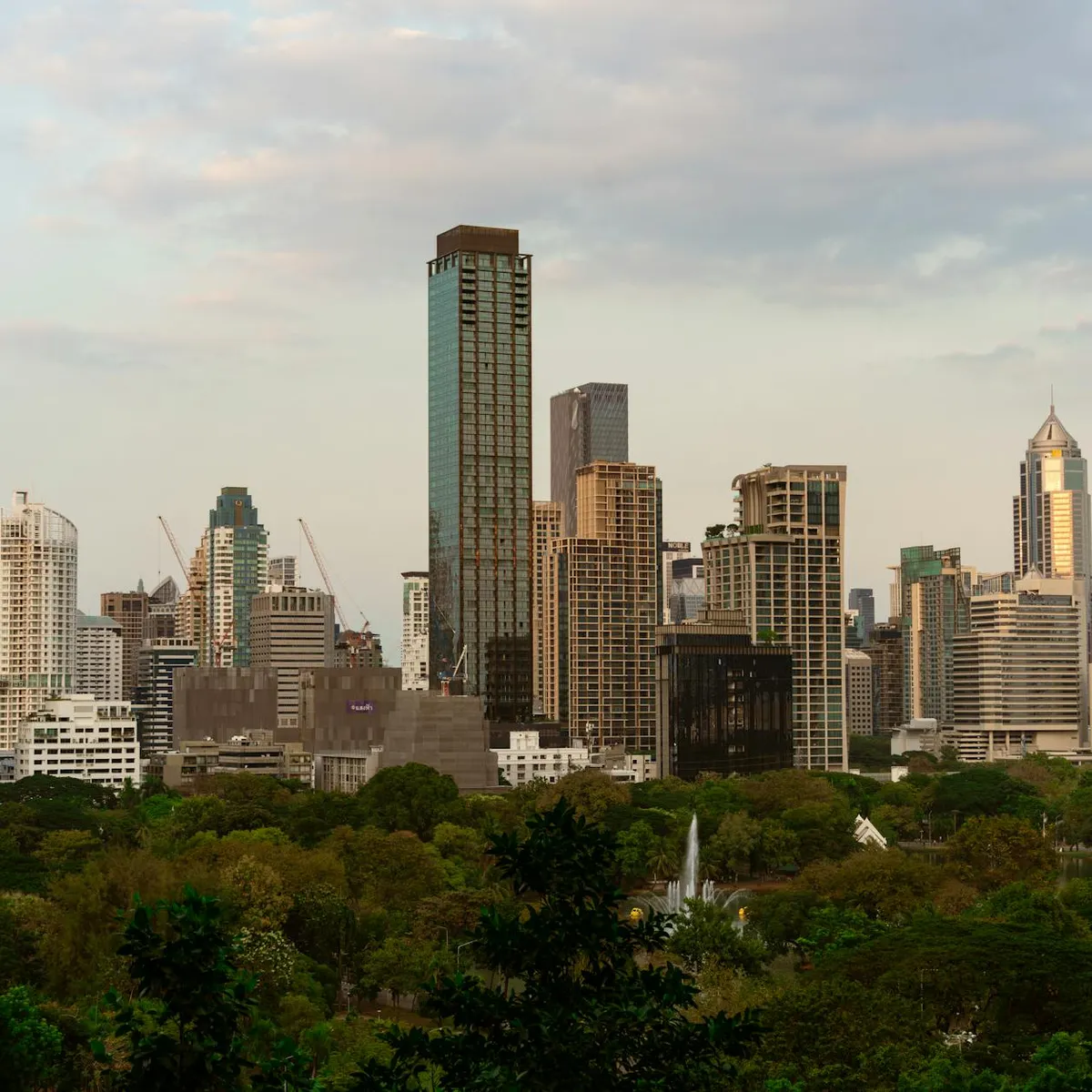
 Photo: Khoi Pham / Pexels
Bangkok
Bangkok accessibility for wheelchair users
Compare Bangkok by accessibility, transport, terrain, healthcare, cost, weather, laws, reviews, and community notes.
Bangkok accessibility scores
Compare Bangkok by accessibility, transport, terrain, healthcare, cost, weather, and laws. General stats use public data and models. Community rows reflect member reviews and votes.
General stats
National benchmarks and estimates — your experience in this city may differ.
Community
Starts from our estimate — thumbs up nudge toward Excellent, down toward Poor. Reviews use 1–5 stars.
These figures combine public statistics, models, and live weather where available. Every city is different — treat this as a guide, and share what you know in the Reviews & Corrections tab.
Profile last updated 6/30/2026.
Bangkok wheelchair accessibility guide
Research Bangkok for wheelchair users and caregivers: getting around, terrain, healthcare, costs, climate, accessible things to do, and practical caveats before booking.
Last updated 6/30/2026At a glance
Bangkok is flat, energetic, medically strong, and comparatively affordable, but wheelchair access is uneven. RollVenture's row captures the trade-off: mostly flat terrain, medium-confidence pavement data, and from ~$2,103/mo costs, but a lower accessibility score because sidewalks, footbridges, station exits, and older attractions vary widely. The best strategy is to live near a step-free BTS or MRT station, use malls and hotels as access anchors, and rely on taxis when the pedestrian route breaks down.
Getting around
BTS Skytrain and MRT can be useful, but access depends on the station, exit, lift status, and crowding. Always check the exact station pair and exit before committing. Taxis and ride-hailing fill the gaps, though traffic can be slow. River boats and canal boats are generally harder for wheelchair users unless a specific operator confirms boarding help and pier access. Choose accommodation attached to, or very near, an accessible mall or rail station.
Terrain & mobility
Bangkok's flat terrain is a major advantage. The barriers are urban: broken sidewalks, curb heights, utility poles, stairs to footbridges, street vendors, flooding after storms, and heavy traffic crossings. Modern malls, hospital campuses, airport rail links, and some rail stations can be much easier than street-level wandering. Manual-chair users may still need help with curbs and ramps.
Healthcare & care
The curated DB profile lists King Chulalongkorn Memorial Hospital and Bumrungrad International Hospital as major healthcare anchors, with Bumrungrad known for international medical tourism. Verify costs, insurance acceptance, transfer support, and accessible room details before booking care. Bangkok is one of the stronger choices in Southeast Asia for private medical appointments, diagnostics, and English-language support.
Costs & housing
Use from ~$2,103/mo as the planning baseline, with housing around ~$896/mo. Accessible apartments are easiest in newer condos with lifts, ramps, security desks, and mall/rail connections. Ask for exact bathroom photos, threshold heights, lift dimensions, backup power policies, and whether the building entrance floods in heavy rain.
Climate & comfort
Heat, humidity, monsoon rain, and air pollution can all affect mobility. Plan early starts, indoor cooling breaks, and backup taxi legs. Wheelchair cushions, battery charging, and hydration matter in the hot season.
Accessible things to do
Bangkok Art and Culture Centre / Siam area— a practical central arts-and-mall district with elevators and nearby rail, but confirm current lift routes.
ICONSIAM— a modern riverside mall and dining destination; use taxi or confirmed step-free rail/boat routing rather than assuming pier access.
Lumphini Park— one of the better flat outdoor rolls in central Bangkok; go early for heat and check entrances after rain.
The Grand Palace / Wat Phra Kaew area— a must-see historic zone, but surfaces, crowds, security routing, and temple thresholds require companion support and advance checks.
Community & language
Thai is the daily language, but English is common in hospitals, hotels, malls, and tourist services. Local disability travel knowledge exists but is fragmented, so hotel concierges and hospital international desks are useful.
Would we recommend it?
Yes, with planning. Bangkok is not reliably barrier-free, yet its flat terrain, hospitals, malls, transport options, and cost make it one of the more workable Asian megacities for wheelchair users who can mix rail, taxis, and carefully chosen neighborhoods.
These figures combine public statistics, models, and live weather where available. Every city is different — treat this as a guide, and share what you know in the Reviews & Corrections tab.
Profile last updated 6/30/2026.
Reviews & corrections
Share your experience or suggest a data correction. Both appear publicly; admin updates official city scores and costs separately.
Log in to write a review or suggest a correction.
No reviews or corrections yet.