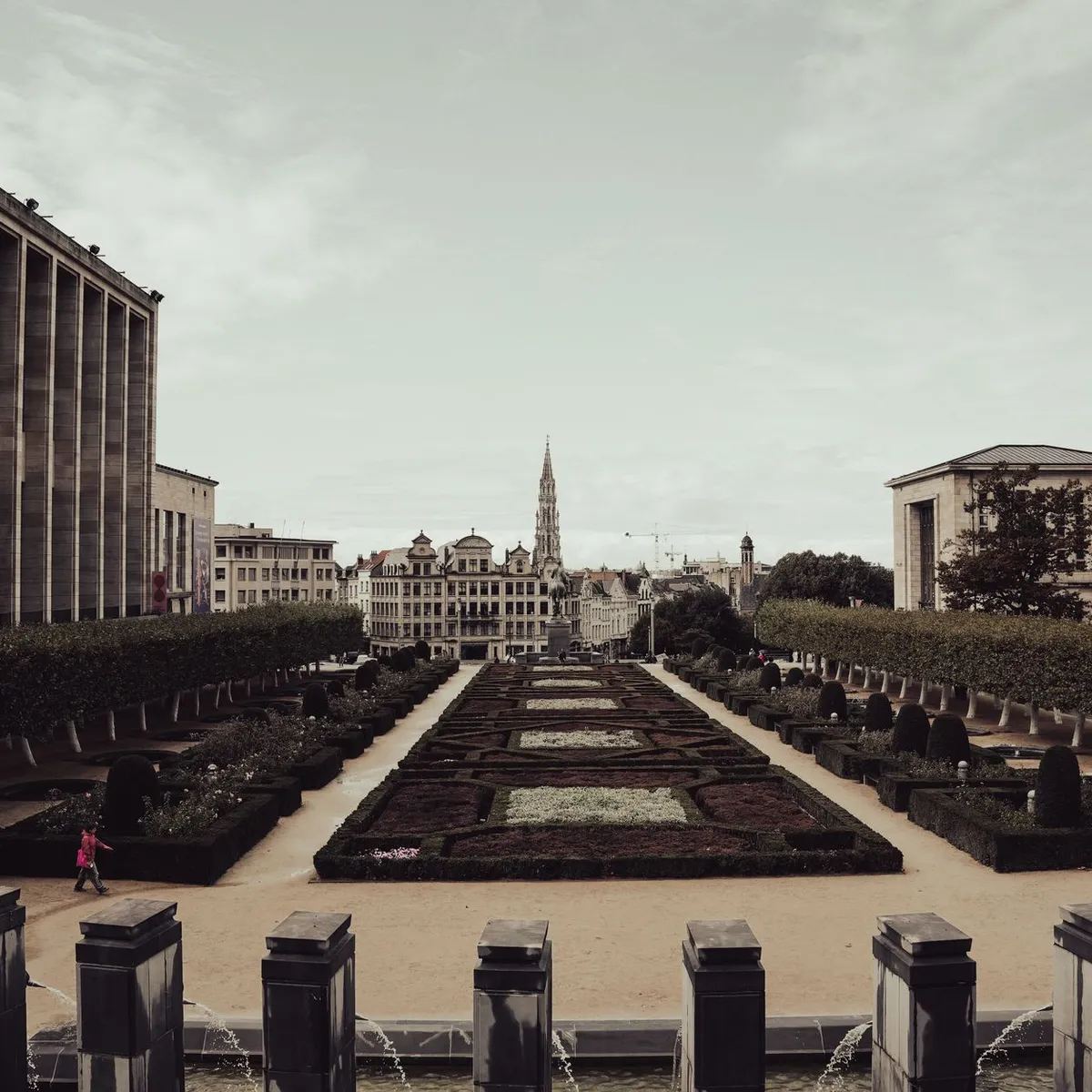
 Photo: Tapas S / Pexels
Brussels
Brussels accessibility for wheelchair users
Compare Brussels by accessibility, transport, terrain, healthcare, cost, weather, laws, reviews, and community notes.
Brussels accessibility scores
Compare Brussels by accessibility, transport, terrain, healthcare, cost, weather, and laws. General stats use public data and models. Community rows reflect member reviews and votes.
General stats
National benchmarks and estimates — your experience in this city may differ.
Community
Starts from our estimate — thumbs up nudge toward Excellent, down toward Poor. Reviews use 1–5 stars.
These figures combine public statistics, models, and live weather where available. Every city is different — treat this as a guide, and share what you know in the Reviews & Corrections tab.
Profile last updated 6/30/2026.
Brussels wheelchair accessibility guide
Research Brussels for wheelchair users and caregivers: getting around, terrain, healthcare, costs, climate, accessible things to do, and practical caveats before booking.
Last updated 6/30/2026At a glance
Brussels can work well for wheelchair users who want a major European capital with dense services, international healthcare options, and many central attractions, but it requires route planning. RollVenture’s row gives it strong infrastructure and a gently rolling terrain profile, while the pavement sample shows many usable surfaces mixed with setts and paving stones. Budget from ~$4,589/mo using the stored profile. The city is best approached as a neighborhood-by-neighborhood destination: the European Quarter, newer museums, and major transit nodes are easier than some older cobbled streets around the historic core.
Getting around
STIB/MIVB is the main urban transit operator. Google-indexed official STIB results describe access to stops, stations, vehicles, and a traveller guide for persons with disabilities; Brussels regional information also points visitors toward public transport accessibility resources. In practice, do not assume every metro, tram stop, or elevator is available at the moment you travel. Build routes around step-free stations, allow extra time for elevator outages, and consider taxis or door-to-door support for late evenings, bad weather, or routes crossing cobbled streets.
Terrain & mobility
The city’s terrain profile is favorable by European standards: gently rolling, modest sampled grades, and a high-confidence OSM pavement profile with many asphalt or paved segments. The caveat is surface texture. Grand-Place approaches, older lanes, and heritage districts can include cobbles, narrow sidewalks, crowding, and drainage slopes. Power-chair users may find the center manageable with careful lines; manual users may prefer staying near flatter boulevards or modern transit corridors.
Healthcare & care
The row’s healthcare profile lists nearby OSM clinic leads such as Polyclinique de Ribaucourt and Clinique Saint-Jean branches; verify access and languages directly. Brussels has a large bilingual and international medical environment, but administrative steps, insurance status, and appointment availability vary. For personal care, ask agencies about lift experience, evening coverage, and whether staff can work in English, French, Dutch, or another preferred language.
Costs & housing
Stored costs are high: from ~$4,589/mo overall, with housing around ~$2,724/mo. Accessible housing in central Brussels can be difficult because attractive older buildings often have steps, small lifts, or awkward bathrooms. Favor newer apartment blocks, hotels with measured accessible-room details, and neighborhoods with known step-free transit.
Climate & comfort
Brussels is mild but damp, with frequent rain and cool gray periods. Wet cobbles and leaf litter can change the difficulty of a route. Pack rain protection for cushions and controls, and build indoor alternates into museum days.
Accessible things to do
Grand-Place area— iconic and central, but use it as a carefully timed visit because crowds and cobbles can be tiring.
Royal Museums of Fine Arts of Belgium— major museum complex; verify current lift and entrance routing before arrival.
Atomium— a recognizable Brussels landmark; check the current reduced-mobility instructions because not every internal route suits every wheelchair.
European Quarter / Parlamentarium area— modern district with broader pavements and visitor infrastructure; book assistance when needed.
Community & language
French and Dutch are official, English is widely used in international areas, and many migrant communities are present. Written access information may appear in multiple languages; keep screenshots of confirmations.
Would we recommend it?
Yes, with caution. Brussels has the services and density to be useful, but the oldest tourist streets and variable station access mean it rewards careful planning more than spontaneous wandering.
These figures combine public statistics, models, and live weather where available. Every city is different — treat this as a guide, and share what you know in the Reviews & Corrections tab.
Profile last updated 6/30/2026.
Reviews & corrections
Share your experience or suggest a data correction. Both appear publicly; admin updates official city scores and costs separately.
Log in to write a review or suggest a correction.
No reviews or corrections yet.