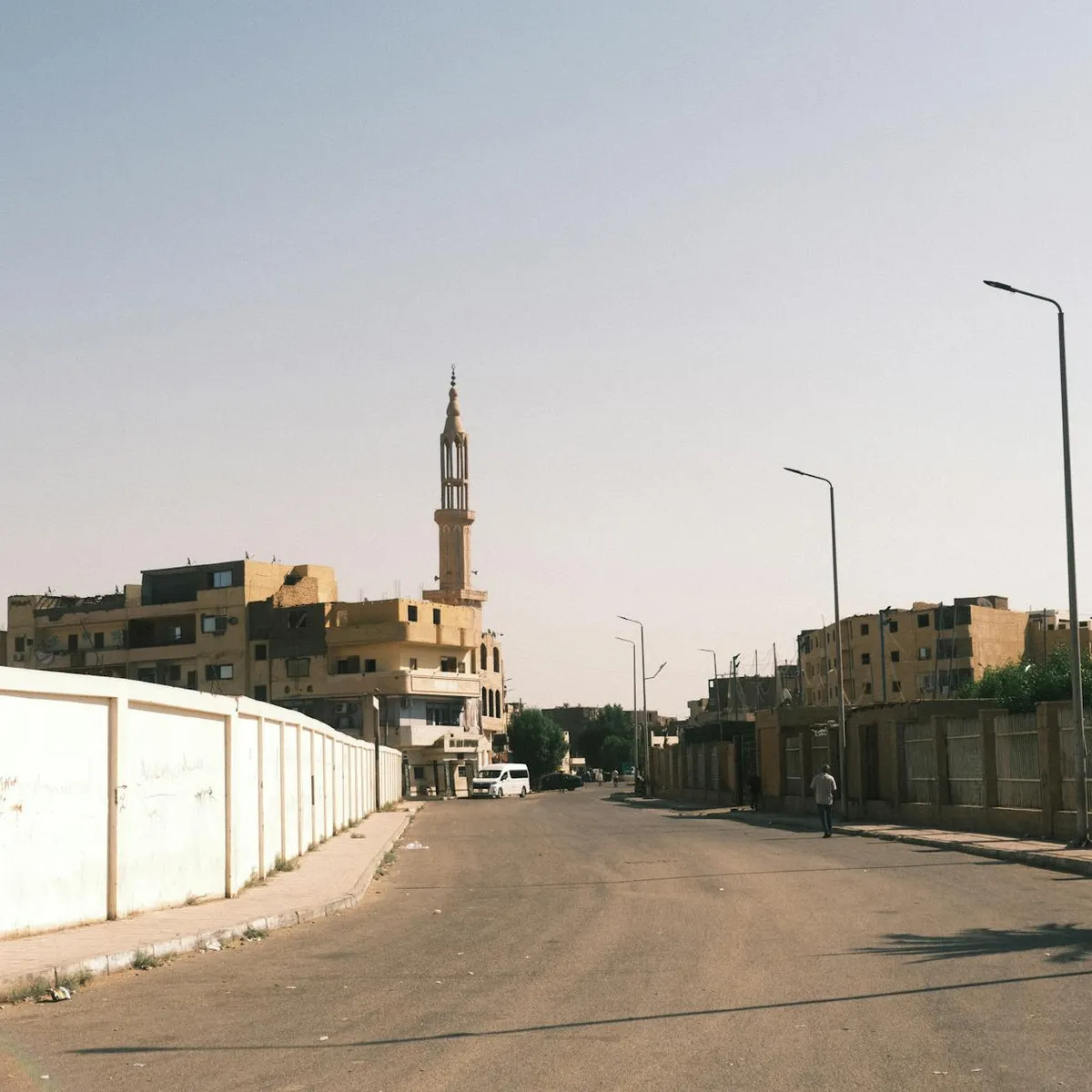
 Photo: Muhammed Fatih Beki / Pexels
El Fasher
El Fasher accessibility for wheelchair users
Compare El Fasher by accessibility, transport, terrain, healthcare, cost, weather, laws, reviews, and community notes.
El Fasher accessibility scores
Compare El Fasher by accessibility, transport, terrain, healthcare, cost, weather, and laws. General stats use public data and models. Community rows reflect member reviews and votes.
General stats
National benchmarks and estimates — your experience in this city may differ.
Community
Starts from our estimate — thumbs up nudge toward Excellent, down toward Poor. Reviews use 1–5 stars.
These figures combine public statistics, models, and live weather where available. Every city is different — treat this as a guide, and share what you know in the Reviews & Corrections tab.
Profile last updated 6/30/2026.
El Fasher wheelchair accessibility guide
Research El Fasher for wheelchair users and caregivers: getting around, terrain, healthcare, costs, climate, accessible things to do, and practical caveats before booking.
Last updated 6/30/2026At a glance
El Fasher is the capital of North Darfur and historically a caravan and agricultural market city, but this is a very difficult wheelchair base right now. The stored city scores are modest overall and low for accessibility, and public safety conditions should be treated as the first planning filter rather than an afterthought. A wheelchair user should not plan independent travel here without current security advice, a trusted local host, private accessible transport arranged in advance, and a contingency plan for medical evacuation. Use this guide as a conservative orientation note, not as a green light.
Getting around
Plan around private vehicles, not spontaneous public transport. The city is linked by road to Geneina and Umm Keddada, but road conditions, checkpoints, fuel, and security can change quickly. Wheelchair transport is scored low, so assume taxis and minibuses will not have ramps or securement. If travel is unavoidable, pre-book a vehicle with enough room for the chair, a second person for transfers, and a driver who can wait during errands.
Terrain & mobility
The terrain profile is hilly, with an OpenTopoData sample showing about 755 m average elevation and a 251 m elevation range. The pavement profile is low-confidence but still cautionary: most sampled ways were untagged, with unpaved, sand, and asphalt surfaces noted. Expect broken edges, dust, soft shoulders, missing curb cuts, and long exposed crossings. A manual chair user will likely need assistance outside a small, pre-checked route.
Healthcare & care
The database has OpenStreetMap healthcare leads for اطباء بلا حدود توماس and مركز منظمة ريليف الصحي, both well outside the centre. Treat them as leads only; confirm whether they are operating, reachable, and able to handle disability-related needs before relying on them. Bring extra medication, repair parts, pressure-care supplies, and written medical information. Home aid is estimated from ~$385/mo, but availability and trust should be verified through a local network.
Costs & housing
The database estimate is from ~$2,265/mo. That should not be read as a comfort budget: security logistics, generators, vehicle hire, and escorts can easily dominate costs. Accessible housing should be verified by video: entrance step, bathroom door width, shower arrangement, backup water and power, and whether a vehicle can stop directly at the entrance.
Climate & comfort
El Fasher is hot, dry, dusty, and exposed. Heat management matters for wheelchair users who cannot easily reposition or cool down. Prioritize shaded indoor stops, bottled water, backup battery capacity, and dust protection for cushions, bearings, and respiratory equipment.
Accessible things to do
Central market area— Wikipedia identifies El Fasher as an agricultural marketing point. Only attempt a short, hosted visit on firm ground and at quiet hours; do not assume smooth paving or step-free shop access.
Al Fashir University area— The city page identifies the university as a local institution. Treat campus or nearby civic-area stops as possible vehicle-based orientation only, with access checked by a local host.
Airport or arrival corridor orientation— If flying or transferring, use the airport-area logistics stop to verify vehicle fit, chair loading, and onward road conditions before committing to city movement.
Community & language
Arabic is the practical default, with local Darfur languages also present. Do not rely on English for transport, care, or medical coordination. A local fixer or host is essential.
Would we recommend it?
No for most wheelchair travelers. El Fasher may matter for family, aid, journalism, or essential work, but as a relocation or leisure base it is too risky and too uncertain. Only consider it with current security clearance, confirmed accessible accommodation, and dependable local support.
These figures combine public statistics, models, and live weather where available. Every city is different — treat this as a guide, and share what you know in the Reviews & Corrections tab.
Profile last updated 6/30/2026.