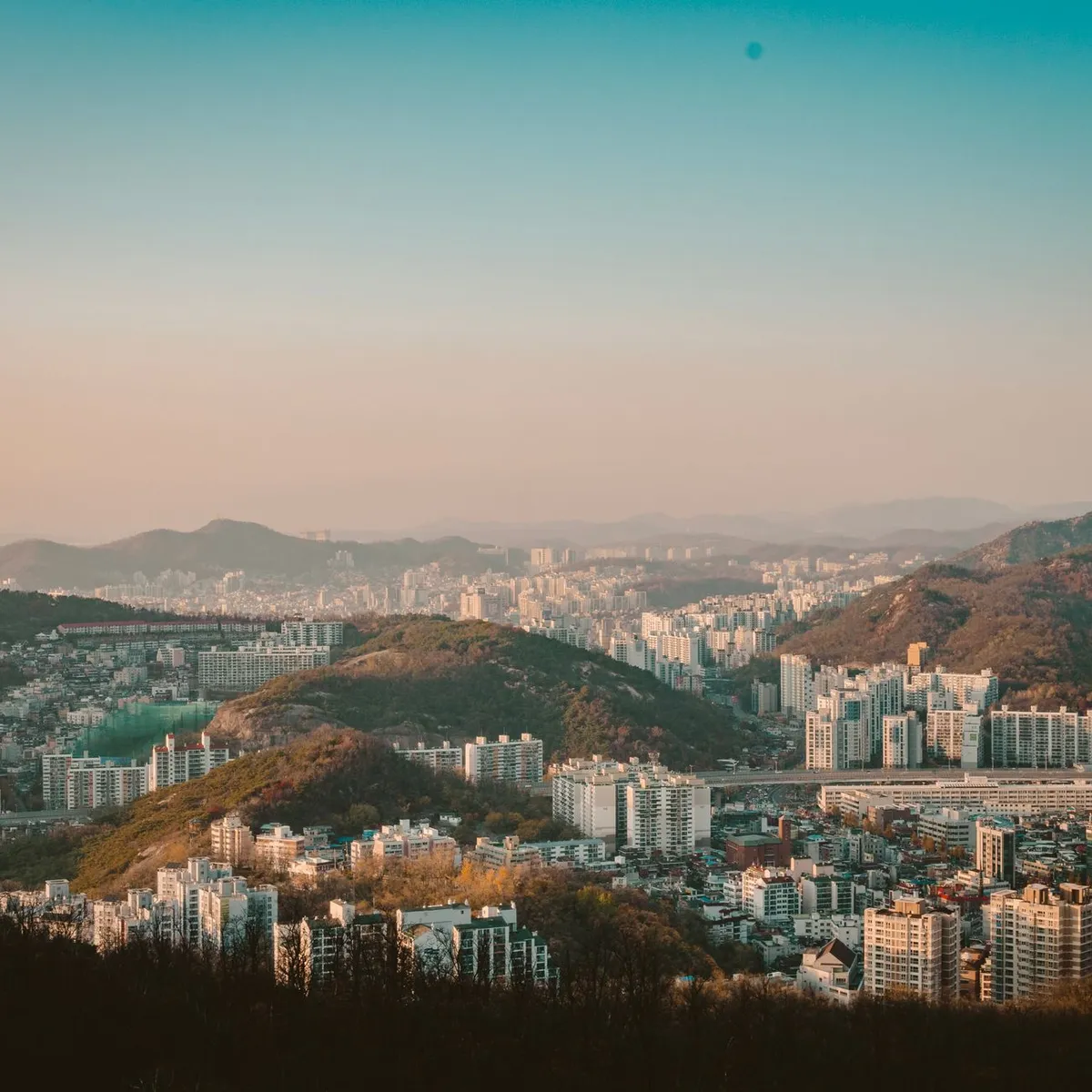
 Photo: Marius Mann / Pexels
Gwangju
Gwangju accessibility for wheelchair users
Compare Gwangju by accessibility, transport, terrain, healthcare, cost, weather, laws, reviews, and community notes.
Gwangju accessibility scores
Compare Gwangju by accessibility, transport, terrain, healthcare, cost, weather, and laws. General stats use public data and models. Community rows reflect member reviews and votes.
General stats
National benchmarks and estimates — your experience in this city may differ.
Community
Starts from our estimate — thumbs up nudge toward Excellent, down toward Poor. Reviews use 1–5 stars.
These figures combine public statistics, models, and live weather where available. Every city is different — treat this as a guide, and share what you know in the Reviews & Corrections tab.
Profile last updated 6/30/2026.
Gwangju wheelchair accessibility guide
Research Gwangju for wheelchair users and caregivers: getting around, terrain, healthcare, costs, climate, accessible things to do, and practical caveats before booking.
Last updated 6/30/2026At a glance
Gwangju is a major South Korean city with strong cultural institutions, high safety scores, and better pavement data than many cities in the queue. RollVenture's live profile estimates monthly living cost from ~$2,969/mo and housing from ~$1,285/mo. It can work for wheelchair users who want a Korean city outside Seoul, but source detail in English is thin, so plans should be checked in Korean or with venue staff before arrival. The best base is near subway, hospital, or Asia Culture Center access rather than on hillside edges.
Getting around
Gwangju has a metro system and buses, but this batch could not verify enough current English-language accessibility detail from the metro site; one official English URL returned 404. Treat transit as promising but not self-explanatory. Confirm elevator availability, station exits, low-floor bus coverage, and transfer distances before relying on a route. Taxis or hotel-arranged transport may be needed for late trips or hillside destinations.
Terrain & mobility
The DB terrain profile labels Gwangju hilly, with a sampled max grade of 6.3% and a large elevation range. That does not mean every central route is steep, but it does mean neighborhood choice matters. The pavement profile is high-confidence and comparatively good, with asphalt dominant and 55% good tagged surfaces. Stay close to flatter central corridors when possible and avoid ambitious walking-distance assumptions.
Healthcare & care
The live healthcare profile lists several nearby hospitals and clinics from OpenStreetMap, including rehabilitation-related naming in the local facility list. These are useful leads, not verified access guarantees. South Korea has strong urban medical capacity, but foreign-language booking, caregiver setup, insurance, and hospital navigation should be planned before arrival.
Costs & housing
Use the RollVenture estimate of from ~$2,969/mo overall and ~$1,285/mo housing. Newer apartment blocks may have elevators, but wheelchair-suitable bathrooms and step-free building approaches still need photos or video. Ask about slope from street to lobby, elevator dimensions, bathroom threshold, and nearby convenience-store access.
Climate & comfort
Summers are humid and rainy, winters can be cold, and hillier side streets become more tiring in bad weather. Plan museum-heavy days during heat or rain and keep outdoor memorial or park routes short unless a local source confirms surfaces.
Accessible things to do
Asia Culture Center— the official English site was reachable and exposes an accessible-facilities section in its visitor navigation. This is the strongest verified cultural anchor for a wheelchair-user itinerary.
Gwangju Biennale / exhibition district— the official English URL tested returned 404, so use it only as a cultural lead. Verify current venue access, elevators, and accessible restrooms before planning a full visit.
May 18 history sites— an official 5.18 archive English URL returned 404 during this check. The subject is central to Gwangju, but wheelchair users should confirm which museum, archive, or memorial route is step-free before visiting.
Metro-linked central loop— if station elevators are confirmed locally, build a short loop around ACC, nearby food streets, and central museums rather than trying to cover hillside neighborhoods in one day.
Community & language
Korean is the default. English is more likely at major cultural sites and hotels than in small clinics or restaurants. Written Korean access requests and screenshots of destination entrances will make planning much smoother.
Would we recommend it?
Yes, cautiously, for travelers comfortable verifying details in Korean and choosing a central, flatter base. It is less suitable for someone who needs fully documented English accessibility information before every outing.
These figures combine public statistics, models, and live weather where available. Every city is different — treat this as a guide, and share what you know in the Reviews & Corrections tab.
Profile last updated 6/30/2026.