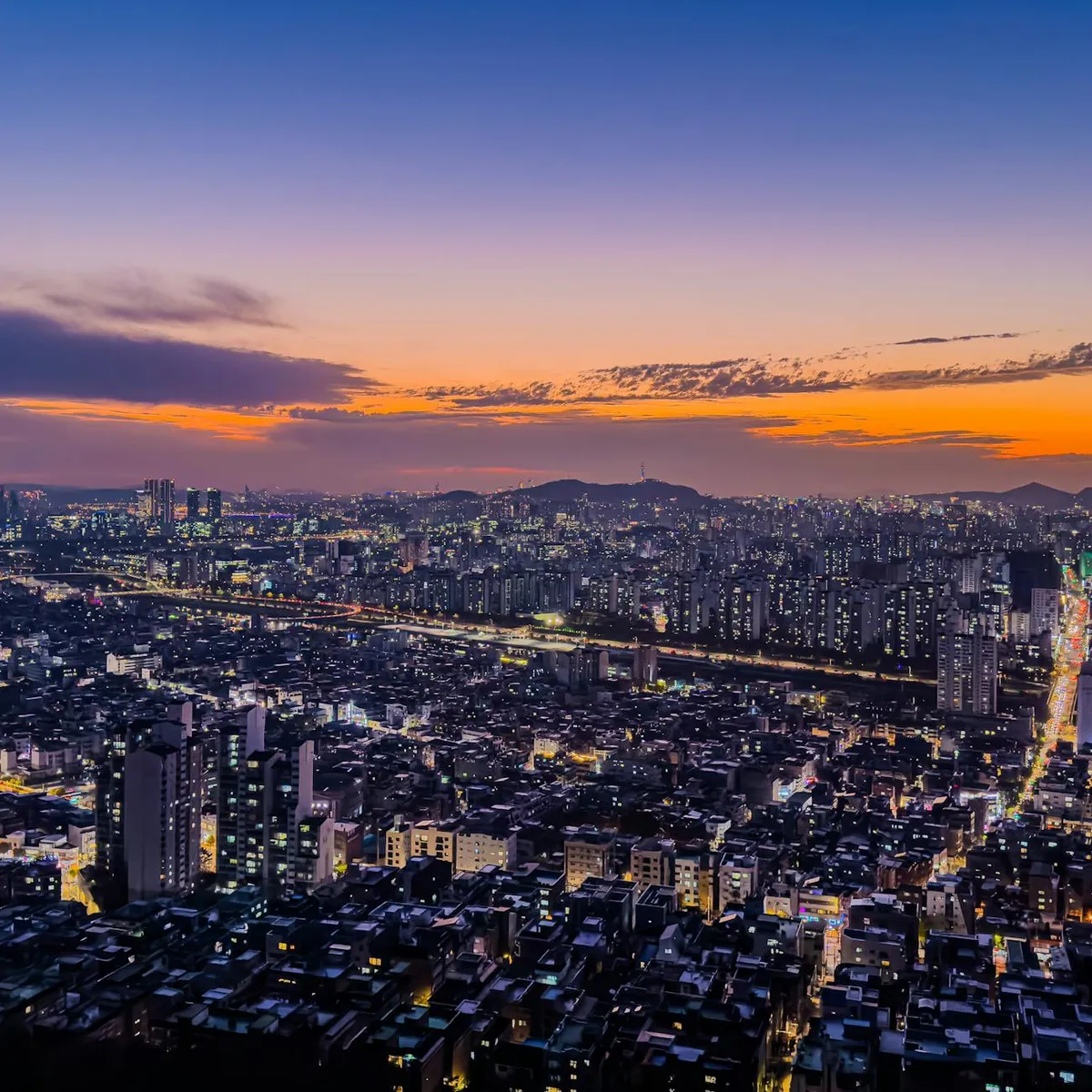
 Photo: Mocchi NO / Pexels
Hwaseong-si
Hwaseong-si accessibility for wheelchair users
Compare Hwaseong-si by accessibility, transport, terrain, healthcare, cost, weather, laws, reviews, and community notes.
Hwaseong-si accessibility scores
Compare Hwaseong-si by accessibility, transport, terrain, healthcare, cost, weather, and laws. General stats use public data and models. Community rows reflect member reviews and votes.
General stats
National benchmarks and estimates — your experience in this city may differ.
Community
Starts from our estimate — thumbs up nudge toward Excellent, down toward Poor. Reviews use 1–5 stars.
These figures combine public statistics, models, and live weather where available. Every city is different — treat this as a guide, and share what you know in the Reviews & Corrections tab.
Profile last updated 6/30/2026.
Hwaseong-si wheelchair accessibility guide
Research Hwaseong-si for wheelchair users and caregivers: getting around, terrain, healthcare, costs, climate, accessible things to do, and practical caveats before booking.
Last updated 6/30/2026At a glance
Hwaseong-si is a spread-out Gyeonggi city between Suwon, Ansan and the Yellow Sea, with new-town districts, royal heritage sites and coastal day-trip areas rather than one compact tourist core. For wheelchair users it is a cautious maybe: the DB profile shows a relatively modest cost base for Korea from ~$2,678/mo, good infrastructure scoring, and mostly flat sampled points, but the city is geographically large and the pavement profile has low confidence. Plan around car/taxi transfers, station elevators and destination-by-destination checks rather than expecting a simple walkable center.
Getting around
Use Seoul-area rail where it fits the itinerary, especially for Dongtan, Byeongjeom and Suwon-side connections, but confirm elevator status and step-free routing before committing. Buses reach more places, yet many heritage and coastal sites require transfers or longer rolls from stops. Wheelchair-accessible taxis or a hired van will be the most reliable option for Jebudo, royal tombs, fossil sites and family travel with mobility equipment.
Terrain & mobility
The sampled terrain is described as hilly, but with very low max grade in the grid and 100% flat samples; the practical challenge is distance and fragmented districts, not a steep old core. OSM pavement data is low-confidence and mostly untagged, with asphalt, dirt and concrete mixed in. Expect uneven shoulders around rural/coastal stops and smoother surfaces around newer residential/commercial areas.
Healthcare & care
The DB healthcare profile lists OSM hospital leads such as Central Hospital and nearby public health branches, but the closest entries are roughly 15-17 km from the city center, so treat them as leads only. For a longer stay, pre-identify a hospital in Dongtan/Suwon/Ansan, confirm wheelchair entrances and English support, and arrange personal-care backup before arrival.
Costs & housing
Use the database estimate as a planning floor: from ~$2,678/mo, including housing around ~$1,048/mo. Accessible housing should be verified carefully because newer apartments may have elevators but bathroom door widths, wet-room layout and parking/drop-off access vary. Short stays are easier if based near a rail station or Dongtan/Suwon services.
Climate & comfort
Summers are hot, humid and monsoon-prone; winters are cold enough for icy curb ramps and slick station approaches. Coastal sites can be windy, while inland new towns offer more indoor breaks. Build weather buffers into any royal-tomb or island day.
Accessible things to do
Yungneung and Geolleung Royal Tombs— UNESCO-listed Joseon royal tombs administered through Korea heritage channels; paths are more open than dense urban alleys, but verify current wheelchair route, slopes and restroom access.
Jebudo Island— a tidal-road coastal outing known from Hwaseong tourism; best attempted by vehicle, with tide timing, restroom access and boardwalk/road surface checked the same day.
Hwaseong Dinosaur Egg Fossil Site— an outdoor interpretive site; use it as a low-step nature/history option only after confirming path firmness and accessible toilets.
Woori Flower Botanical Garden— a controlled garden environment that may be easier than rural trails, but greenhouse entrances, ramps and parking should still be confirmed.
Community & language
Korean is essential outside hotels and major stations. Translation apps help, but written Korean addresses and phone confirmation are valuable for accessible taxis, clinics and venue entrances.
Would we recommend it?
Yes for travelers who already know the Seoul/Gyeonggi region or have a driver; not as a first Korea base for independent wheelchair travel. Hwaseong-si can work well for specific heritage/coastal stops, but the distances and low-confidence pavement data make pre-planning essential.
These figures combine public statistics, models, and live weather where available. Every city is different — treat this as a guide, and share what you know in the Reviews & Corrections tab.
Profile last updated 6/30/2026.
Reviews & corrections
Share your experience or suggest a data correction. Both appear publicly; admin updates official city scores and costs separately.
Log in to write a review or suggest a correction.
No reviews or corrections yet.